
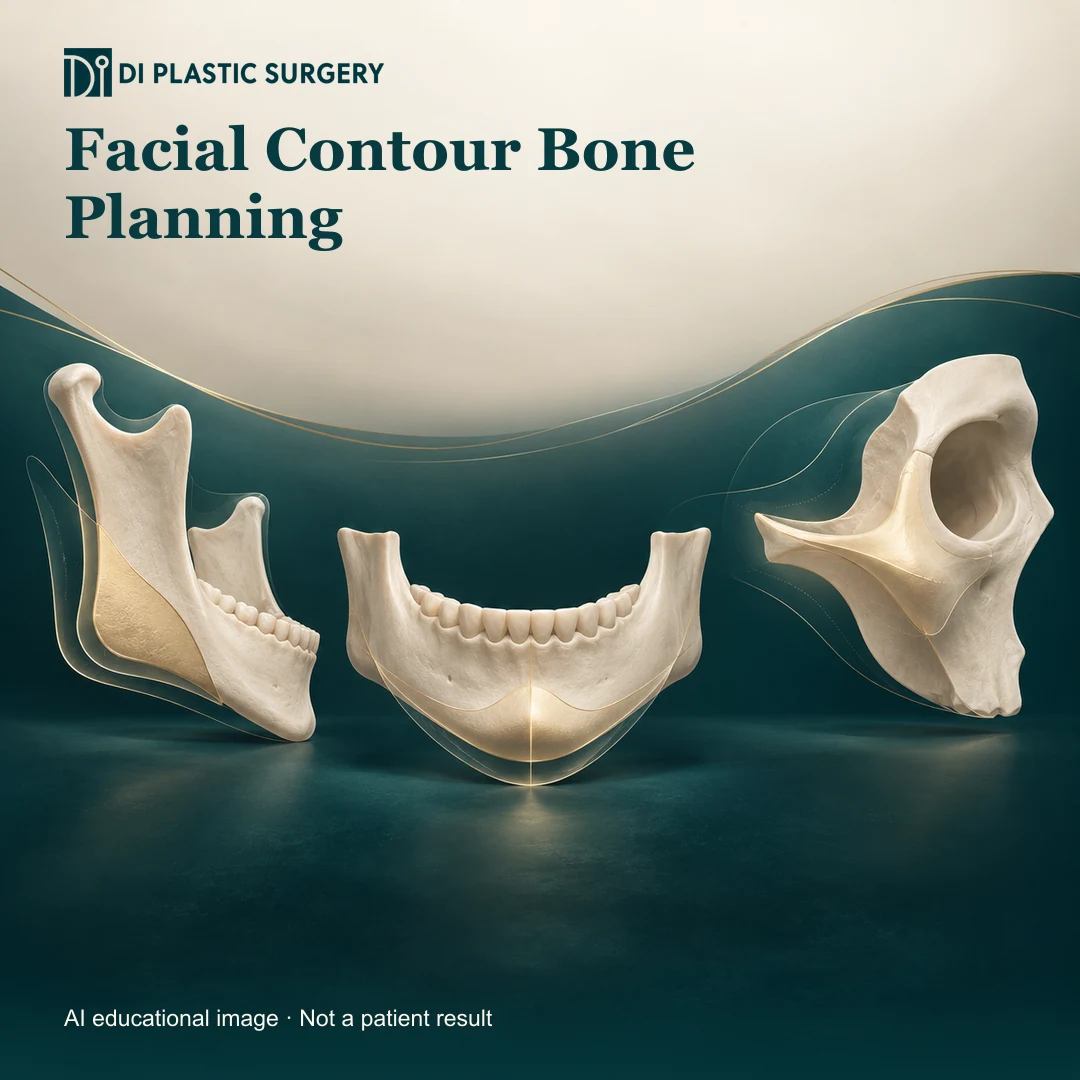
Planning a Seoul stay for square jaw reduction starts with appointment and care arrangements, not a fixed number of sightseeing days. This guide helps you prepare for consultation, local travel, mouth-care needs and departure decisions. It does not establish that surgery is suitable for you or promise an operating date, result, price or recovery period.
Ask for a consultation itinerary before buying a surgery trip
Tell the clinic what concerns you about your lower face, your preferred language and your possible travel window. Ask when the surgeon can examine you, whether any tests or imaging are proposed, and how much time is available to consider the recommendation. Do not assume that an inquiry or a photo review is a confirmed surgery booking.
The DI square-jaw reduction page distinguishes jawbone, chewing muscle and cheek fullness. A broad-jaw concern may therefore lead to several different discussions. Confirm the actual operation under consideration before estimating the stay. If your concern includes bite changes or jaw discomfort, raise that during assessment rather than assuming a cosmetic contouring plan will address it.
Understanding square-jaw reduction
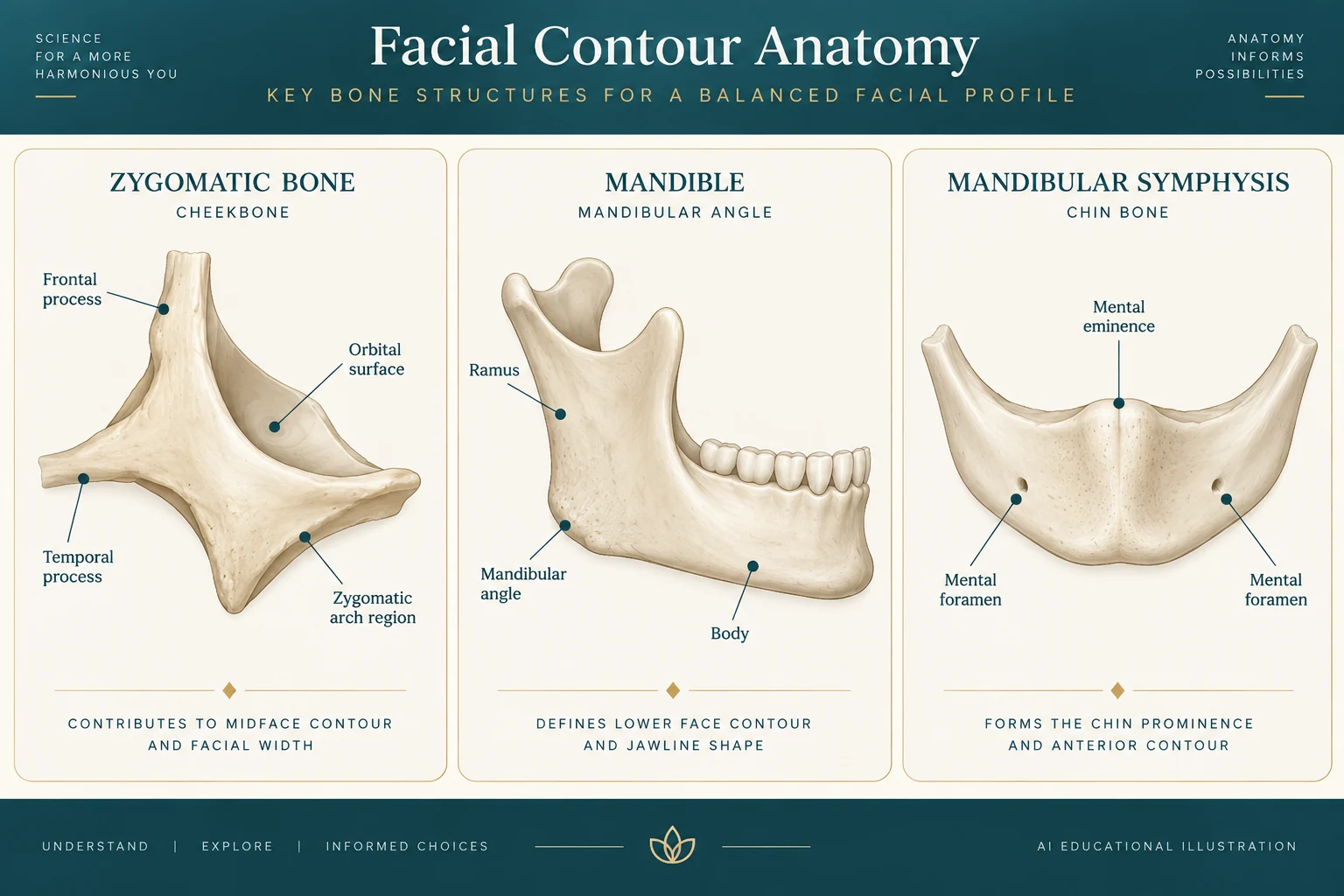
A broad lower-face appearance may involve the mandibular angle, masseter muscle, soft tissue or a combination. Bone reduction addresses a different structure from muscle-directed treatment. The examination and any required imaging should identify the main contributor.
The plan should name the intended bone contouring and whether long-curve or cortical components are proposed. Ask how the surgeon will account for nerve location, pre-existing asymmetry and the relationship to the chin.
Discuss changes in sensation, contour irregularity, mouth care and bone-healing follow-up. The isolated mandibular fragment explains the anatomical region without prescribing a reduction amount. A combination package should not be chosen only because it includes more areas.
Build the schedule around the specific treatment, not a package label
Ask whether the proposed plan is jaw reduction alone or includes chin, cheekbone, muscle or fat treatment. Each addition needs its own explanation and can change the care arrangements. Request a written plan naming the surgeon, planned anesthesia, location of treatment, discharge arrangements and the follow-up appointments that require you to remain in Seoul.
DI’s overview lists general anesthesia, an initial recovery estimate and a typical number of follow-up visits. These are published guide values, not a commitment to your travel dates. Ask what your team will actually examine at each visit, whether stitches or drains need removal, and what could postpone departure. Discuss those questions directly with DI before making nonrefundable reservations.
Choose accommodation for practical access to care
Confirm the clinic’s current address and ask how often you may need to return. Compare realistic door-to-door journeys, elevator access, a quiet room, flexible check-out and convenient access to suitable food. Distance on a map does not tell you how easy the journey will feel after treatment.
A hotel is not a medical recovery facility. If assistance after anesthesia is needed, ask who must accompany you, how the first night is supervised and whether professional support is indicated. Do not assume the clinic, KOMD or hotel will provide nursing, an escort or overnight monitoring unless those services are explicitly confirmed.
Keep a budget and booking option for a longer stay if the treating team recommends it. A reversible accommodation decision is more useful than a tightly packed itinerary built around someone else’s recovery photographs.
What the proposed procedure should specify
Keep base mandibular-angle reduction and each optional contouring add-on separate in the quotation; confirm anesthesia and review arrangements.
Before consent, ask the clinician to name the operation and alternatives, explain the main objective and limitations, and confirm the person responsible for treatment and postoperative review. A schematic, a price item or a case video cannot establish suitability for an individual patient.
Verified DI price guide: KRW, VAT included
Source: DI 2026 English Price Guide, dated 11 September 2026, page 6; checked on 7 October 2026. The guide labels these as general prices in Korean won with VAT included.
These rows are different procedures, packages or add-ons. An add-on is not the full operation price. The guide’s price does not establish which anesthesia, materials, tests, medicines, aftercare or additional procedures are included in your case. Request an itemized current quote before booking.
| Verified item | KRW, VAT included | Price scope |
|---|---|---|
| Mandibular-angle reduction | KRW 4,000,000 | Listed procedure fee |
| Long-curve component | KRW 400,000 | Add-on only; not a standalone procedure price |
| Cortical component | KRW 400,000 | Add-on only; not a standalone procedure price |
| Combined long-curve + cortical component | KRW 600,000 | Add-on only; not a standalone procedure price |
Arrange the airport and clinic journeys without promising independence
Before arrival, clarify who is arranging transport, how you will find the destination and whether a companion is required after discharge. Carry the address and contact details in a format you can use without mobile data. If you request travel coordination, ask which tasks are included and who is responsible for the medical handover.
A public-transit route that works before surgery may not be the right discharge plan. Ask the team about safe travel after anesthesia and who can assist with luggage. Avoid committing to demanding walks, crowded attractions or a same-day onward trip before you know the restrictions.
Prepare for food and mouth care using the clinic’s instructions
Ask whether your planned technique involves an incision inside the mouth and obtain written guidance on food texture, drinking, rinsing, toothbrushing and medicines. Confirm which supplies to obtain and how to use them. A general website timetable or a photograph of soup is not permission to change your diet or oral-care routine.
If mouth opening is limited or eating becomes difficult, you need a clear way to contact the treating team. Discuss how concerns about hydration, pain, swelling or an incision will be assessed. Do not make your own adjustment to prescribed treatment because travel plans are inconvenient.

Know who handles a medical concern while you are away from home
Jaw-contouring surgery has risks, including bleeding, infection, pain, swelling, altered sensation, contour irregularity and anesthesia-related complications. A published mandibuloplasty review documents sensory deficits and other complications in a historical series. Those findings are not DI complication rates or a personal risk prediction.
Request the clinic’s urgent and out-of-hours instructions, the location of appropriate emergency care and the records to take with you. Serious breathing difficulty or another medical emergency requires local emergency care, not waiting for an online reply. A travel coordinator can help with logistics but cannot replace a clinician’s assessment or emergency service.
Make departure conditional on your own assessment
The CDC medical-tourism guidance discusses surgery-related travel risks and the importance of continuing care. An initial recovery estimate is not personal clearance for an international flight. Ask the surgical team to consider your condition, planned flight and relevant medical history.
Before leaving, request a treatment summary, medication information, any relevant records and instructions for follow-up at home. Agree how new symptoms will be reviewed and who can examine you locally if necessary. Remote contact is useful but does not guarantee that every problem can be assessed from a photograph.
Read one-month photographs as an observation, not a travel deadline
The original pair below is DI’s designated gallery case 342: Square-jaw reduction, Front, 1 month after surgery. Calendar capture dates, the pretreatment interval and the exact technique are not displayed. Neither muscle treatment nor a particular recovery course has been inferred.
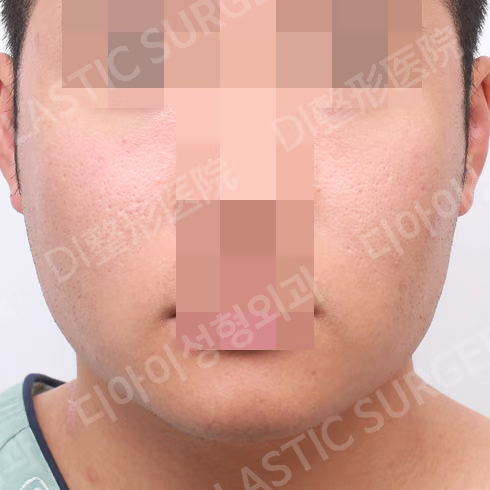
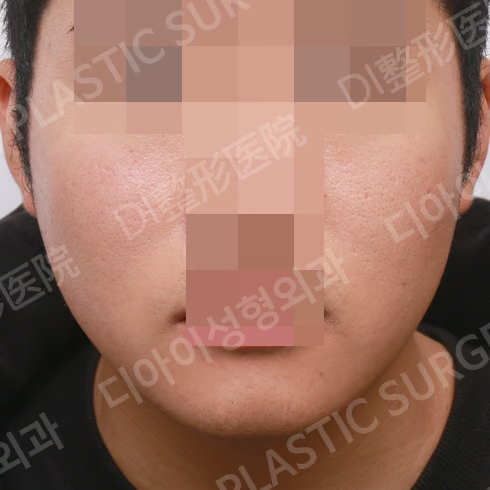
Original photographs are displayed without cropping, retouching or added overlays; existing privacy masking and markings remain. Individual results and recovery vary. One month does not establish completed healing or the stay another person needs. View the labelled originals in DI’s designated Before & After gallery.
Separate medical costs from the Seoul travel budget
Request an itemized clinical estimate covering surgery, anesthesia, examinations, follow-up and any optional procedures. Separately budget for accommodation, a companion if needed, transport, meals, changes to reservations and possible extra care. Confirm what your insurance does and does not cover; coverage cannot be assumed.
For a useful first message, include your consultation goal, preferred language and flexible dates. You can contact KOMD about Seoul visit coordination, while suitability, surgical decisions and flight clearance must remain with the treating clinicians. An inquiry is not a diagnosis or a commitment to treatment.
Sources and image notes
- DI: published Square Jaw Reduction planning and care information
- DI: published medical-team information
- DI: original case 342 and its one-month label
- Kang (2014): historical mandibuloplasty complication series
- CDC Yellow Book: medical tourism and care continuity
The dedicated cover and two explanatory body images are AI-generated, not patient evidence, actual medical records or a promised surgical result. Only the clearly identified original gallery pair shows an actual case. Treatment suitability, effects, price and recovery require individual evaluation.
Preparation, aftercare and travel milestones
Before treatment, distinguish bone, muscle and soft-tissue concerns with the clinician. Ask which imaging, dental or other assessments are indicated. Bring previous operative or implant records and review medicines and health conditions before anesthesia planning.
Confirm oral or external wound care according to the chosen incision, dietary instructions, dressings and review appointments. Ask about expected swelling and sensory changes and which symptoms require earlier assessment. An estimate of initial recovery does not establish complete bone or soft-tissue healing.
Schedule follow-up before booking fixed travel. Ask whether any sutures need removal and how chewing, exercise and flight timing should be managed. Keep a copy of the operation and material details for future clinicians if further care is needed.

Risks and symptoms to discuss before consent
Discuss bleeding, infection, asymmetry, changes in sensation and possible revision. Bone procedures require discussion of healing and surrounding nerves; implants require material, displacement and removal discussions. The relevant risks depend on the exact operation.
Ask which risks are most relevant to your examination, how complications would be handled, and what alternatives include postponing or not having treatment. Obtain written instructions from the treating team; a general article cannot replace them.
Questions before surgery and travel
Can a photograph distinguish jaw bone from muscle width?
Not reliably. Examination and any indicated imaging are needed before choosing a bone or muscle-directed approach.
Who confirms my final treatment plan and quotation?
The treating medical institution confirms suitability, the procedure, consent and the current itemized medical quotation. KOMD helps coordinate information and travel arrangements.
Does an early recovery estimate mean that I can fly?
No. Required reviews, wound or suture care and individual travel clearance must be confirmed by the treating clinician.
Procedure explanations and educational illustrations updated 7 October 2026. DI procedure information. Illustrations are AI-generated concepts, not actual patients or results. Medical decisions and current fees require clinic confirmation.