
If you are planning a Seoul visit for chin surgery, build the trip around an assessment and a review plan—not an assumed number of recovery days. The practical question is what your particular operation would require while you are away from home. This guide helps you organize the conversation, accommodation and return journey without treating an online inquiry as a surgery booking.
Confirm what “chin surgery” means before arranging the stay
A chin concern may involve width, vertical length or how far it projects in profile. Tell the clinic what you want assessed and whether there are bite or chewing concerns. DI’s published chin-surgery page discusses bone cutting and repositioning. Do not assume that a chin implant, chin narrowing and a broader jaw operation have the same preparation or follow-up.
Ask for the proposed procedure in plain English, including whether other facial-contouring operations are under discussion. An inquiry, a photo review and an in-person consultation are different stages. Suitability, expected effect, price and recovery depend on individual evaluation. You may decide not to proceed after the assessment; leave your travel plans able to accommodate that decision.
Understanding chin surgery
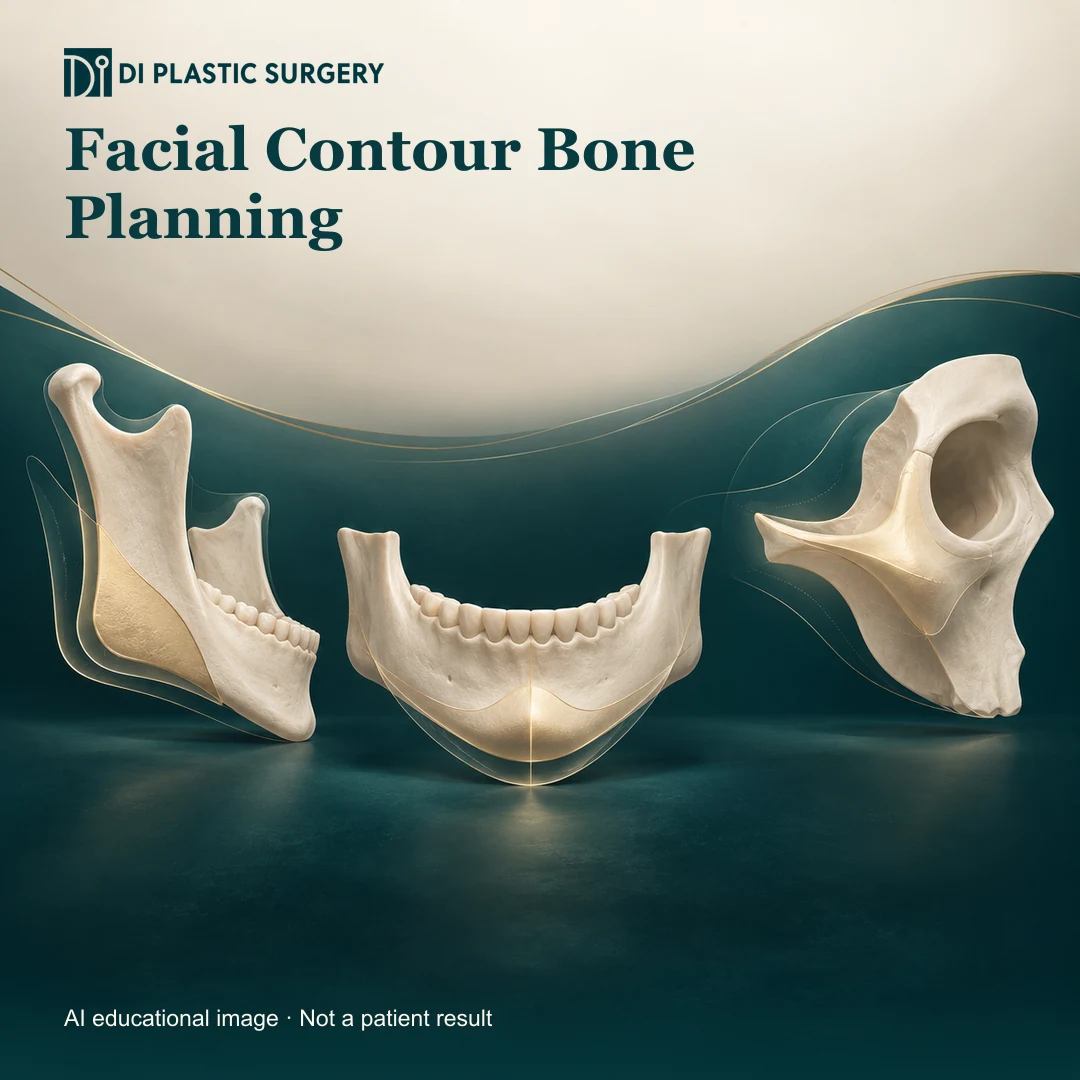
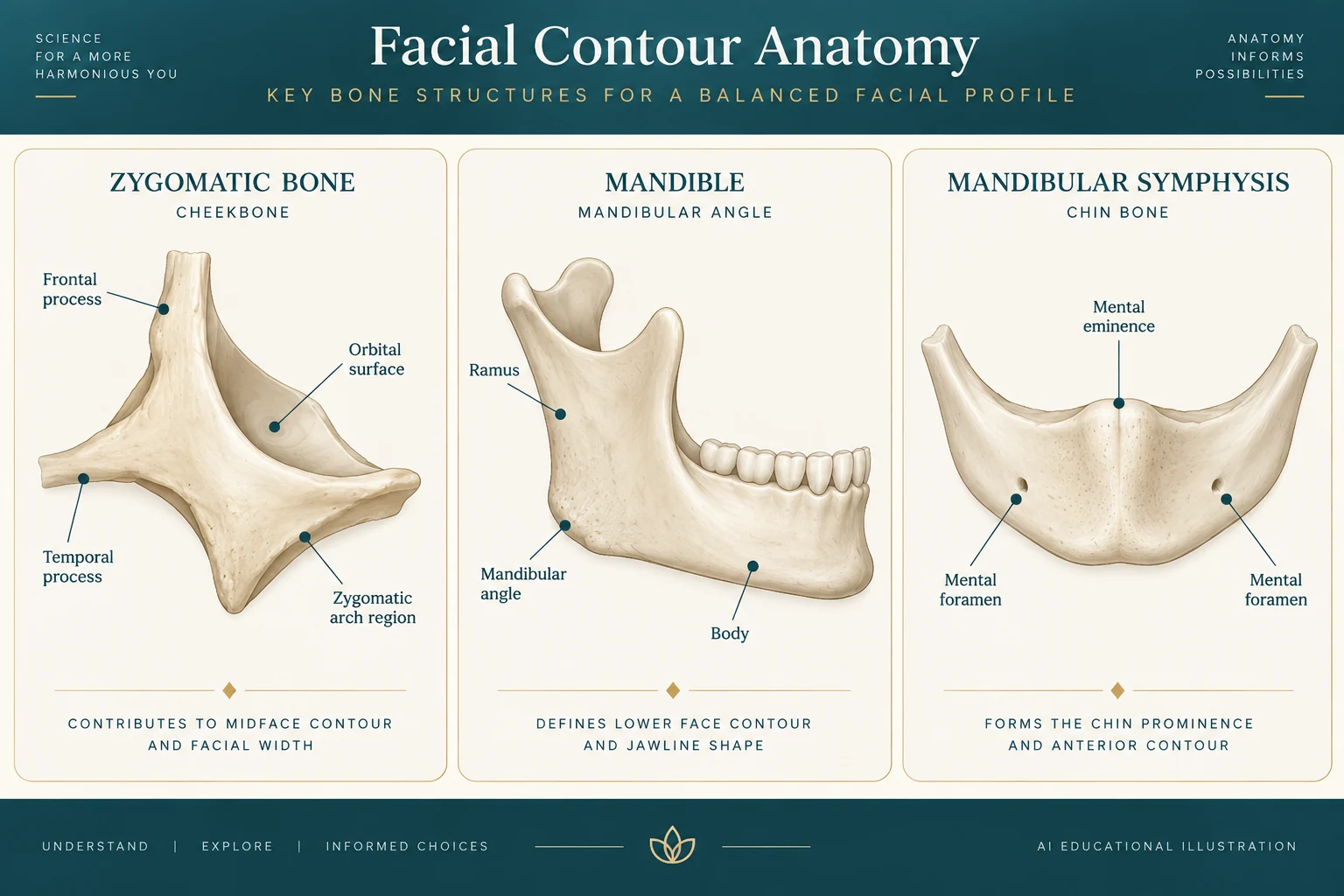
Chin planning separates width, vertical length and forward projection. A concern in one dimension does not mean all three should change. The assessment also considers the bite and relationship between the chin, lips and jawline.
A bony genioplasty, chin shaving and an implant are different approaches. Ask whether bone will be moved or reshaped, whether fixation is needed and whether an alternative involves adding a material.
Discuss the incision route, sensation around the lower lip and chin, asymmetry and the healing plan. A chin-fragment illustration is a regional concept, not a surgical measurement or a prediction of the final contour.
Use an appointment-led itinerary with decision points
Start with an arrival window and a confirmed consultation appointment. Ask whether examination, records review, tests or imaging need separate appointments. Then request a provisional sequence for any proposed treatment and required postoperative reviews. The clinic should identify which steps are confirmed and which remain dependent on assessment.
A useful itinerary has decisions rather than universal day numbers: consultation completed; proposal understood; surgery chosen or declined; postoperative assessment completed; departure discussed. Ask which milestone would change the plan if there is a concern. Do not turn a published initial-recovery estimate or typical visit count into a personal flight date.
Prepare a short, useful consultation brief
Write down your main appearance question, related symptoms, preferred language and possible travel dates. Have information about previous chin, jaw or dental treatment available. If you already possess implant details, operative notes or scan information, ask how the clinical team would like you to share them securely. Do not send complete medical records or identity documents in an initial general inquiry.
Before travel, clarify who will explain the proposed operation and how interpretation is arranged if needed. Ask for written instructions in a language you understand. Confirm the operating surgeon and actual anesthesia arrangements with DI, using its published medical-team information as a starting point rather than a substitute for appointment confirmation.
What the proposed procedure should specify
Identify the specific width, length or projection goal; distinguish bony genioplasty, shaving and implant options in the written plan.
Before consent, ask the clinician to name the operation and alternatives, explain the main objective and limitations, and confirm the person responsible for treatment and postoperative review. A schematic, a price item or a case video cannot establish suitability for an individual patient.
Verified DI price guide: KRW, VAT included
Source: DI 2026 English Price Guide, dated 11 September 2026, page 6; checked on 7 October 2026. The guide labels these as general prices in Korean won with VAT included.
The separately named procedure/package options below span KRW 1,500,000–3,500,000, VAT included. This range compares different scopes; it is not a promised total for one operation.
These rows are different procedures, packages or add-ons. An add-on is not the full operation price. The guide’s price does not establish which anesthesia, materials, tests, medicines, aftercare or additional procedures are included in your case. Request an itemized current quote before booking.
| Verified item | KRW, VAT included | Price scope |
|---|---|---|
| Genioplasty | KRW 3,500,000 | Listed procedure fee |
| Chin shaving | KRW 1,500,000 | Listed procedure fee |
Choose accommodation for access to appointments
Check the clinic’s current address through its directions page, then compare the practical journey from a possible hotel or apartment. Consider vehicle pickup access, stairs, lifts, luggage and whether a support person can stay with you. A convenient location on a tourist map does not establish that the room or route fits your needs.
Ask what assistance is needed after the actual anesthetic and whether a responsible adult is required. Check accommodation extension and cancellation terms before paying. Neither this article nor its fictional lounge image endorses a hotel, transport service or clinical recovery facility. Confirm availability and support directly rather than assuming they are included.
Plan local transport and daily tasks separately from sightseeing
Discuss transport after treatment with the team before choosing an independent public-transport journey. Who will accompany you, handle luggage and help if the schedule changes? Arrange pickup details and an accessible contact method. A coordinator may help with logistics, but medical advice must come from the treating professionals.
Keep the calendar light enough for actual review appointments and the team’s activity instructions. You do not need to fill recovery time with tours, long shopping trips or events. The presence of swelling is not a reliable test of whether an activity is appropriate. Ask about work calls, exercise and the return journey separately.

Get a written mouth-care plan before buying supplies
DI’s facial-contouring care information discusses mouth care, swelling and activity. Ask which instructions apply to the proposed chin technique. Clarify what you may eat or drink, how to clean your mouth, which medicines to use and whether tape, dressings or sutures need review. Do not adopt a generic rinse recipe or brush-start date from another person’s itinerary.
Practical questions include whether your room has suitable food preparation or delivery access, whether a support person can help with errands, and how to obtain the exact supplies the team requests. The blank cards, towel and water in the illustration are planning props, not an approved care kit. Do not change prescribed medication based on this guide.
Budget for decisions and contingencies, not only an advertised fee
Ask DI for an itemized estimate for your proposed operation. Request clarity on assessments, anesthesia, follow-up and any optional additional procedure. Separately calculate accommodation, transport, interpretation if needed and a possible change in your departure. There is no verified universal chin-surgery price in this article.
Ask how extra appointments and complication care would be arranged and charged. Review what your insurer actually covers, including elective surgery and related complications; do not assume ordinary travel cover applies. CDC’s medical-tourism guidance emphasizes complication planning and continuity of care.
Make departure a clinical discussion
Confirm which examinations or wound reviews must happen before leaving. Ask the team to assess your individual travel risks and explain what would postpone departure. Surgery and long seated travel can both contribute to blood-clot risk; a short flight or a convenient booking does not establish safety. No fixed minimum stay or flight clearance is provided here.
Obtain contact details for concerns in Seoul and after returning home. Request relevant records and a follow-up plan for a clinician at home if needed. Seek prompt medical attention for a suspected complication rather than waiting for an online reply or delaying care to protect a flight booking. Travel coordination is not an emergency service.
Understand the evidence without inventing a chin-only result
The designated DI Before & After gallery currently labels its chin-surgery examples as combined operations. No verified chin-only pair matching this guide was found, so patient before-and-after photographs are not included. Effects of chin surgery cannot be isolated from those combined-case photographs.
ASPS lists surgical risks such as infection, altered sensation, asymmetry, persistent pain and further surgery; which risks apply depends on the actual technique. Results and recovery vary. All three images accompanying this article are AI-generated explanations, not patient evidence. If you are also considering jaw-angle surgery, use the separate square-jaw stay-planning guide to formulate additional questions, not to assume identical care.
For your next step, ask DI about an individual consultation and required review appointments. KOMD can discuss travel-coordination questions through its contact options; services, availability and fees require confirmation.
Sources and scope
- DI Plastic Surgery: published chin-surgery methods, planning and care
- American Society of Plastic Surgeons: chin-surgery categories
- American Society of Plastic Surgeons: risks and safety
- CDC Yellow Book: medical tourism, travel risks and continuity of care
General educational travel planning, not an individualized medical plan or a promise of treatment availability, price, outcome or recovery time. The treating clinicians’ instructions take priority.
Preparation, aftercare and travel milestones
Before treatment, distinguish bone, muscle and soft-tissue concerns with the clinician. Ask which imaging, dental or other assessments are indicated. Bring previous operative or implant records and review medicines and health conditions before anesthesia planning.
Confirm oral or external wound care according to the chosen incision, dietary instructions, dressings and review appointments. Ask about expected swelling and sensory changes and which symptoms require earlier assessment. An estimate of initial recovery does not establish complete bone or soft-tissue healing.
Schedule follow-up before booking fixed travel. Ask whether any sutures need removal and how chewing, exercise and flight timing should be managed. Keep a copy of the operation and material details for future clinicians if further care is needed.

Risks and symptoms to discuss before consent
Discuss bleeding, infection, asymmetry, changes in sensation and possible revision. Bone procedures require discussion of healing and surrounding nerves; implants require material, displacement and removal discussions. The relevant risks depend on the exact operation.
Ask which risks are most relevant to your examination, how complications would be handled, and what alternatives include postponing or not having treatment. Obtain written instructions from the treating team; a general article cannot replace them.
Questions before surgery and travel
Is chin shaving the same as moving the chin bone?
No. Reshaping and repositioning are different operations. Ask which approach addresses the agreed dimension of change.
Who confirms my final treatment plan and quotation?
The treating medical institution confirms suitability, the procedure, consent and the current itemized medical quotation. KOMD helps coordinate information and travel arrangements.
Does an early recovery estimate mean that I can fly?
No. Required reviews, wound or suture care and individual travel clearance must be confirmed by the treating clinician.
Procedure explanations and educational illustrations updated 7 October 2026. DI procedure information. Illustrations are AI-generated concepts, not actual patients or results. Medical decisions and current fees require clinic confirmation.