
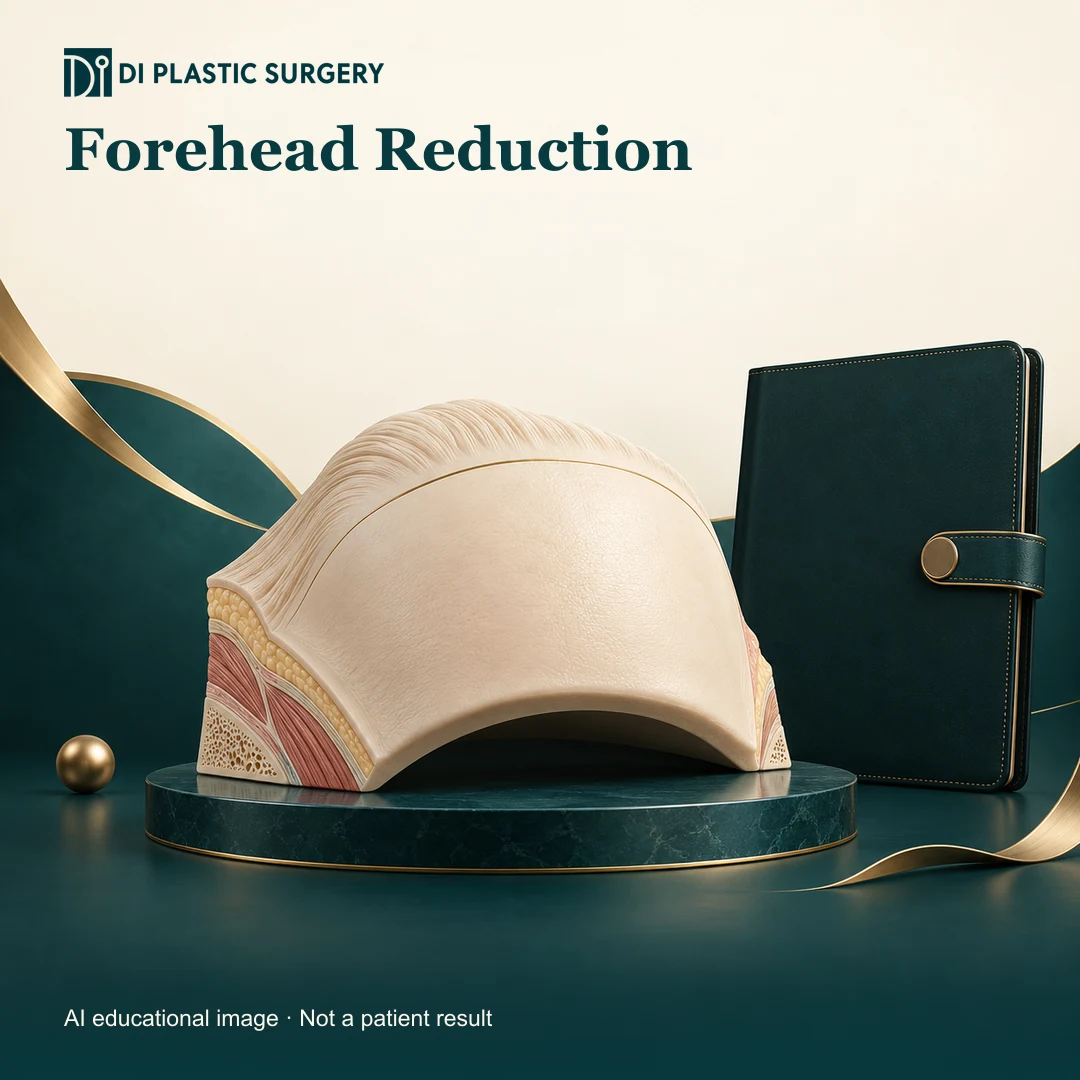
For a forehead-reduction consultation in Seoul, build your itinerary around the hairline assessment and follow-up appointments before choosing a return flight. A clinic’s short recovery estimate does not tell you when your incision will be ready for travel, when sutures need attention or how long scar review may continue.
This guide helps you organize a consultation trip, not decide that surgery is necessary. Treatment suitability, effects, price and recovery require individual clinical evaluation. An examination may change the proposed procedure or lead to a decision not to proceed.
Start with a consultation-only option
Tell the clinic whether you want to discuss forehead height, hairline shape or another upper-face concern. The official DI forehead-reduction page describes hairline and proportion planning. Ask for a consultation that identifies what would actually be changed, rather than arranging a trip around the name of an operation.
Ask whether you can attend for assessment only and consider treatment later. If a combined forehead lift is proposed, request separate explanations of its purpose, risks, fees and review requirements. The forehead-lift follow-up planning guide covers that separate consultation topic; it is not a substitute for a forehead-reduction plan.
Understanding forehead reduction
Forehead reduction concerns the distance between the hairline and brow region, usually through a hairline-advancement plan. It differs from a forehead lift aimed at brow position. The desired height should be considered with scalp mobility and hairline characteristics.
Discuss the incision along the hairline, the extent of advancement and how hair density or future hair loss affects the plan. A stated reduction target is an individual planning decision rather than a standard measurement suitable for everyone.
Ask about scar visibility, scalp sensation, hair changes near the incision and follow-up for wound care. If a lift or another procedure is proposed at the same time, its purpose and price should be identified separately.
Ask for appointment milestones before a fixed stay length
Request a written sequence covering the examination, any preoperative checks, the proposed operation if suitable, incision checks, possible suture removal and a review before departure. Ask which visits must be in person and which later reviews might be possible from home. Remote messages cannot replace an examination when one is needed.
DI’s procedure overview says suture removal is required and gives a short initial-recovery estimate. Confirm the timing for your actual closure and wound. Do not convert that estimate into a seven-day package or an automatic flight clearance. Ask what would happen if your wound needs more care, the schedule changes or your trip must be extended.
Prepare hairline questions without diagnosing yourself
A clinical review of hairline-lowering surgery highlights hairline stability and scalp mobility in candidate assessment. Use that information to prepare questions, not to determine your own eligibility. Ask how previous scalp treatment or a changing hairline could affect the discussion.
Keep your initial general inquiry brief: the concern, preferred language and tentative travel dates. Ask the clinic how to share relevant history or photographs through its designated clinical process. Do not include passport numbers, payment details or complete medical records in a general travel inquiry.
What the proposed procedure should specify
Agree the hairline objective and scar plan; ask whether hair transplantation is an alternative or a later option rather than assuming a lift and reduction are equivalent.
Before consent, ask the clinician to name the operation and alternatives, explain the main objective and limitations, and confirm the person responsible for treatment and postoperative review. A schematic, a price item or a case video cannot establish suitability for an individual patient.
Verified DI price guide: KRW, VAT included
Source: DI 2026 English Price Guide, dated 11 September 2026, page 5; checked on 7 October 2026. The guide labels these as general prices in Korean won with VAT included.
These rows are different procedures, packages or add-ons. An add-on is not the full operation price. The guide’s price does not establish which anesthesia, materials, tests, medicines, aftercare or additional procedures are included in your case. Request an itemized current quote before booking.
| Verified item | KRW, VAT included | Price scope |
|---|---|---|
| Forehead reduction | KRW 3,000,000 | Listed procedure fee |
Arrange local movement around clinical instructions
Keep the confirmed clinic address, appointment times and contact route accessible offline. Plan a simple journey between accommodation and the clinic, and confirm accompaniment requirements if sedation or anesthesia is proposed. Do not assume you will be ready to navigate a busy station, carry luggage or travel alone after treatment.
Choose accommodation for practical access and the flexibility to extend, not for a promised recovery benefit. Ask whether stairs, heavy bags or long journeys conflict with your instructions. Transport and a hotel room do not provide clinical monitoring, and a coordinator cannot clear you for an operation or departure.
Make hair washing and incision care part of the itinerary
Before treatment, ask for written instructions on washing, drying, products, pressure from headwear and care of the incision. DI’s page discusses hair washing and activity restrictions, but your team must confirm what applies to your wound. A salon visit is not a wound check or a replacement for clinical advice.
Plan how to follow those instructions in your accommodation. Confirm whether help is needed and which supplies the clinic recommends. Avoid adding scar massage, cosmetic treatments or hair-growth products because they appear in a travel guide. If instructions are unclear, request clarification before leaving the clinic.
Budget for reviews and an unexpected change in plans
Request an itemized estimate separating the assessment, operation, anesthesia, tests, follow-up and any optional care. Ask about the payment and cancellation terms before committing. No universal forehead-reduction price, hotel allowance or required stay length has been verified for this article.
Allow for accommodation changes and additional assessment if a problem occurs. The CDC’s medical-tourism guidance recommends planning continuity of care and considering complication-related costs. Check the exclusions in your own insurance rather than assuming routine travel cover includes elective surgery complications.
Understand the original case’s date label
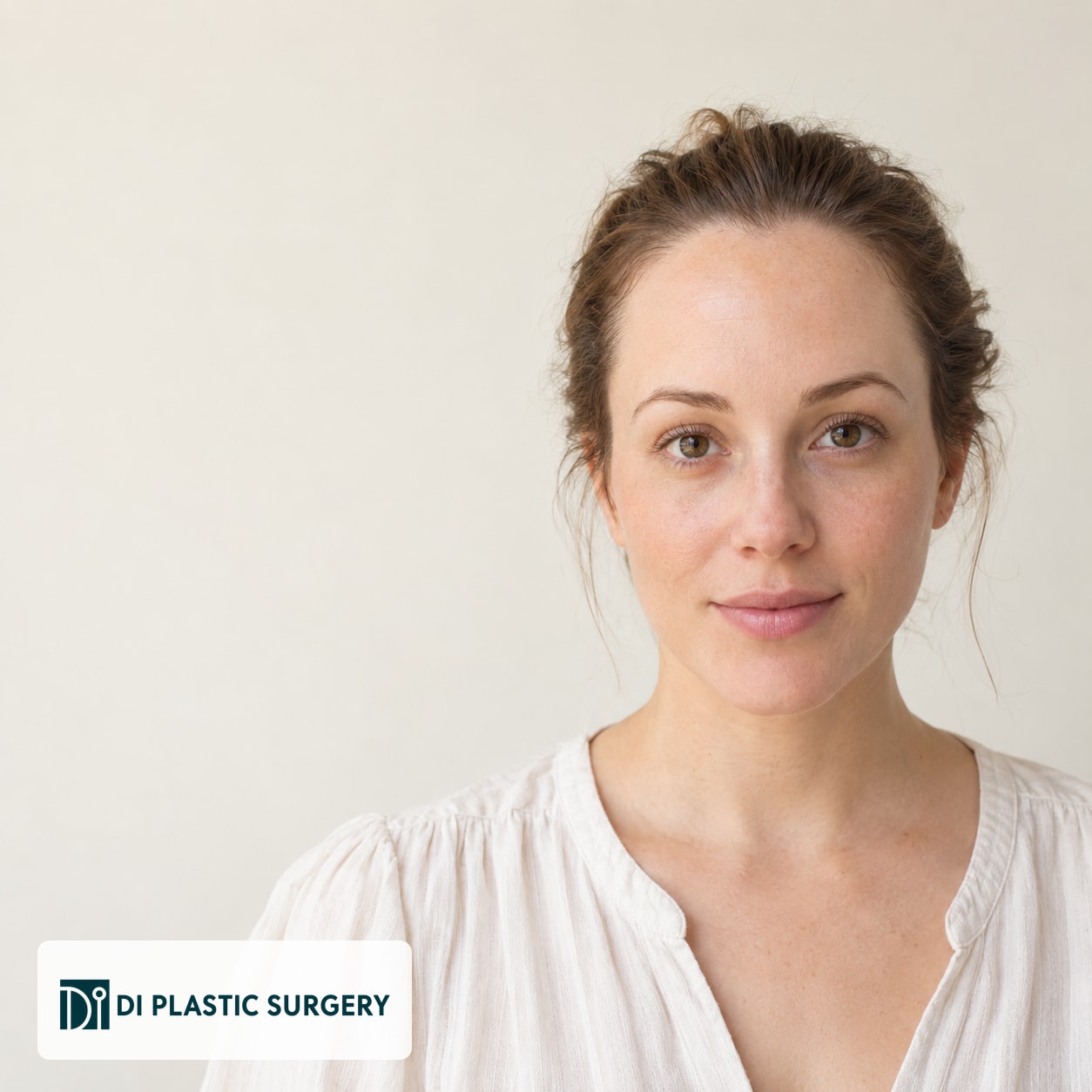
The photographs below are the unchanged Front-view pair from designated DI gallery case 409. Its displayed procedure is Forehead reduction and its follow-up label is 1 month after surgery. The original DI Before & After gallery does not display calendar capture dates or an operative record for this pair.
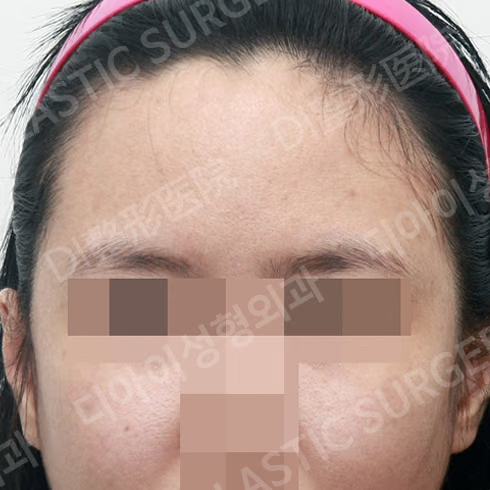
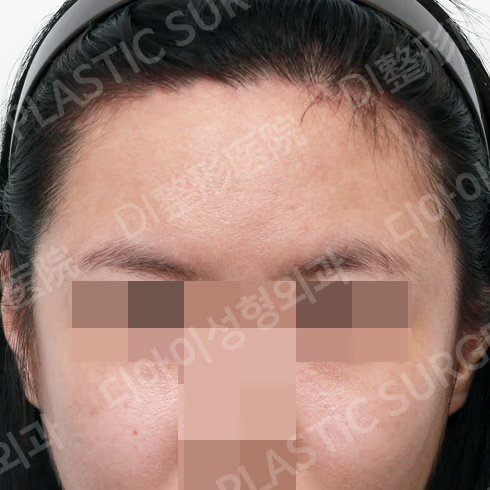
Case 409 · Forehead reduction · Front · 1 month after surgery. Results and recovery vary. The pair does not establish a final result, your expected appearance or a one-month travel requirement. Original composition and privacy masking are retained, with no generated retouching, crop or added branding. These two original photographs are hosted by DI; the explanatory illustrations are AI-generated, not clinical evidence.
Keep a route to clinical care after returning home
Ask for the discharge summary, care instructions, next-review plan and a contact route for new concerns. Forehead-reduction research reports risks including hair loss around an incision, unfavorable scarring, sensory changes and hematoma; DI’s overview also lists bleeding and infection. Ask the surgeon which warning signs need urgent local assessment. Online messages should not delay emergency care.
Discuss the actual return-flight timing with your treating team. Air travel and recent surgery can both contribute to blood-clot risk, and no calendar rule in this article clears you to fly. If you need in-person care at home, identify a local clinical contact before travel.
Use KOMD’s consultation contact for practical coordination questions and DI’s individual consultation information for the clinic’s assessment process. Clarify which organization is responsible for each part of your plan. Clinical decisions belong to the treating team.
Sources and scope
- DI: published procedure overview and incision-care information
- Epstein and Kuka Epstein: Hairline-Lowering Surgery (2020)
- Vila et al.: forehead-reduction outcomes and reported complications (2021 systematic review)
- CDC Yellow Book: medical tourism, continuity of care and travel risks
- Designated original DI gallery: case 409
Sources checked October 4, 2026. This travel-planning article is not a personalized diagnosis, surgical prescription or guarantee. Your own surgeon must confirm suitability, method, effects, price, recovery and travel advice.
Preparation, aftercare and travel milestones
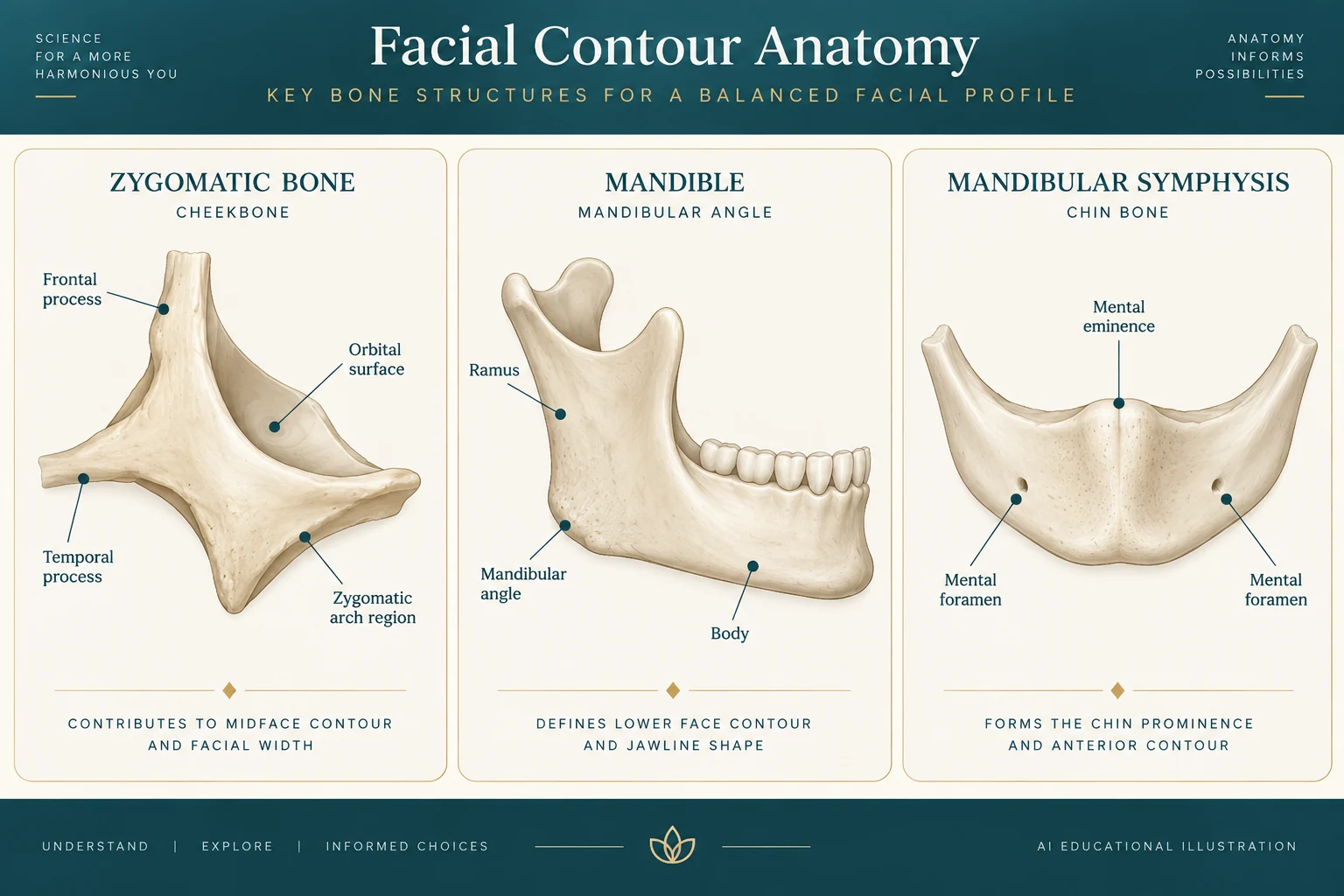
Before treatment, distinguish bone, muscle and soft-tissue concerns with the clinician. Ask which imaging, dental or other assessments are indicated. Bring previous operative or implant records and review medicines and health conditions before anesthesia planning.
Confirm oral or external wound care according to the chosen incision, dietary instructions, dressings and review appointments. Ask about expected swelling and sensory changes and which symptoms require earlier assessment. An estimate of initial recovery does not establish complete bone or soft-tissue healing.
Schedule follow-up before booking fixed travel. Ask whether any sutures need removal and how chewing, exercise and flight timing should be managed. Keep a copy of the operation and material details for future clinicians if further care is needed.

Risks and symptoms to discuss before consent
Discuss bleeding, infection, asymmetry, changes in sensation and possible revision. Bone procedures require discussion of healing and surrounding nerves; implants require material, displacement and removal discussions. The relevant risks depend on the exact operation.
Ask which risks are most relevant to your examination, how complications would be handled, and what alternatives include postponing or not having treatment. Obtain written instructions from the treating team; a general article cannot replace them.
Questions before surgery and travel
Does forehead reduction automatically raise the eyebrows?
Not necessarily. Hairline position and brow position are distinct goals. A combined operation must be specifically planned.
Who confirms my final treatment plan and quotation?
The treating medical institution confirms suitability, the procedure, consent and the current itemized medical quotation. KOMD helps coordinate information and travel arrangements.
Does an early recovery estimate mean that I can fly?
No. Required reviews, wound or suture care and individual travel clearance must be confirmed by the treating clinician.
Procedure explanations and educational illustrations updated 7 October 2026. DI procedure information. Illustrations are AI-generated concepts, not actual patients or results. Medical decisions and current fees require clinic confirmation.