

If you are planning a Seoul visit for a thread-lift consultation, build the trip around assessment and follow-up, not a fixed promise of same-day recovery. You may be advised to change the treatment plan or not proceed. Keep time and booking flexibility for that decision.
Start with an inquiry that can produce a workable visit plan
Explain the concern you want assessed, your preferred consultation language, previous facial procedures and your tentative arrival and departure dates. Ask whether the clinic can arrange an in-person consultation and which review appointments would be needed if treatment is recommended. Do not treat an online conversation as medical clearance or a confirmed treatment date.
Use the KOMD journal for patient-planning reading, and open the contact options on the KOMD homepage with travel-coordination questions. Confirm the treating clinic’s own clinical answers directly. A travel itinerary cannot decide your suitability, anesthesia or readiness to leave Korea.
Confirm what the clinic means by thread lifting
Read DI’s published Thread Lift information before discussing a visit. The page describes absorbable PDO threads in its MINT thread-lifting overview, but your individual plan must identify the actual product, method, area and limitations. Thread lifting should not be treated as another name for facelift surgery or every named lifting treatment.
Ask whether the proposal is threads alone or a combination with another treatment. Make sure the quotation and appointment schedule identify each part. If the clinic proposes an additional procedure at examination, review the reasons, risks, cost and aftercare before deciding; your original flight schedule is not a reason to accept an unsuitable plan.
Separate consultation day, treatment day and review day
Request a sequence of appointments, not a universal number of nights. First confirm the consultation. After examination, establish whether treatment is appropriate and whether any preparation or further assessment is needed. Then agree the treatment date and the follow-up that must happen before departure. Ask what changes could require an extra visit.
A brief procedure or an outpatient appointment does not establish a safe same-day flight. There is no single stay length in this guide that applies to every thread-lift patient. Suitability, effects, price and recovery depend on an individual clinical assessment, including any combined treatment.
Ask when the clinician expects to review you, what will be checked and whether further reviews are needed after you return home. Record the clinic’s answer in your calendar before booking fixed activities. An early photo update is not equivalent to an in-person review when the treating team says an examination is necessary.

Choose accommodation for access, not a claimed recovery package
Confirm the clinic’s exact address and review times, then check the route from the accommodation you are considering. A hotel near a station is not necessarily convenient if the route involves long walks, stairs or transfers. Compare the full journey and ask about a simpler transport option if the clinical team anticipates restrictions.
Keep your accommodation changeable where practical. Check cancellation terms and whether you can extend the stay if follow-up changes. Do not assume that a hotel provides nursing, clinical observation or aftercare because it is advertised to medical travelers. Ask the treating team what support you need and make separate arrangements where appropriate.
Plan the journey after anesthesia before the appointment
Confirm the proposed anesthesia and ask whether an accompanying adult is required after treatment. Arrange the return journey accordingly rather than assuming you can travel alone, drive or navigate a crowded route. The clinician’s instructions determine which restrictions apply.
Keep the clinic’s contact details, address and your accommodation address available in a form you can show to a driver. Ask how language assistance will work for consent, aftercare and an unexpected problem—not only for the initial inquiry. Allow time for explanations instead of placing a transfer immediately after an uncertain appointment end time.
Leave sightseeing and departure flexible
Ask for written instructions on washing, entry-site care, medicines, sleeping, facial pressure, mouth movement and activity. Do not book strenuous outings, massage or other facial treatments before checking the restrictions for your actual technique. The ASPS recovery guide emphasizes individual instructions and follow-up; it does not supply a personal flight date.
Before departure, ask whether the required reviews have been completed, who will help if a concern appears at home and what information a local clinician may need. A remote contact route can support continuity but cannot guarantee that every problem can be managed online. Urgent symptoms should be assessed by appropriate local medical services.

Know the risks without using them to diagnose yourself
Swelling, bruising and discomfort can occur, but infection, thread extrusion, persistent pain and an unfavorable result are also risks. Ask about temporary difficulty opening the mouth and the risks of the planned anesthesia. Your treating clinician must explain the risks of your specific technique and how to obtain assessment if something changes.
Give the clinical team relevant medical history, allergies, medicines and supplements, nicotine use and prior procedures. Do not adjust prescribed medicines yourself. Read ASPS thread-lift safety information as background for questions, not a complete personal risk assessment.
An original one-week case is not a travel timetable
The following unchanged pair comes only from DI’s designated Before & After gallery: NON-SURGICAL NO. 037, labelled Thread lift, 45° view, 1 week after surgery. Calendar capture dates, the exact pretreatment interval and the thread product or number are not displayed, so they have not been inferred.
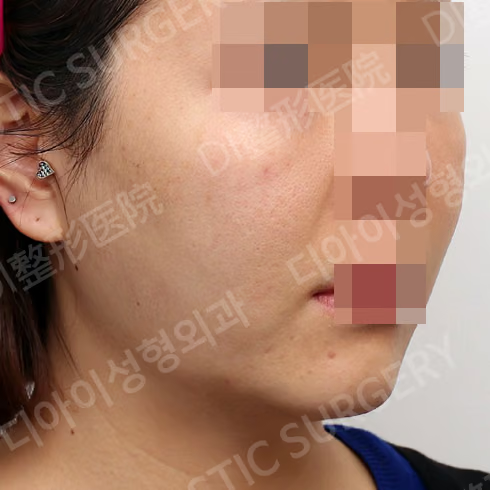
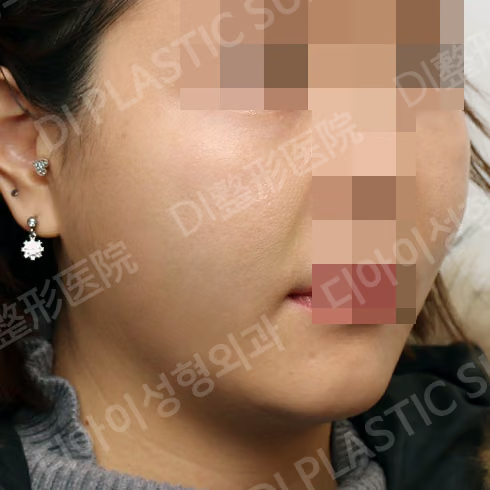
Original patient photographs retain their original privacy masking and have no AI retouching, cropping or logo overlays. Individual results and recovery vary. An early comparison does not establish a stable final outcome, the stay you need or your readiness to fly. The separate AI illustrations above do not depict this case.
Take five planning questions to the clinic
- What must be assessed before deciding on treatment?
- Which product and method are actually proposed, and what are their limits?
- Which appointments and aftercare restrictions apply to me?
- What support and return transport do I need after the planned anesthesia?
- What could change my departure date, and how will follow-up continue at home?
Review DI’s medical-team information and arrange an individual DI consultation for clinical decisions. Keep travel coordination separate from medical consent, and leave room to decide against treatment.
Sources and image disclosure
This travel-planning article uses DI’s published procedure information and the verified designated gallery case, alongside general ASPS patient guidance. It does not certify a personal treatment plan or promise a recovery date. The three explanatory images are AI-generated.