
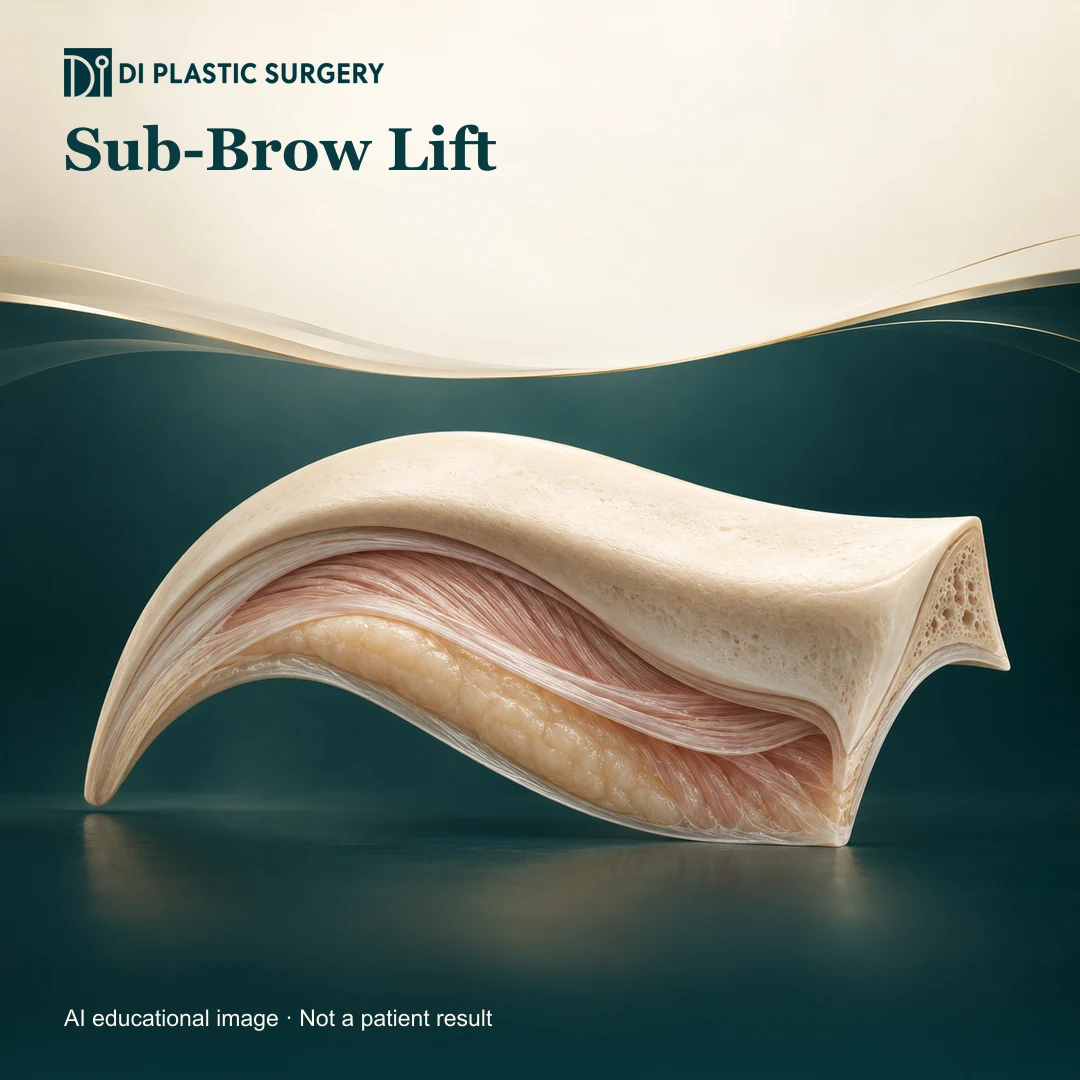
A trip to Seoul for a sub-brow lift consultation starts with an assessment, not a fixed surgery itinerary. If you are considering treatment for upper-eye heaviness or loose skin below the eyebrow, prepare your medical information and leave room for the surgeon to recommend a different approach—or no procedure. This guide focuses on travel and consultation planning for international visitors; it cannot determine whether surgery is suitable for you.
Describe your concern before choosing a technique
Write down what bothers you and when you notice it: loose upper-eyelid skin, a heavy sensation, eyebrow position, difficulty opening or closing the eyes, or changes in vision. These concerns can have different causes. A photograph or the name of a procedure does not establish the right treatment. Tell the clinic about eye symptoms and ask whether an eye specialist should assess them before cosmetic planning.
DI’s sub-brow lift information describes an incision below the eyebrow to address selected upper-eye skin concerns. This approach differs from a forehead lift, upper blepharoplasty and ptosis correction. Ask what examination finding supports the proposed method and what alternatives are reasonable. Brow-lift information from other medical sources is useful background, but should not be treated as a description of every sub-brow technique.

Understanding sub-brow lift
A sub-brow lift addresses selected excess upper-eyelid skin through an incision placed beneath the eyebrow. It should be distinguished from a forehead or brow lift and from surgery to correct a low eyelid margin. The position of the brow and the amount of upper-lid skin are assessed separately.
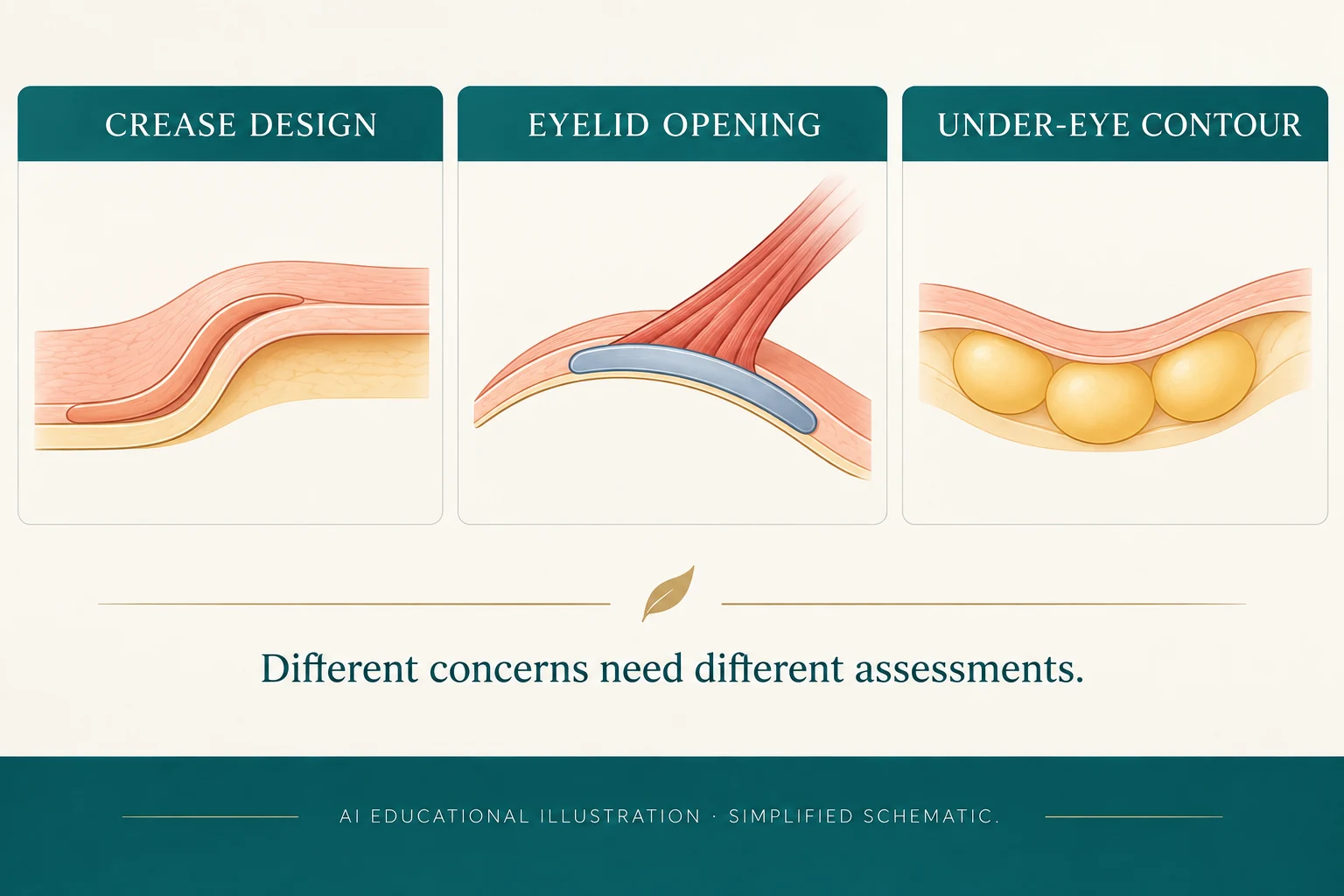
The surgeon discusses how much skin can be safely adjusted while preserving eye closure and a suitable relationship between the brow and eyelid. Existing crease design, brow hairs and prior scars can influence the incision and the appearance of the healing scar.
Ask whether the proposed operation changes the crease itself, whether a ptosis or brow-position problem remains untreated, and how the incision will be cared for. A scar hidden near brow hairs is still a scar; its visibility and maturation vary.
Prepare your records and language needs before travelling
Gather a current list of medicines and supplements, relevant conditions, allergies, previous eyelid or brow operations and any available operative records. Include dry-eye symptoms, contact-lens use and changes in vision. Ask the treating team how to submit records securely. Do not stop prescribed medicines based on a travel article or an online conversation; the clinicians responsible for your care should advise you.
Confirm the language used for the consultation, consent documents and aftercare instructions. Ask who will interpret medical discussions if you need help. An initial inquiry may organize a possible visit, but does not confirm candidacy, appointment availability, a surgery date or a final price. Review the DI consultation guide and medical team information before deciding what further questions to send.
Keep the Seoul schedule flexible
Before paying for non-refundable flights, ask when the in-person assessment would happen and whether additional eye examinations might be needed. If surgery is proposed, request the planned follow-up visits, wound review arrangements and after-hours contact. An online recovery estimate is not personal permission to fly. The surgeon must advise you about travel in light of the actual treatment, health and healing.
Choose accommodation and transport that make the agreed appointments practical. DI is in Gangnam; use its clinic directions to check the location, then confirm your route and actual appointment time. Consider changeable lodging, a contingency budget and help for the return journey if the team recommends it. A short city break advertised online does not establish how long your own medical visit should last.

What the proposed procedure should specify
Compare a sub-brow skin approach with blepharoplasty or a brow lift according to the actual source of heaviness, not just the location of a photograph’s shadow.
Before consent, ask the clinician to name the operation and alternatives, explain the main objective and limitations, and confirm the person responsible for treatment and postoperative review. A schematic, a price item or a case video cannot establish suitability for an individual patient.
Verified DI price guide: KRW, VAT included
Source: DI 2026 English Price Guide, dated 11 September 2026, page 2; checked on 7 October 2026. The guide labels these as general prices in Korean won with VAT included.
These rows are different procedures, packages or add-ons. An add-on is not the full operation price. The guide’s price does not establish which anesthesia, materials, tests, medicines, aftercare or additional procedures are included in your case. Request an itemized current quote before booking.
| Verified item | KRW, VAT included | Price scope |
|---|---|---|
| Sub-brow lift | KRW 1,500,000 | Listed procedure fee |
Discuss scars, eye comfort and the written estimate
Ask where the incision would sit, what scar may remain visible and how your brow hair, skin and previous procedures affect the plan. Ask about symmetry, sensation, eyelid closure and eye-surface comfort. General brow-lift patient information from ASPS and Leeds Teaching Hospitals discusses risks including bleeding, infection, scarring, asymmetry, altered sensation and eye irritation or dryness. The risks of your specific proposed technique may differ; have the treating surgeon explain them and any anesthesia risks before consenting.
Request an itemized estimate covering the proposed treatment, anesthesia, scheduled reviews and any exclusions. Ask how unexpected extra care is arranged and charged. DI’s cost guide provides context for an individual quotation. A journal article cannot confirm a personal price, treatment effect or recovery period, and results vary.
Plan for follow-up after returning home
Before departure, obtain written aftercare, contact details and the records you may need for a clinician at home. Ask which symptoms require urgent assessment and where to seek help if you have unexpected pain, visual changes or difficulty closing the eyes. Clarify how remote communication will work and when local examination may be needed. Keep the clinic’s instructions accessible rather than relying on a generic calendar.
No before-and-after photographs are reproduced here. The reviewed DI gallery cases involving a sub-brow lift also list other procedures; they do not establish the isolated outcome of this treatment. All three illustrations are generated editorial images and make no claim about a real patient’s result.
Sources and further reading
- DI Plastic Surgery: sub-brow lift procedure information
- DI’s designated before-and-after gallery
- American Society of Plastic Surgeons: general brow-lift risks
- Leeds Teaching Hospitals NHS Trust: forehead and brow-lift patient information
Prepared by the KOMD editorial team from the linked sources, checked on 1 October 2026. This is general preparation information, not a diagnosis or individualized medical advice.
Preparation, aftercare and travel milestones
Before treatment, describe dry-eye symptoms, contact-lens use, previous eye procedures, medicines and allergies. Ask which examinations and anesthesia assessment are needed. Do not stop prescribed medicines on the basis of a blog; obtain instructions from the prescribing and treating clinicians.
After treatment, obtain the clinic’s instructions for wound care, eye care, prescribed medicines, sleep position, activity and makeup or contact-lens restrictions. Confirm whether there are removable sutures and when the first examination is due. An initial-recovery estimate does not mean that scars or swelling have fully settled.
For travel, leave time for required in-person review and suture care. Ask the surgeon when flying and strenuous activities are appropriate for your own procedure. Keep the clinic’s contact and emergency instructions available after returning home.

Risks and symptoms to discuss before consent
Discuss bleeding, infection, scarring, asymmetry, dry eyes, difficulty closing the eye and possible revision. Eyelid surgery can also affect lid position or vision. A sudden visual change or severe unexpected eye pain requires urgent medical assessment.
Ask which risks are most relevant to your examination, how complications would be handled, and what alternatives include postponing or not having treatment. Obtain written instructions from the treating team; a general article cannot replace them.
Questions before surgery and travel
Is a sub-brow lift the same as a forehead lift?
No. They use different approaches and target different structures. The clinician should explain which problem each option addresses.
Who confirms my final treatment plan and quotation?
The treating medical institution confirms suitability, the procedure, consent and the current itemized medical quotation. KOMD helps coordinate information and travel arrangements.
Does an early recovery estimate mean that I can fly?
No. Required reviews, wound or suture care and individual travel clearance must be confirmed by the treating clinician.
Procedure explanations and educational illustrations updated 7 October 2026. DI procedure information. Illustrations are AI-generated concepts, not actual patients or results. Medical decisions and current fees require clinic confirmation.