
Planning a visit to Seoul to discuss a short-looking or upturned nose? Start with a consultation itinerary, not a surgery-and-flight package. An examination may change the options, the estimate and the appointments you need. This guide helps you prepare the practical questions before committing to treatment.
Describe your reason for visiting before reserving surgery
Tell the clinic whether your concern is overall length, an upward-pointing tip or visible nostrils. Mention whether the appearance has changed after an earlier operation. These observations help frame a conversation; they do not determine a diagnosis or a technique. A consultation can also lead to a different approach or no operation.
DI’s official short nose correction page discusses length, tip support and tissue condition. Use it to prepare questions, not to select your own graft or calculate an expected result. This journal focuses on visiting and coordination; the treating clinician is responsible for assessment, treatment and postoperative instructions.
Understanding short-nose correction
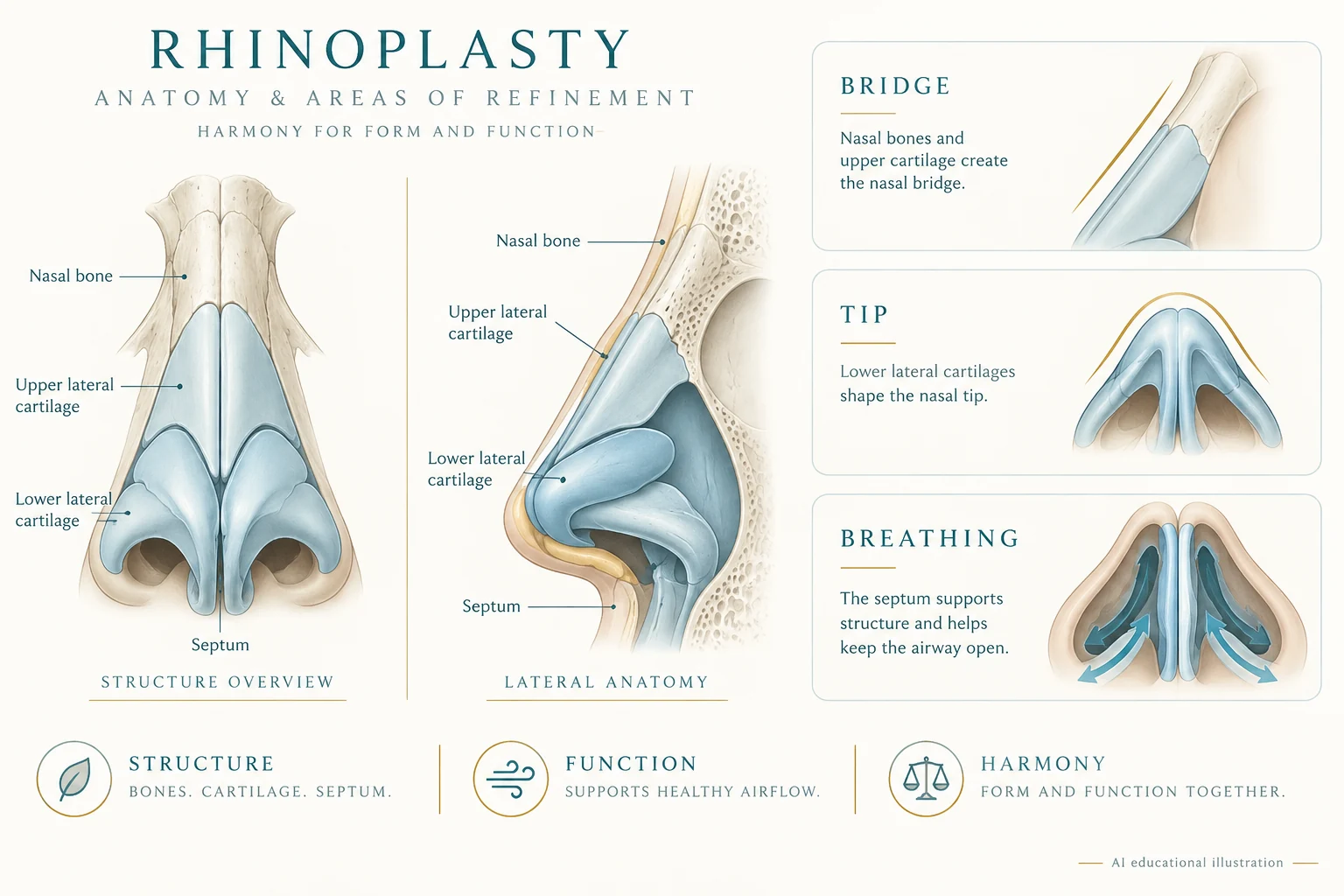
A short-nose concern may involve limited apparent length, an elevated tip or changes following a previous operation. The skin envelope and available cartilage can constrain the proposed extension. A first operation and a scarred revision nose can require different planning.
The surgeon should explain how support will be established, whether cartilage grafts are needed and which donor source is being considered. Extension is not simply a surface adjustment. Ask how the intended shape will be balanced with soft-tissue tension and breathing.
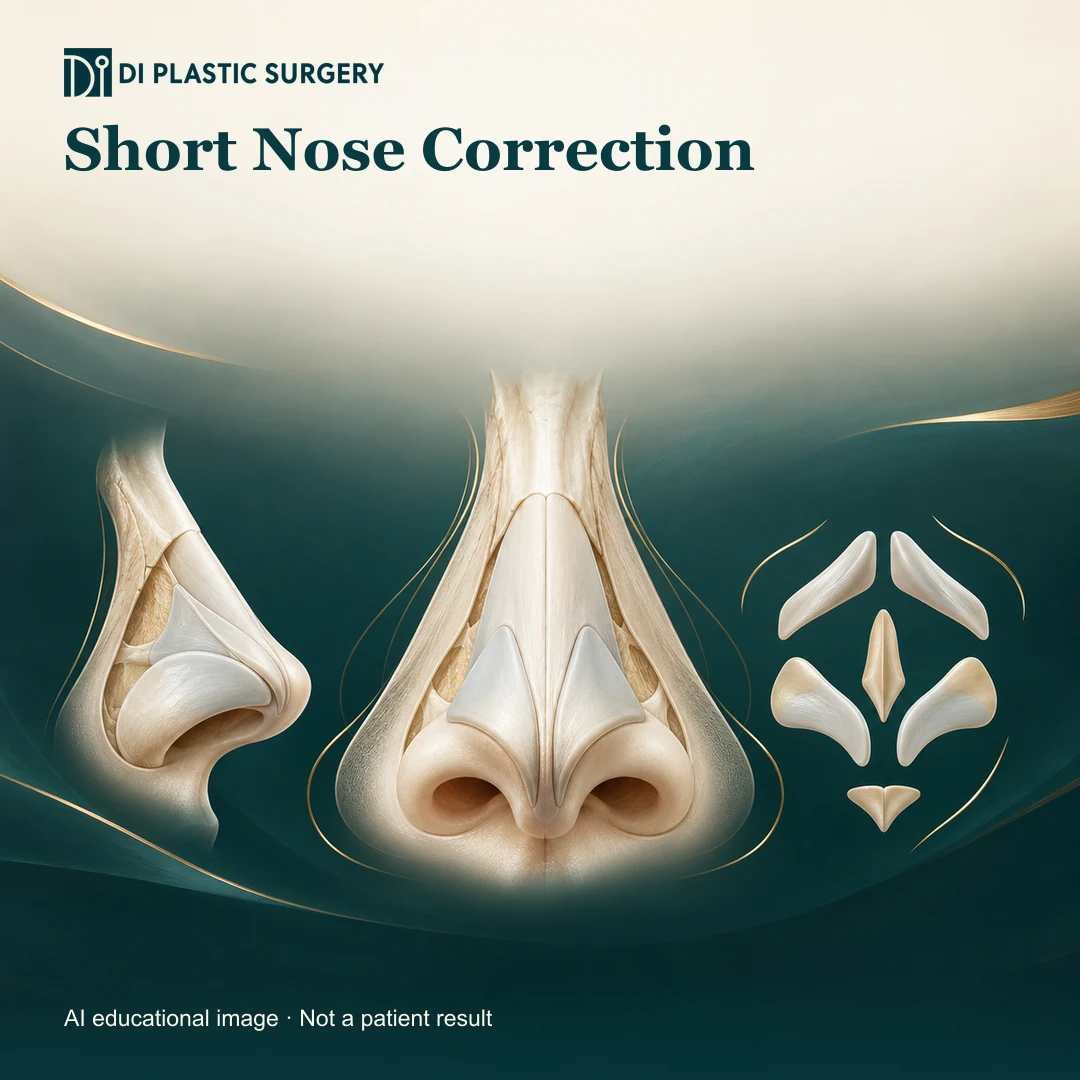
Bring records of any prior grafts or implants. Discuss the change you want in length or tip position and the limits of the existing tissues. The educational illustration shows support concepts without prescribing an extension measurement.
Confirm what the appointment will cover
Ask whether the booked appointment is an initial consultation only, what examination is expected, and which costs are separate. Confirm the clinician, language support and enough time to discuss limitations and alternatives. Reviewing DI’s medical team information is a useful first step, but an online profile does not replace your own discussion.
Make a short question list: What is contributing to the appearance? What would remain unchanged? Is a graft proposed, and why? Does the plan involve a donor site that needs additional care? If you have breathing symptoms, ask about their assessment separately. Do not assume a cosmetic change will address an airway concern.
Prepare records privately, without uploading them to public inquiry forms
If you have had nasal surgery, ask the clinic which earlier operation details, implant or graft information and available records would be useful. Bring your medication and supplement list, allergies and relevant medical history to the consultation. Do not stop a medicine or start a preparation routine based on a travel article.
Use an initial inquiry for your preferred language, broad interest and proposed travel dates. Ask the clinic for an appropriate private channel before sharing medical records or sensitive photographs. Keep copies accessible during the visit and note what is still unknown rather than trying to reconstruct a procedure from memory.

What the proposed procedure should specify
Confirm whether this is a primary or revision case, the planned support method, donor-site implications and the complete material-specific quote.
Before consent, ask the clinician to name the operation and alternatives, explain the main objective and limitations, and confirm the person responsible for treatment and postoperative review. A schematic, a price item or a case video cannot establish suitability for an individual patient.
Verified DI price guide: KRW, VAT included
Source: DI 2026 English Price Guide, dated 11 September 2026, page 3; checked on 7 October 2026. The guide labels these as general prices in Korean won with VAT included.
These rows are different procedures, packages or add-ons. An add-on is not the full operation price. The guide’s price does not establish which anesthesia, materials, tests, medicines, aftercare or additional procedures are included in your case. Request an itemized current quote before booking.
| Verified item | KRW, VAT included | Price scope |
|---|---|---|
| Primary short-nose correction | KRW 400,000 | Add-on only; not a standalone procedure price |
Arrange local travel around confirmed appointments
Before choosing accommodation, obtain the clinic’s current address, entrance instructions, appointment time and contact number directly. Check the route from your accommodation rather than assuming all clinics in Seoul are close together. Allow for airport arrival, luggage and unexpected delays; do not make the consultation your first inflexible commitment immediately after landing.
If surgery is later agreed, ask the treating team what assistance and transport they require after discharge. Reserve any necessary help before that day. Avoid making promises to yourself about independent sightseeing or public transport immediately afterward. Clinical advice and your condition should determine the plan.
Keep the length of stay and return flight flexible
DI’s procedure overview lists suture removal and follow-up visits and states that recovery varies. That is not a fixed stay recommendation for every visitor. Ask for your own expected review schedule, what could extend it, and who will decide whether you are fit to travel. A consultation-only visit and a treatment visit may need different arrangements.
Choose bookings whose change terms you understand. Ask how extra appointments, accommodation, transport and a delayed return would affect your budget. The quoted operation price and the total visit cost are not the same. Request an itemized estimate and distinguish necessary medical follow-up from optional travel services.
Our long nose consultation planning guide concerns a different tip-position question; it is not an interchangeable treatment recommendation. Browse the KOMD journal for practical preparation topics and keep the treating team’s individual instructions ahead of general travel advice.
A gallery follow-up date is not a travel timetable
The original 45-degree photographs below come only from DI’s designated gallery. Case 529 is labelled “Short-nose correction”, with “2 months after surgery” displayed. The gallery does not identify the exact technique, graft source or full history. No additional clinical facts are inferred.
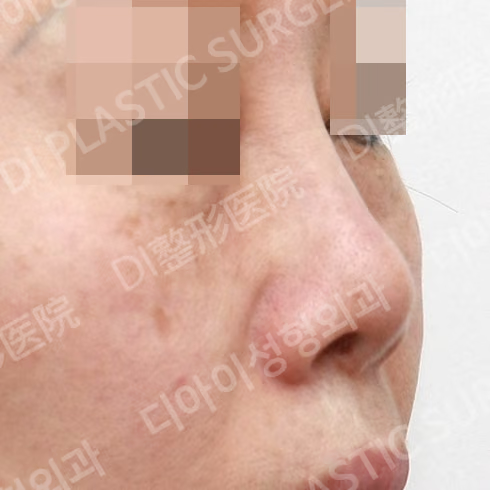
Before
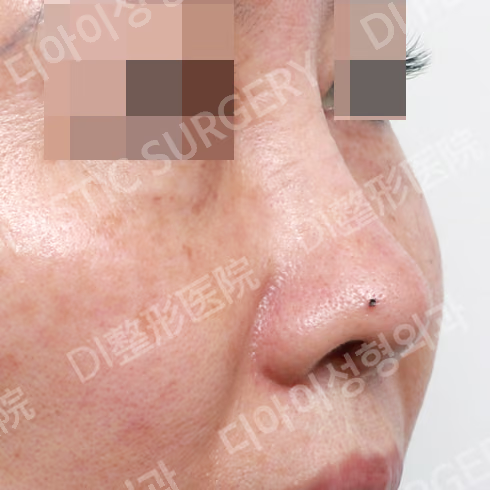
After
Two months describes this photographed follow-up, not a guaranteed final healing point or required stay in Korea. One case cannot predict your appearance or recovery. Do not use a gallery date to book your return flight.
Know who to contact after returning home
Before leaving Seoul, obtain written care instructions, the next review arrangements and a contact route for concerns. Ask how urgent problems should be handled locally and how routine follow-up can be coordinated after returning home. Clarify language support and availability without assuming a message service provides emergency care.
Rhinoplasty has risks, including anesthesia complications, infection, altered sensation, breathing difficulty, healing or scarring problems, swelling, dissatisfaction and possible further surgery. Discuss the risks relevant to your proposed operation. Suitability, expected effects, price and recovery require individual assessment; neither this itinerary nor a photograph guarantees an outcome.
For clinical appointment questions, use DI’s consultation channels. For visit-coordination questions, start from KOMD’s contact options, keeping your first message free of medical records and sensitive personal information.
Sources and scope
- DI Plastic Surgery: short nose correction procedure and follow-up overview
- DI designated Before & After gallery: Case 529
- American Society of Plastic Surgeons: rhinoplasty consultation
- American Society of Plastic Surgeons: risks and safety
- NHS: rhinoplasty and recovery
This is general consultation and travel-planning information, not a diagnosis, prescribed itinerary or personalized medical advice. The two editorial illustrations are AI-generated; only the explicitly labelled gallery pair consists of actual patient photographs.
Preparation, aftercare and travel milestones
Before surgery, document previous nose operations, implants or grafts, breathing symptoms and injury history. Bring operative records where available. Review medicines, allergies and smoking or nicotine use with the team, and obtain specific preparation instructions.
Confirm splint, packing and suture arrangements and how to care for them. Avoid manipulating dressings or the nose without instructions. Ask about pressure from glasses, nose blowing, sleeping position and return to exercise. Early swelling can affect the apparent bridge and tip; a day-7 or one-month image is not a final result.
Arrange travel around the clinician’s review schedule, not around a generic blog timeline. Ask what symptoms should prompt immediate contact, when flying is suitable and how subsequent follow-up will continue after returning home.

Risks and symptoms to discuss before consent
Discuss bleeding, infection, scarring, asymmetry, breathing changes, material or graft concerns and possible revision. If cartilage harvesting is planned, discuss donor-site risks separately. Unexpected severe symptoms require assessment rather than comparison with an online photograph.
Ask which risks are most relevant to your examination, how complications would be handled, and what alternatives include postponing or not having treatment. Obtain written instructions from the treating team; a general article cannot replace them.
Questions before surgery and travel
Does the short-nose add-on apply to every revision case?
No. The verified add-on appears in the primary section. Revision and cartilage-intensive plans require individual pricing.
Who confirms my final treatment plan and quotation?
The treating medical institution confirms suitability, the procedure, consent and the current itemized medical quotation. KOMD helps coordinate information and travel arrangements.
Does an early recovery estimate mean that I can fly?
No. Required reviews, wound or suture care and individual travel clearance must be confirmed by the treating clinician.
Procedure explanations and educational illustrations updated 7 October 2026. DI procedure information. Illustrations are AI-generated concepts, not actual patients or results. Medical decisions and current fees require clinic confirmation.