

“Point Lifting” is DI Plastic Surgery’s name for a targeted facial-lifting option in Gangnam, Seoul. If you are considering it while traveling to Korea, the first task is not to choose a return-flight date. It is to learn what procedure the surgeon would actually recommend for your anatomy, whether it is appropriate at all, and what follow-up that specific plan requires. This KOMD guide focuses on the decisions an overseas visitor can organize before and after an in-person assessment.
AI-generated editorial illustration. The people shown are not DI clinicians or patients; no treatment result is depicted.
Before you travel: define the question for the surgeon
Describe the area that concerns you in ordinary terms—perhaps the lower face, cheek, jawline or skin laxity—without assuming you already know the right operation. Note when you first noticed the change and whether it differs at rest and in motion. Prepare a concise history of previous facial surgery, thread procedures, fillers, energy-based treatments, scars, medical conditions, allergies and current medicines. Ask the clinic which records or photographs it wants and how to send health information securely.
DI’s published Point Lifting information describes a targeted approach with small incisions, but it does not establish your candidacy, incision sites, anesthesia or recovery schedule. The term is a clinic-specific service name rather than a universal medical technique. An online exchange can help prepare questions; only a treating clinician’s examination can produce a personal plan.
Understanding point lifting
Point lifting is a clinic-specific treatment name. The useful medical description is the actual area treated, incision route, tissues addressed and any additional steps. A brand name alone does not establish that the procedure is a thread lift, a standard facelift or one uniform technique.
Ask the surgeon to explain whether the main concern is skin excess, supporting-tissue descent, neck bands or volume. The layered illustration separates these concepts so that the proposed operation can be discussed in plain language.
Confirm the scope, alternatives, scar locations and follow-up needs. If a combined treatment is suggested, identify the purpose of each component rather than assuming every element of a named program is required for your anatomy.
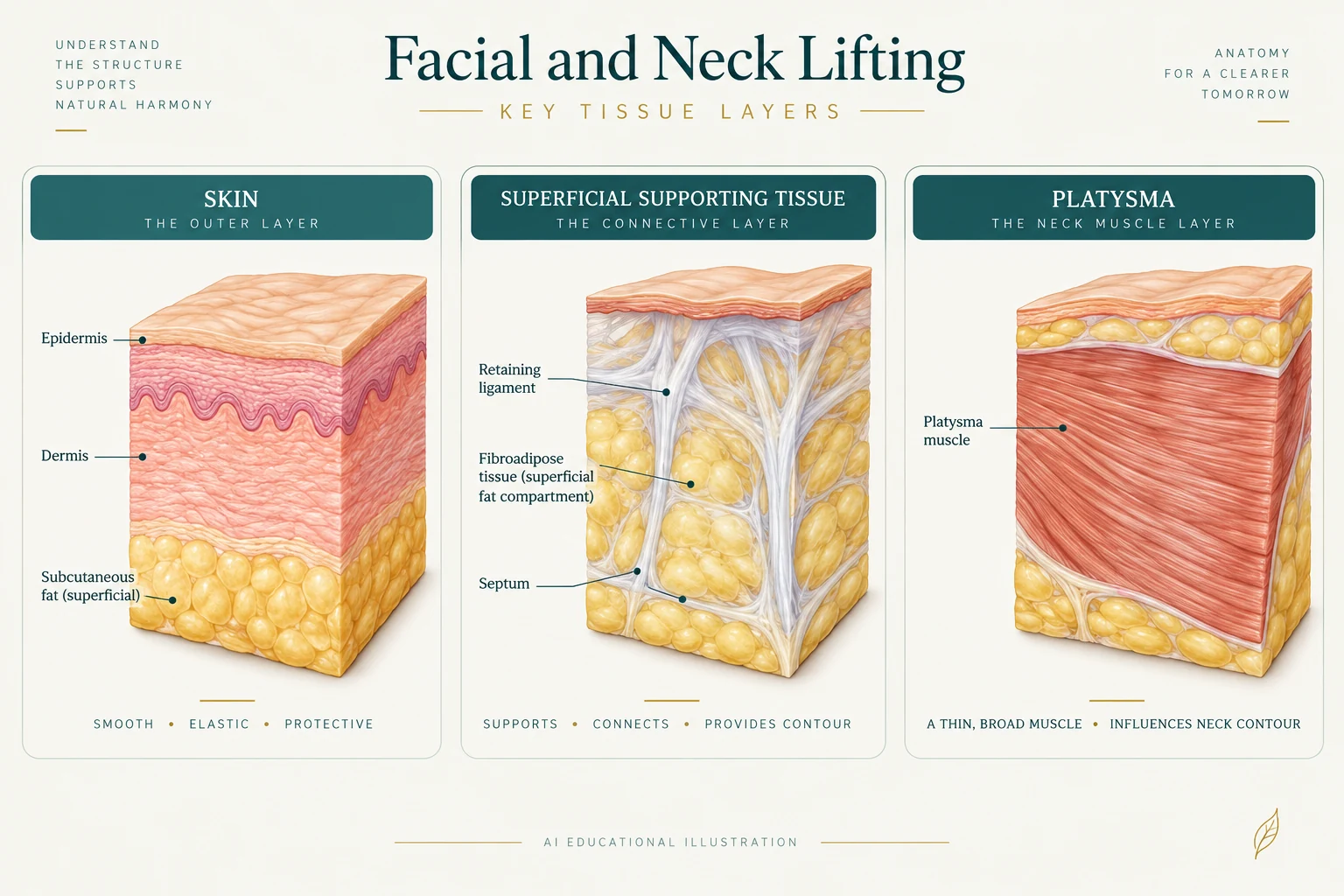
Compare real options, not procedure names
At the appointment, ask which finding makes the recommended lifting approach suitable and what tissue would be treated. How does it differ from a thread lift, another DI lifting procedure, a facelift or no operation? What change is realistic, and what concern will remain? The American Society of Plastic Surgeons advises discussing goals, medical history, treatment choices, anesthesia, likely outcomes and complications during a facelift consultation. That general checklist is useful even though it does not define DI Point Lifting.
Ask the surgeon to describe likely scar locations and the limits of any “small incision” claim. Small does not mean scar-free or risk-free. A patient with previous facial treatments may need a different assessment from someone who has had none. Do not book a combined treatment merely because it appears in a travel package; each component needs its own rationale, risks and consent.

Ask for a written medical and travel sequence
Separate the stages: initial inquiry, in-person examination, any tests, final consent, treatment if appropriate, early review, further follow-up and departure advice. The order may change after assessment. Ask who provides anesthesia, where the procedure would take place, whether an accompanying adult is needed and who will answer urgent questions outside clinic hours. If you need language support, confirm what is available for consent and aftercare rather than assuming the same support applies at every visit.
Accommodation near the clinic can make follow-up easier, but reserve a flexible stay rather than a minimum advertised number of nights. Ask the treating team when it expects to see you again and what would delay safe travel. NHS facelift guidance describes recovery and possible complications for a standard facelift; it is not a DI Point Lifting timetable or your medical clearance to fly. The exact return date is an individual clinical decision.

What the proposed procedure should specify
Ask for the exact procedure, tissue planes and included areas. No exact matching line-item price was verified, so a standard facelift or thread-lift fee must not be substituted.
Before consent, ask the clinician to name the operation and alternatives, explain the main objective and limitations, and confirm the person responsible for treatment and postoperative review. A schematic, a price item or a case video cannot establish suitability for an individual patient.
Price confirmation for the named procedure
No exact matching price item was verified in the checked DI 2026 English Price Guide. A price from a similarly named operation is not substituted. Request the exact procedure, package inclusions and current written quotation.
| Procedure | Verified price | Next step |
|---|---|---|
| Point lifting | No exact named price verified | Request a current itemized clinic quotation |
Build a safety and communication plan
Facial procedures may involve swelling, bruising, bleeding, infection, wound-healing problems, asymmetry or changes in sensation or movement; the relevance of each risk depends on the actual technique and personal health. A thread lift has a different risk profile, including possible thread-related problems. Ask the surgeon which complications matter for the proposed plan, what warning signs require urgent assessment and how aftercare will be coordinated once you leave Korea.
Keep a copy of your written instructions, contact details and any operative summary. Before leaving Seoul, ask who will review concerns remotely and when to seek local medical help rather than waiting for a message reply. If a complication occurs, travel plans may need to change. Online images—even real before-and-after photos—cannot establish how you will heal. This article deliberately shows no patient before-and-after case because no exact Point Lifting pair was verified in DI’s designated gallery.
What should an itemized quotation include?
Ask when a final estimate can be issued and whether it includes the consultation, tests, surgeon and facility fees, anesthesia, medication, follow-up and any separate treatment. Discuss what is not included and what happens if the plan changes after examination. Price depends on the individual plan; a travel organizer cannot guarantee a procedure or an outcome from a photograph or a preliminary message.
For the clinic’s own medical information, review DI Point Lifting, its medical-team profile and consultation guide. KOMD’s introduction to Dr. Jung Yun Ik provides further background. KOMD can help you organize questions and a flexible visit; it cannot decide suitability, provide medical clearance or replace the treating team’s advice.
A short checklist to keep with your booking notes
- Describe the concern and provide relevant medical and treatment history.
- Ask what DI Point Lifting would mean in your individual plan and which alternatives were considered.
- Confirm anesthesia, scars, risks, emergency contact and written aftercare.
- Leave flights and accommodation changeable until the clinic explains follow-up and departure advice.
- Request a complete written estimate rather than relying on a headline price.
Suitability, expected change, cost and recovery vary from person to person. Decide only after a qualified clinician has examined you and explained the options and limitations.
Sources
- DI Plastic Surgery: Point Lifting
- American Society of Plastic Surgeons: consultation and preparation
- American Society of Plastic Surgeons: thread-lift safety
- NHS: facelift risks and recovery
Preparation, aftercare and travel milestones
Before treatment, review previous lifting, threads, fillers or surgery, medicines, allergies and smoking or nicotine use. Ask who performs the procedure, how anesthesia is assessed and what monitoring is planned. Confirm each combined procedure separately.
Get written instructions on dressings, drains if used, wound care, hair washing, compression if prescribed and activity. Ask about expected swelling and when a rapidly increasing swelling, severe pain or other unexpected change needs immediate review. Suture removal and return to normal activity are separate milestones.
Build your stay around wound reviews and the surgeon’s assessment of recovery. Confirm how to contact the clinic after hours and after returning home. A limited-incision operation or a short procedure does not establish a fixed safe flight date.

Risks and symptoms to discuss before consent
Discuss bleeding or hematoma, infection, scarring, asymmetry, sensation changes, nerve-related complications and possible revision. Thread procedures also require discussion of visible or palpable threads, dimpling and removal. Risks vary with the operation actually proposed.
Ask which risks are most relevant to your examination, how complications would be handled, and what alternatives include postponing or not having treatment. Obtain written instructions from the treating team; a general article cannot replace them.
Questions before surgery and travel
Is there a verified fixed price for Point lifting?
No exact matching item was found in the checked guide. Request an individualized written quotation identifying the operation and inclusions.
Who confirms my final treatment plan and quotation?
The treating medical institution confirms suitability, the procedure, consent and the current itemized medical quotation. KOMD helps coordinate information and travel arrangements.
Does an early recovery estimate mean that I can fly?
No. Required reviews, wound or suture care and individual travel clearance must be confirmed by the treating clinician.
Procedure explanations and educational illustrations updated 7 October 2026. DI procedure information. Illustrations are AI-generated concepts, not actual patients or results. Medical decisions and current fees require clinic confirmation.