
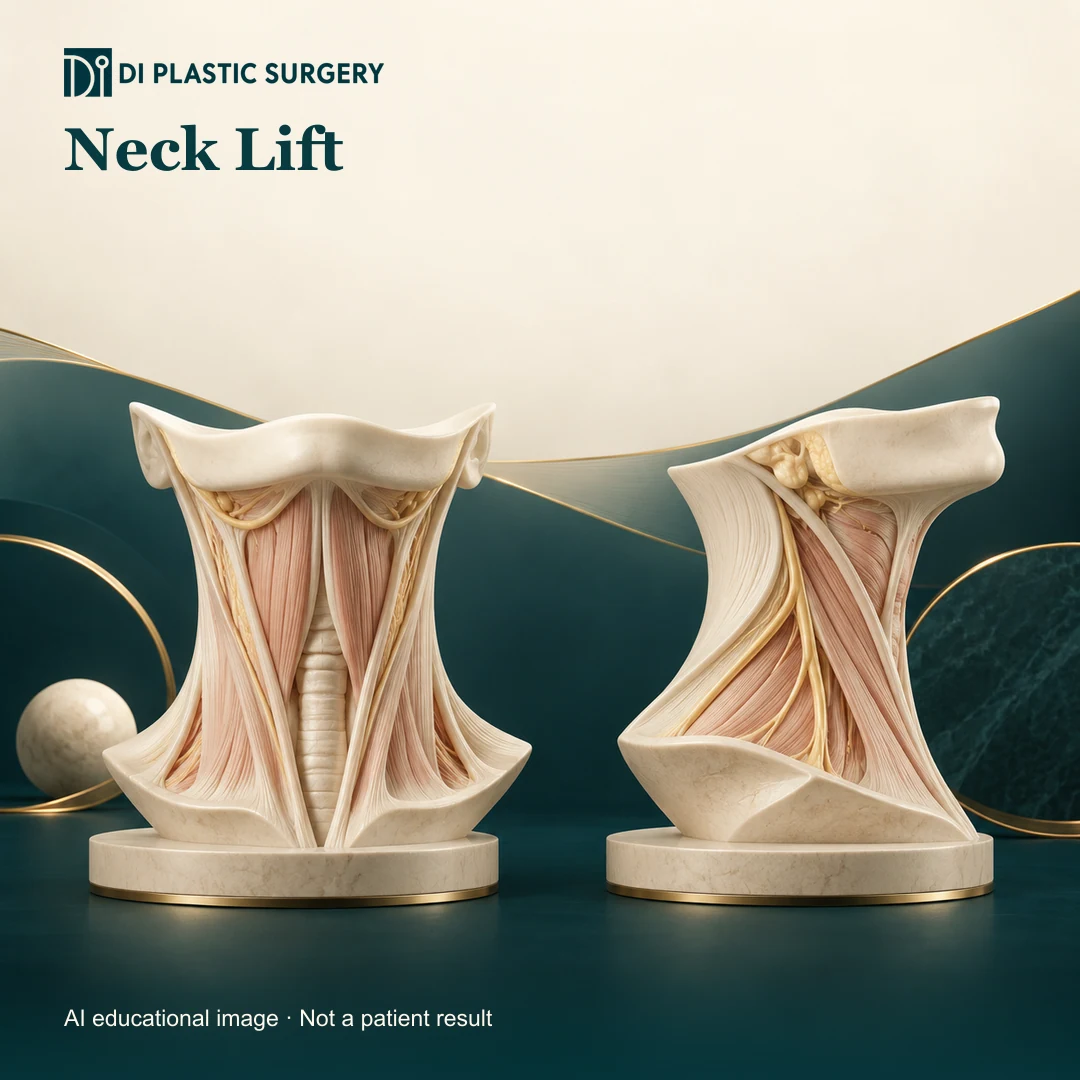
A neck-lift consultation in Seoul raises a practical travel question: can your accommodation, local journeys and departure plans adapt to the neck-care instructions you actually receive? Organize the visit around that question before buying non-refundable tickets. This is a planning guide, not a recommended stay length.
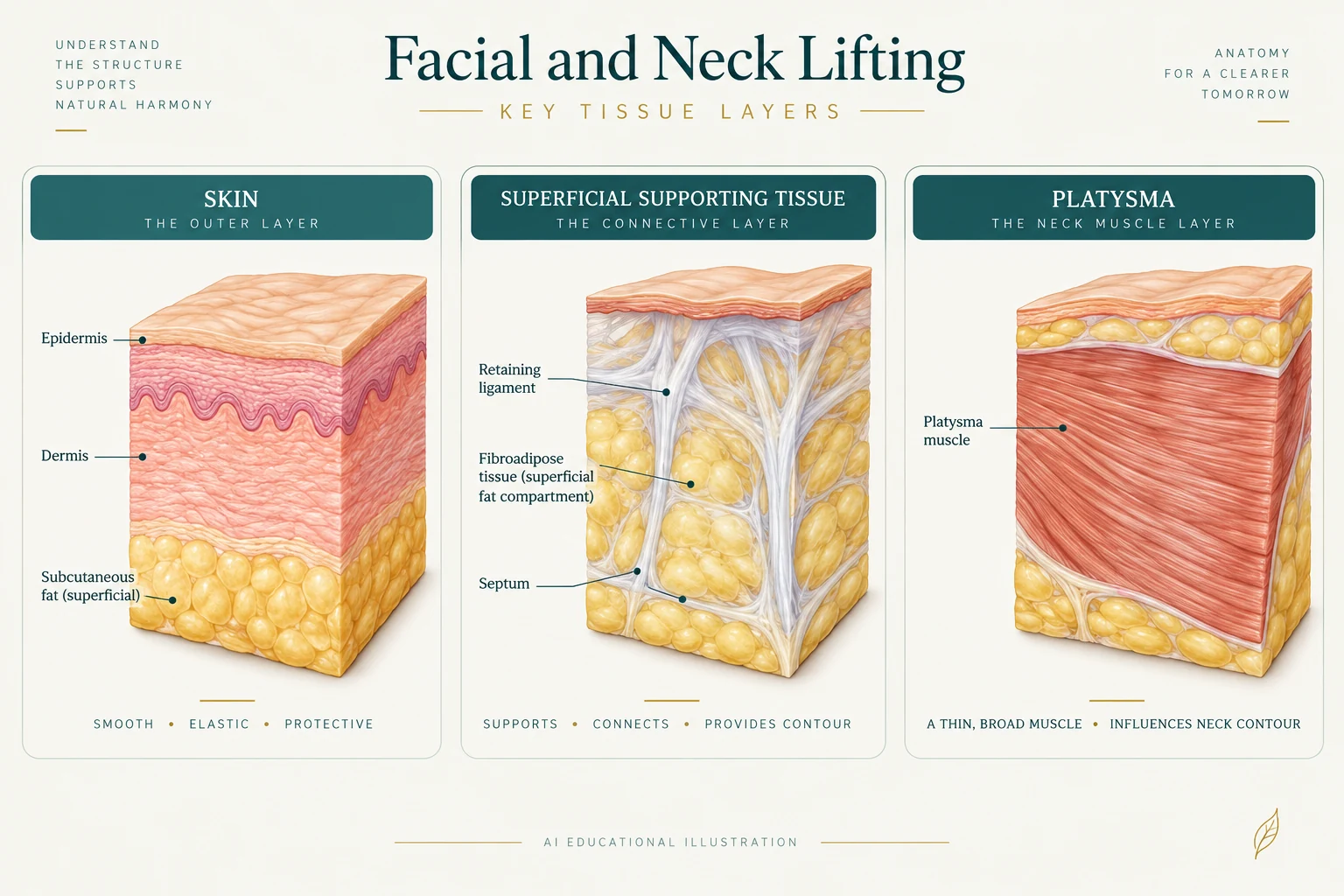
The cover and two planning images in this article are AI-generated illustrations. They do not show an actual patient, postoperative appearance, clinic interior or verified hotel.
First distinguish a consultation trip from a surgical stay
For a consultation-only visit, confirm the appointment, language arrangements and what information the clinic needs in advance. Do not assume an inquiry reserves an operating date or establishes that surgery is suitable. Keep time to consider the assessment without a departure deadline driving the decision.
If surgery is being considered, ask the clinical team for a provisional review schedule and what might change it. DI’s official neck-lift overview lists suture removal and follow-up, but a general visit count cannot be converted into a safe number of hotel nights.
Understanding neck lift
A neck concern can involve excess skin, submental fat, platysma bands or several factors together. Neck lifting should therefore be distinguished from removing superficial fat alone. The assessment also considers the jawline and lower-face relationship.
Discuss whether the plan includes an incision under the chin, near the ears or another approach, and which tissues will be adjusted. A neck add-on during another operation is different from a standalone submental neck-lift plan.
Ask about drains or dressings if relevant, neck movement and compression instructions, and how swelling or an unexpected firm enlargement should be reviewed. The platysma card is a simplified tissue concept rather than an anatomical map of your operation.
Ask for the neck-care plan before selecting a room
Find out whether your proposed operation involves behind-the-ear access, under-chin access or additional procedures. Your questions about washing, dressings, rest and neck movement should relate to that specific plan. Have the team explain any support you would need after discharge and who should provide it.
When comparing accommodation, ask about lift access, a private bathroom, a quiet place to rest, space for a companion and the ability to extend the booking. Check actual facilities rather than relying on an image or the label “medical hotel.” A more expensive room is not necessarily a more practical choice.

Plan short local journeys without promising a transport method
Record the clinic’s confirmed address and entrance, your accommodation address and appointment contact in a form you can use offline. Ask about the route’s steps, walking distance and waiting areas. Check current travel times when you have an appointment; do not build the day around an unverified airport-to-clinic estimate.
After a procedure, ask the team which transport and assistance are appropriate for you. Do not assume you can carry a suitcase, manage a crowded train or drive yourself. Arrange a companion or other support if the team says it is needed, and clarify whether the clinic actually provides any transfer service before counting on one.
What the proposed procedure should specify
Identify the skin, fat and muscle components being treated and whether the price is an add-on or a standalone operation.
Before consent, ask the clinician to name the operation and alternatives, explain the main objective and limitations, and confirm the person responsible for treatment and postoperative review. A schematic, a price item or a case video cannot establish suitability for an individual patient.
Verified DI price guide: KRW, VAT included
Source: DI 2026 English Price Guide, dated 11 September 2026, page 5; checked on 7 October 2026. The guide labels these as general prices in Korean won with VAT included.
These rows are different procedures, packages or add-ons. An add-on is not the full operation price. The guide’s price does not establish which anesthesia, materials, tests, medicines, aftercare or additional procedures are included in your case. Request an itemized current quote before booking.
| Verified item | KRW, VAT included | Price scope |
|---|---|---|
| Neck lift added to another listed operation | KRW 1,200,000 | Add-on only; not a standalone procedure price |
| Submental neck lift | KRW 3,000,000 | Listed procedure fee |
Keep neck care separate from sightseeing advice
Ask for written instructions on movement, sleep, washing and activity, plus the dressing, drain or suture arrangements relevant to your operation. Clarify instructions in your preferred language before leaving the clinic. Do not treat a quiet travel itinerary as permission for exercise, massage or another treatment.
The ASPS neck-lift recovery guidance cautions against applying ice to the neck. Avoid improvising with a hotel ice pack, hot compress or massage; use your treating team’s instructions and ask about uncertainty. A travel guide cannot prescribe your care.

Make departure a review decision, not a fixed countdown
Before committing to return travel, ask which in-person reviews must happen, who will reassess you and how changes would be communicated. Choose flexible flight and accommodation terms where possible. An early improvement in appearance, a suture appointment or the end of a planned holiday does not itself confirm readiness to fly.
Clarify the clinic’s contact hours, urgent-contact route and arrangements after you return home. Ask how to obtain your written treatment and aftercare information for another clinician if necessary. For an emergency in Korea, call 119 or seek emergency care rather than waiting for a travel coordinator’s email response.
Budget for changes and verify the clinical decision
Separate the quoted procedure fee from accommodation, support, transport and potential extensions. Ask what reviews or additional care are included and what could be charged separately. Check the surgeon through DI’s medical-team information and confirm the proposed anesthesia and risk discussion with the clinic.
Neck-lift risks include bleeding, infection, altered sensation, poor wound healing, scarring, asymmetry and nerve injury; other complications also require discussion. Suitability, effects, price and recovery need individual assessment. Use DI’s consultation contacts for clinical questions; KOMD travel planning does not substitute for a surgeon’s advice or guarantee a treatment result.
No neck-lift-only patient photographs are included
On October 3, 2026, the designated DI Before & After gallery search showed case 379 as Neck lift · Thread lift, labeled one week after surgery. This combined case has not been used to imply the result or recovery of a neck lift alone. No unrelated case or generated before-and-after image replaces it.
For other Seoul visit-planning topics, browse the KOMD Journal and procedure information. Treat each visit as an individual plan with clinical decisions made by your treating team.
Sources
- DI Plastic Surgery: neck-lift overview and individual-planning notice
- ASPS: consultation
- ASPS: risks and safety
- ASPS: recovery and care questions
- Korea Tourism Organization: emergency contact numbers
Preparation, aftercare and travel milestones
Before treatment, review previous lifting, threads, fillers or surgery, medicines, allergies and smoking or nicotine use. Ask who performs the procedure, how anesthesia is assessed and what monitoring is planned. Confirm each combined procedure separately.
Get written instructions on dressings, drains if used, wound care, hair washing, compression if prescribed and activity. Ask about expected swelling and when a rapidly increasing swelling, severe pain or other unexpected change needs immediate review. Suture removal and return to normal activity are separate milestones.
Build your stay around wound reviews and the surgeon’s assessment of recovery. Confirm how to contact the clinic after hours and after returning home. A limited-incision operation or a short procedure does not establish a fixed safe flight date.

Risks and symptoms to discuss before consent
Discuss bleeding or hematoma, infection, scarring, asymmetry, sensation changes, nerve-related complications and possible revision. Thread procedures also require discussion of visible or palpable threads, dimpling and removal. Risks vary with the operation actually proposed.
Ask which risks are most relevant to your examination, how complications would be handled, and what alternatives include postponing or not having treatment. Obtain written instructions from the treating team; a general article cannot replace them.
Questions before surgery and travel
Is KRW 1,200,000 the standalone neck-lift fee?
No. It is a neck-lift add-on. The checked standalone submental item is KRW 3,000,000, and the exact plan still needs confirmation.
Who confirms my final treatment plan and quotation?
The treating medical institution confirms suitability, the procedure, consent and the current itemized medical quotation. KOMD helps coordinate information and travel arrangements.
Does an early recovery estimate mean that I can fly?
No. Required reviews, wound or suture care and individual travel clearance must be confirmed by the treating clinician.
Procedure explanations and educational illustrations updated 7 October 2026. DI procedure information. Illustrations are AI-generated concepts, not actual patients or results. Medical decisions and current fees require clinic confirmation.