
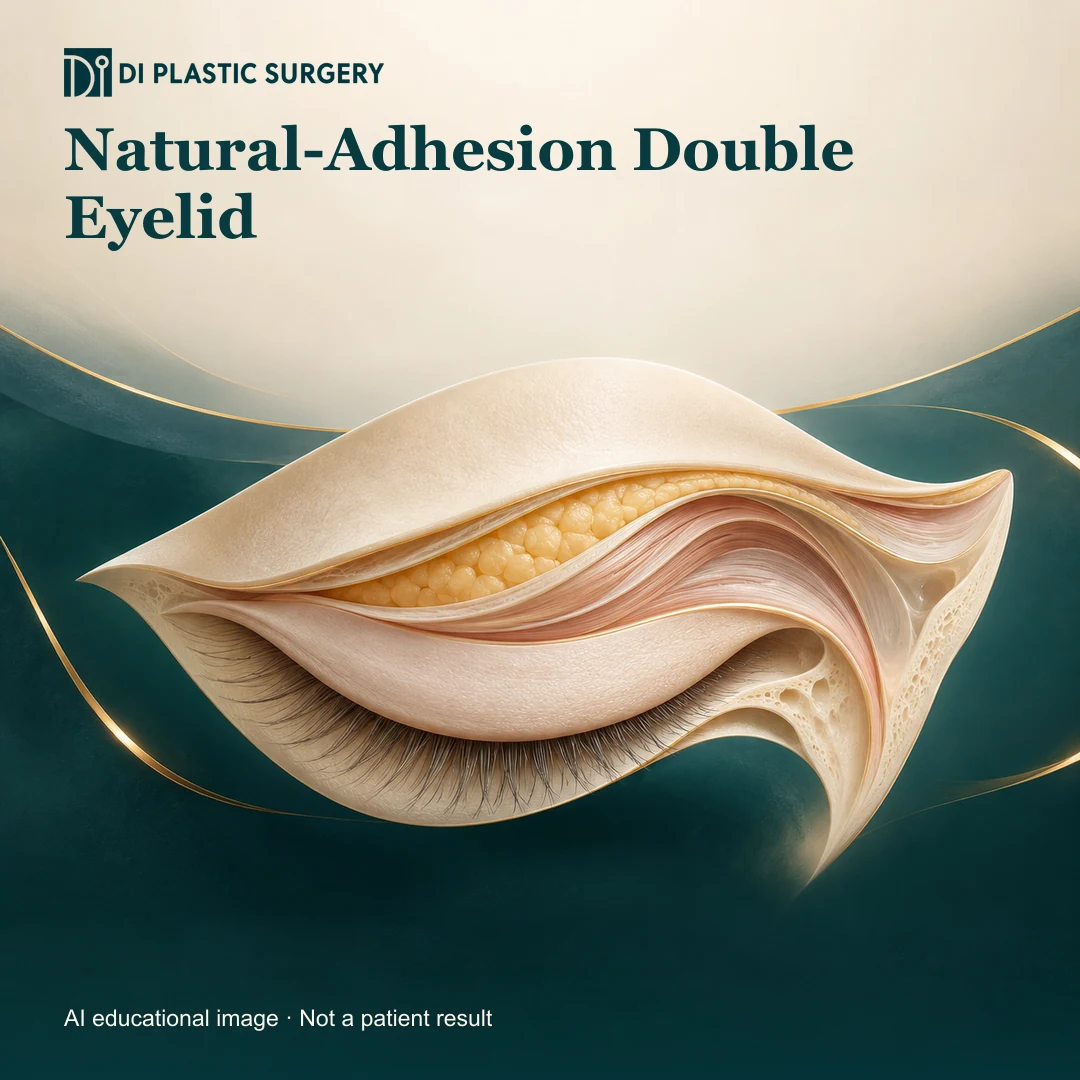
If you are considering natural-adhesion double-eyelid surgery while visiting Korea, start with an assessment and a flexible travel plan—not a promised recovery date. DI Plastic Surgery in Gangnam describes this as a small-opening approach to creating an eyelid crease, but suitability depends on your eyelid anatomy, eye function, prior treatment and goals. This guide focuses on the practical questions an international visitor should settle before booking flights.
AI-generated editorial illustration; the people shown are not patients or clinicians and this is not a result photograph.
Before booking: send the right information
Ask the clinic what information it needs for an initial review. Useful items include your medical and surgical history, current medicines and supplements, allergies, previous eye procedures and any symptoms such as dry eyes or difficulty closing the eyelids. You can describe the crease you hope for, but a reference photograph cannot determine the technique or expected result. The American Society of Plastic Surgeons consultation guidance recommends discussing goals, health conditions, options, anesthesia, risks and likely results with the surgeon.
Do not assume that a “natural adhesion” label means no scar, no risk or a fixed healing period. Ask whether an incisional technique, ptosis correction or no operation is more appropriate. If another procedure is suggested, request a separate explanation of why it is needed and how the plan, fee and follow-up would change. Review DI’s procedure information before the appointment.
Understanding natural-adhesion double-eyelid surgery
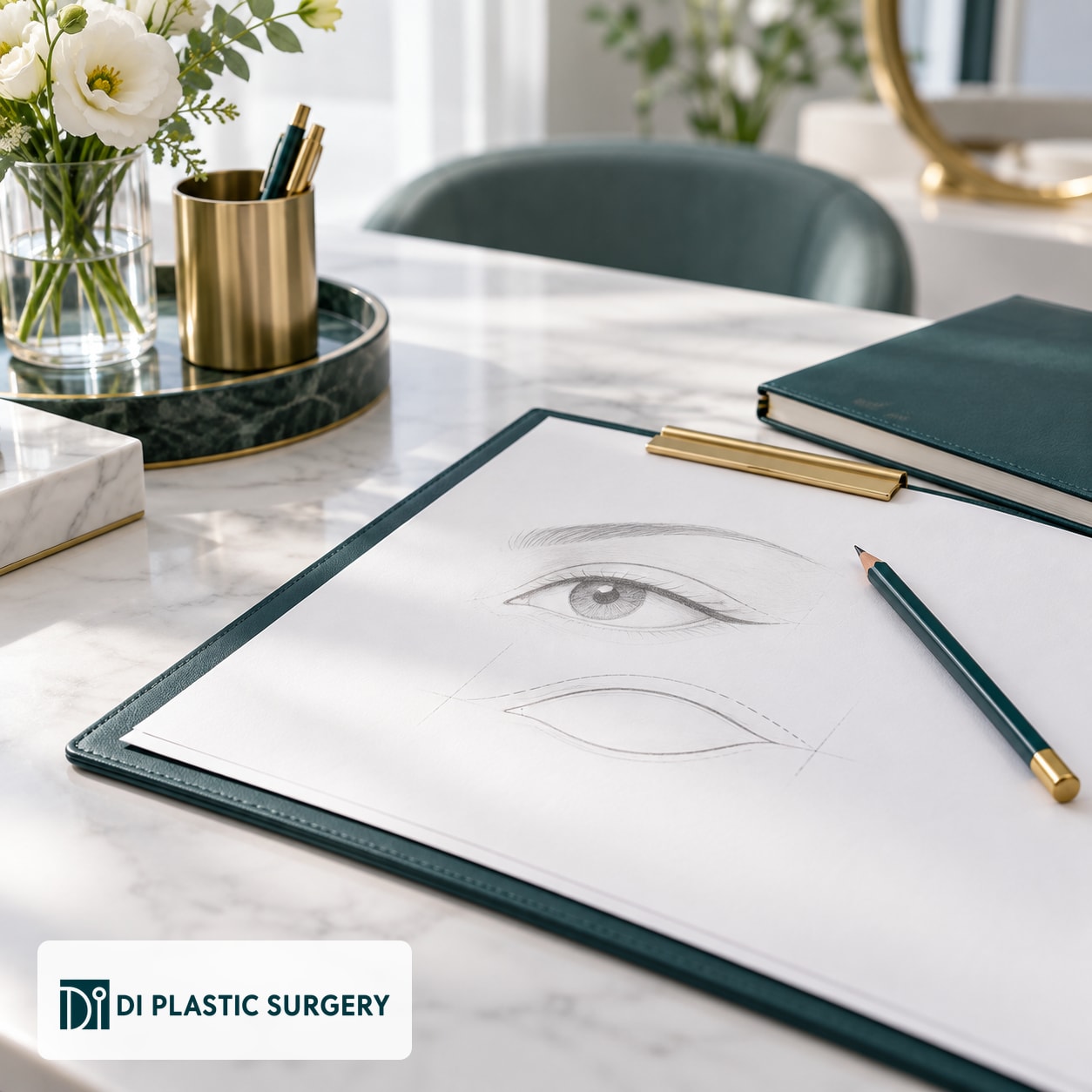
Natural adhesion is a clinic term for a double-eyelid technique intended to establish a crease through attachments between selected upper-eyelid tissues. It does not mean that an operation has no entry points, no swelling, or no risk of a crease changing with time. The illustrated fold shows the concept of tissue attachment, not the exact steps of a particular operation.
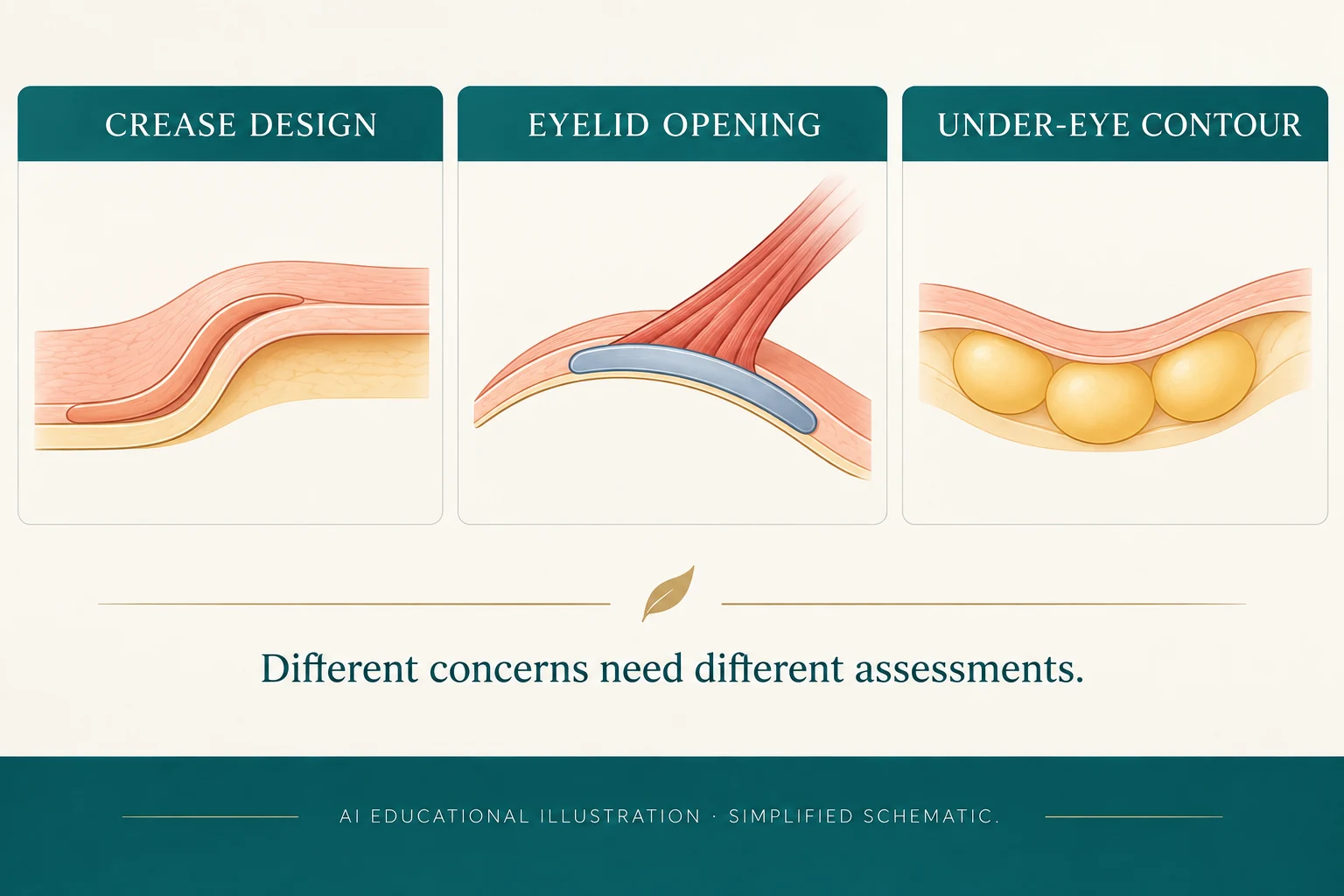
Skin thickness, fat distribution, an existing crease and eyelid-opening function influence whether a limited-access method is appropriate. Excess skin or a need for direct tissue adjustment may lead the surgeon to discuss an incisional alternative. A method should be selected after examination rather than from a name alone.
Discuss the intended crease height and shape on both sides, how pre-existing asymmetry will be handled, and what happens if the crease loosens or does not match the agreed plan. Ask whether a separate ptosis correction or epicanthoplasty is being proposed; those procedures have their own purpose and costs.
Build your itinerary around the consultation
Arrange an in-person examination before treating a proposed surgery date as confirmed. Ask who will assess eyelid-opening function and eye health, which anesthesia options are being considered, whether you may need separate tests, and when a final treatment plan and quotation can be given. Bring your records in a language the clinic can review; ask for interpretation or language support in advance rather than assuming it will be available on the day.
Reserve accommodation and a return flight that can change if the plan or follow-up schedule changes. Ask exactly when the clinic wants to see you again, whether dressings or sutures will need attention, when you may use contact lenses, and who will answer questions after you leave Korea. The clinic’s published timeline is general information, not a clearance to fly. Your treating team must advise on your own travel and activity dates.
Understand risks and aftercare before you travel
Even a procedure described as using small openings is surgery. DI lists bruising, swelling, bleeding, infection, inflammation and pain among possible concerns. NHS eyelid-surgery guidance also discusses dryness, difficulty closing the eyes, scarring and asymmetry; rare serious vision problems warrant clear emergency instructions. Ask what symptoms require urgent assessment, how to contact the clinic after hours, and whether a local clinician can receive your records if needed. Do not stop prescribed medication because of online advice.
What the proposed procedure should specify
Confirm the actual fixation technique, planned entry points, expected follow-up, and the clinic’s policy on crease loosening and revision.
Before consent, ask the clinician to name the operation and alternatives, explain the main objective and limitations, and confirm the person responsible for treatment and postoperative review. A schematic, a price item or a case video cannot establish suitability for an individual patient.
Verified DI price guide: KRW, VAT included
Source: DI 2026 English Price Guide, dated 11 September 2026, page 2; checked on 7 October 2026. The guide labels these as general prices in Korean won with VAT included.
The separately named procedure/package options below span KRW 700,000–1,300,000, VAT included. This range compares different scopes; it is not a promised total for one operation.
These rows are different procedures, packages or add-ons. An add-on is not the full operation price. The guide’s price does not establish which anesthesia, materials, tests, medicines, aftercare or additional procedures are included in your case. Request an itemized current quote before booking.
| Verified item | KRW, VAT included | Price scope |
|---|---|---|
| Natural-adhesion double-eyelid surgery | KRW 700,000 | Listed procedure fee |
| Natural adhesion + upper epicanthoplasty package | KRW 1,300,000 | Listed procedure fee |
What a real gallery case can—and cannot—show
DI’s original Before & After gallery displays case 430 as “Natural-adhesion double-eyelid surgery · Ptosis correction”, with the after image marked 1 month after surgery. The two original photographs appear below without generated alteration or a logo overlay. Because the case includes ptosis correction, it is not evidence of natural-adhesion surgery alone. One person’s appearance at one follow-up cannot predict another person’s result or recovery.
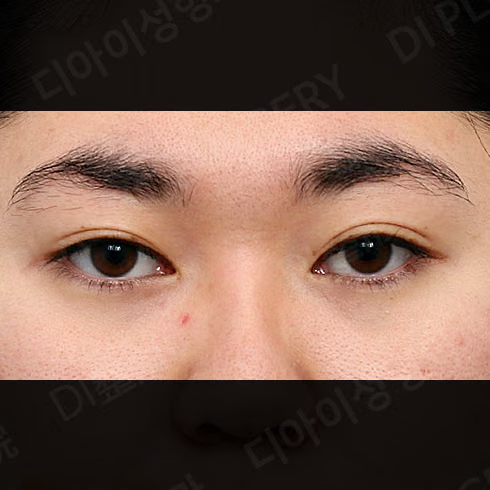
Before
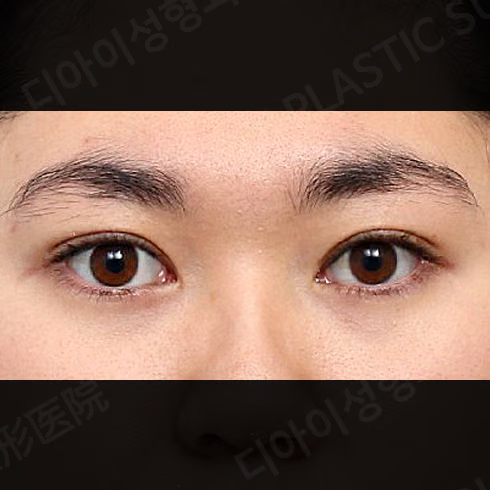
After · 1 month
Take a written checklist to your appointment
Confirm the proposed procedure and alternatives, surgeon, anesthesia plan, risks specific to you, itemized cost, follow-up appointments, emergency contact and whether travel plans should remain flexible. Ask how you can reach the clinic after returning home. For the clinician’s credentials and how an inquiry becomes an examination, see DI’s medical team and consultation guide. KOMD’s role is trip preparation, not a medical assessment. Suitability, outcomes, costs and recovery vary by patient.
Preparation, aftercare and travel milestones
Before treatment, describe dry-eye symptoms, contact-lens use, previous eye procedures, medicines and allergies. Ask which examinations and anesthesia assessment are needed. Do not stop prescribed medicines on the basis of a blog; obtain instructions from the prescribing and treating clinicians.
After treatment, obtain the clinic’s instructions for wound care, eye care, prescribed medicines, sleep position, activity and makeup or contact-lens restrictions. Confirm whether there are removable sutures and when the first examination is due. An initial-recovery estimate does not mean that scars or swelling have fully settled.
For travel, leave time for required in-person review and suture care. Ask the surgeon when flying and strenuous activities are appropriate for your own procedure. Keep the clinic’s contact and emergency instructions available after returning home.

Risks and symptoms to discuss before consent
Discuss bleeding, infection, scarring, asymmetry, dry eyes, difficulty closing the eye and possible revision. Eyelid surgery can also affect lid position or vision. A sudden visual change or severe unexpected eye pain requires urgent medical assessment.
Ask which risks are most relevant to your examination, how complications would be handled, and what alternatives include postponing or not having treatment. Obtain written instructions from the treating team; a general article cannot replace them.
Questions before surgery and travel
Is natural adhesion suitable for every eyelid?
No. Tissue thickness, excess skin and eye-opening function can change the choice of technique. An in-person examination is needed.
Who confirms my final treatment plan and quotation?
The treating medical institution confirms suitability, the procedure, consent and the current itemized medical quotation. KOMD helps coordinate information and travel arrangements.
Does an early recovery estimate mean that I can fly?
No. Required reviews, wound or suture care and individual travel clearance must be confirmed by the treating clinician.
Procedure explanations and educational illustrations updated 7 October 2026. DI procedure information. Illustrations are AI-generated concepts, not actual patients or results. Medical decisions and current fees require clinic confirmation.