
Planning a Seoul visit to discuss a low nasal bridge is different from booking an operation. Use the trip to clarify your priorities, compare the proposed plan and leave room for an individual medical decision. This guide focuses on preparing for the consultation and organizing possible follow-up—not choosing a material remotely or promising a fixed recovery timetable.
Choose the purpose of the visit before the dates
Decide whether this is a consultation-only trip or a visit that might include treatment after assessment. For a consultation-only visit, ask what information can be reviewed in advance and whether a later treatment visit would be needed. For a possible treatment visit, keep the itinerary flexible until the clinician explains the plan and required reviews.
A low bridge, rounded tip and breathing symptoms are separate concerns worth listing individually. Avoid arriving with a preselected graft or implant as the only acceptable option. DI’s low nasal bridge augmentation page discusses bridge and tip considerations, but it does not determine your suitability without examination.
Understanding low nasal bridge augmentation
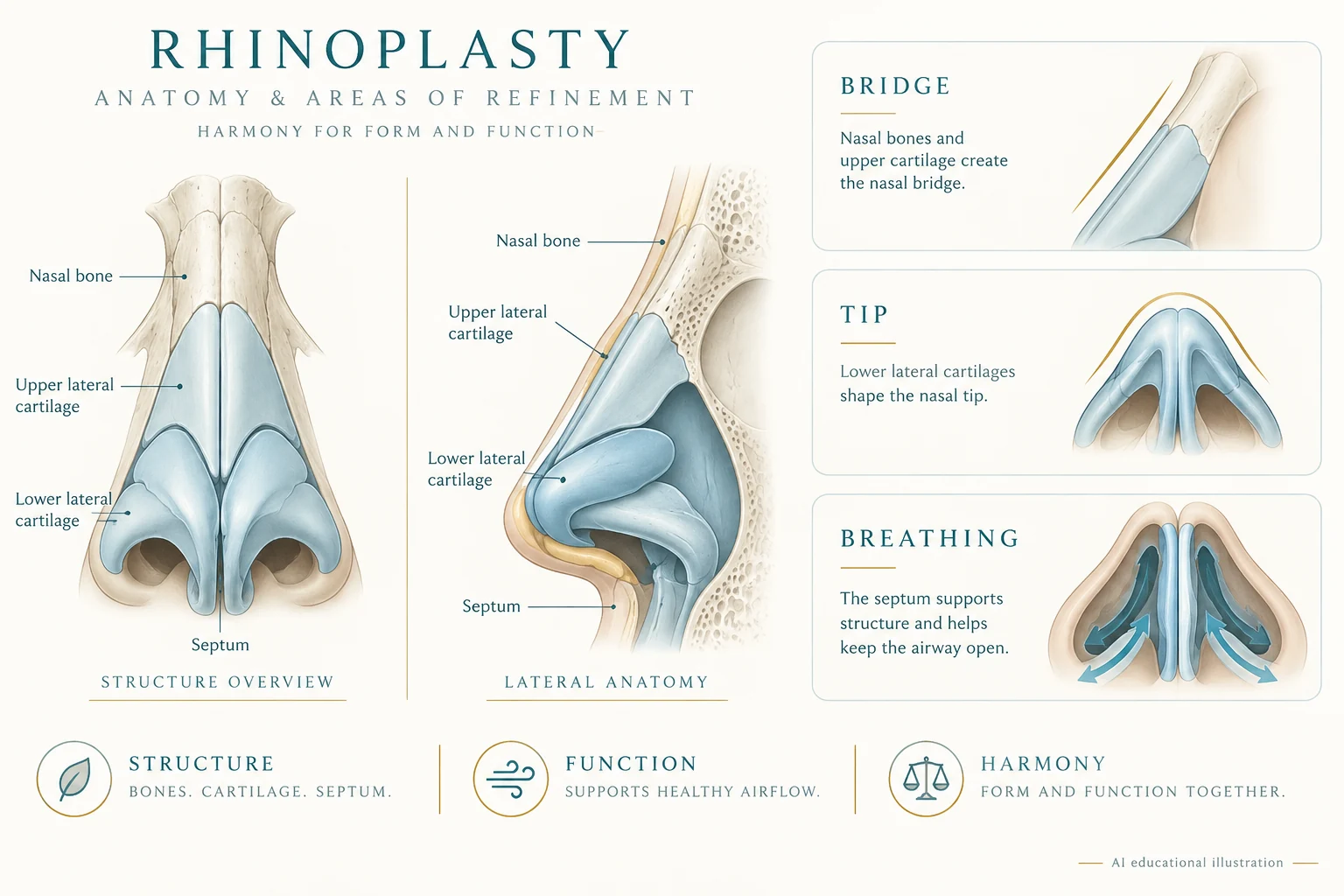
Bridge augmentation aims to change the contour or height of the nasal bridge. The assessment includes the starting point near the forehead, front-view width, skin coverage and the relationship with the tip. A bridge-only preference should still be discussed in the context of the whole nose.
Discuss the proposed material, its location and whether a separate tip-support step is needed. An implant, a cartilage graft and a customized material can have different planning and cost implications. The clinic should name the actual material rather than relying on a broad term such as premium.
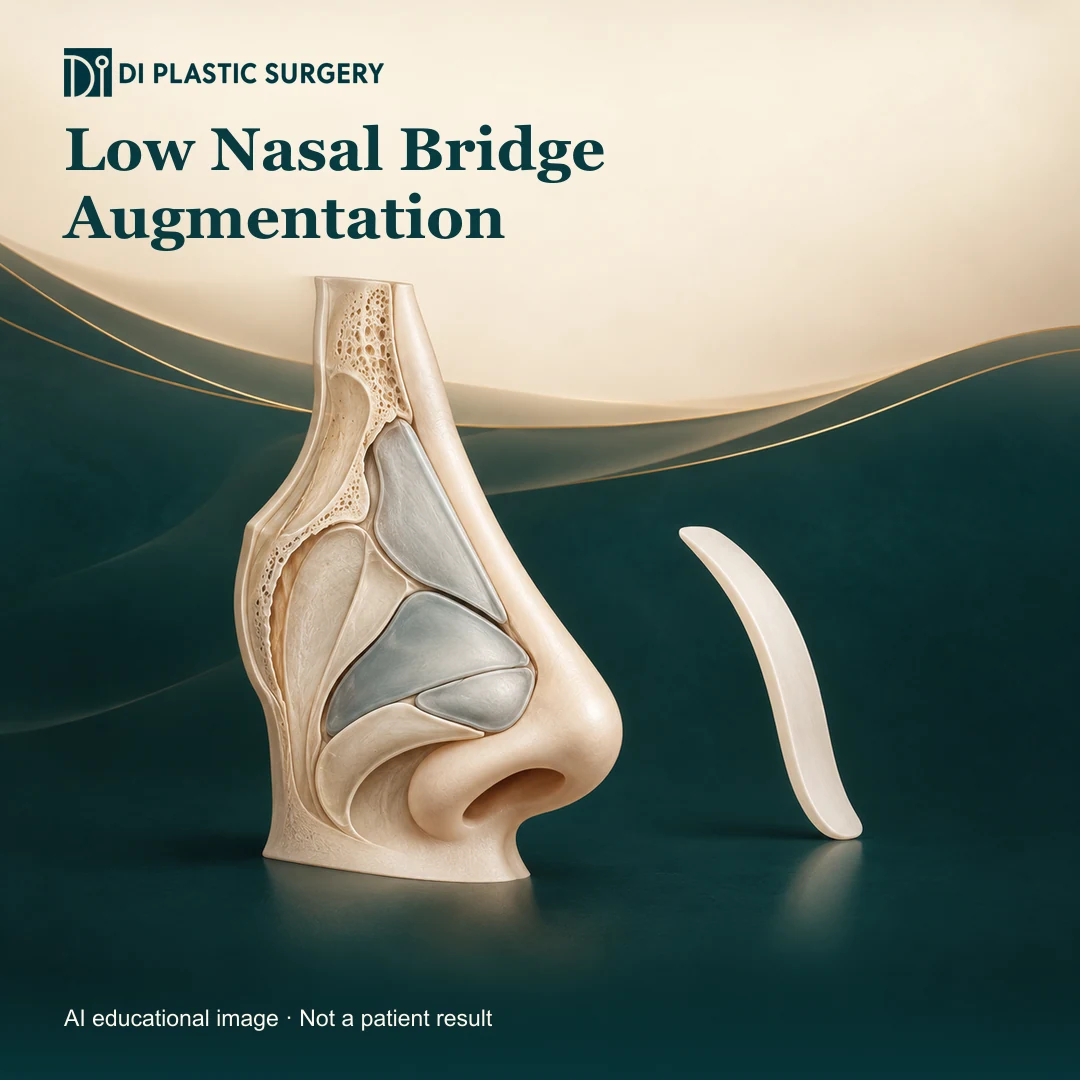
Ask how the selected height fits the available soft tissue and how a material problem would be managed. The illustration is a simplified explanation of bridge and tip relationships and does not specify an implant size or represent the outcome of an actual patient.
Pack useful records, not a promised profile
Prepare your medical history, allergies, medication and supplement list, nicotine use and previous procedure details. If you have had nasal surgery or injections, ask the original provider for available treatment records. Share information through the clinic’s agreed channel rather than posting personal medical information publicly.
Write down the change you hope to discuss and the features you would like to preserve. Reference photographs may help communication, but should not become a promise of another person’s appearance. Confirm your preferred language and how questions and consent information will be explained. Review the DI medical-team profile before the appointment.
Leave the consultation with a written plan to compare
Ask which part of the proposal addresses the bridge and which addresses the tip. DI describes implant and autologous tissue options; that is a starting point for questions, not a recommendation for one material. If tissue would be taken from another area, ask how donor-site care would change your stay and daily activity.
Request an itemized estimate explaining the procedure, anesthesia, examinations, follow-up and any donor-site care. Ask what is excluded and what happens if the plan changes after examination. Keep accommodation, transport and an extension contingency separate from the medical estimate. Suitability, expected effect, price and recovery require individual assessment.
What the proposed procedure should specify
Obtain a material-specific plan including alternatives, implant or graft-related risks, removal or revision arrangements, and all separately charged components.
Before consent, ask the clinician to name the operation and alternatives, explain the main objective and limitations, and confirm the person responsible for treatment and postoperative review. A schematic, a price item or a case video cannot establish suitability for an individual patient.
Verified DI price guide: KRW, VAT included
Source: DI 2026 English Price Guide, dated 11 September 2026, page 3; checked on 7 October 2026. The guide labels these as general prices in Korean won with VAT included.
These rows are different procedures, packages or add-ons. An add-on is not the full operation price. The guide’s price does not establish which anesthesia, materials, tests, medicines, aftercare or additional procedures are included in your case. Request an itemized current quote before booking.
| Verified item | KRW, VAT included | Price scope |
|---|---|---|
| Nasal bridge augmentation + tip surgery | KRW 2,800,000 | Listed procedure fee |
| 3D custom nasal implant material | KRW 900,000 | Add-on only; not a standalone procedure price |
| Rib-cartilage bridge graft | KRW 3,000,000 | Add-on only; not a standalone procedure price |
Plan airport transfers and review-day journeys together
Check the appointment location directly with the clinic before selecting accommodation. Think about repeated journeys for review visits, a manageable route from the airport and how you would get help if your schedule changes. Consult KOMD’s journal for other visit-preparation topics, but confirm current routes and arrangements directly before departure.
If treatment goes ahead, ask who can accompany you when required and which transport arrangements are appropriate afterward. Do not assume you will be ready to navigate a busy station, carry luggage or take a flight on a preset date. Your clinical team—not a travel checklist—should advise on discharge, travel clearance and restrictions.
Keep recovery time distinct from sightseeing time
Ask for the planned early reviews, any splint or suture care and restrictions on pressure, glasses and activity. Keep rest periods and possible extra appointments in the itinerary rather than filling every day with excursions. If a splint comes off unexpectedly, contact the clinic; do not reattach it yourself.
Rhinoplasty carries risks including infection, bleeding, anesthesia complications, scarring, altered sensation, breathing difficulty, dissatisfaction and further surgery. Before deciding, clarify warning signs, urgent-care arrangements, after-hours contact and how follow-up will continue after you return home. Unexpected severe pain or symptoms require prompt clinical advice, not waiting for the next travel day.
A gallery case is not a travel or recovery guarantee
The original front-view pair below is Case 659 from DI’s designated Before & After gallery, labelled “Low-bridge rhinoplasty · Bulbous-nose correction” and “1 month after surgery”. It includes more than one procedure. The gallery does not identify the materials used or the person’s travel schedule; neither is inferred here.
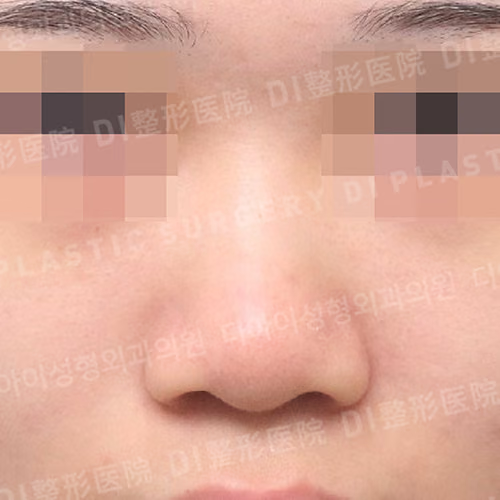
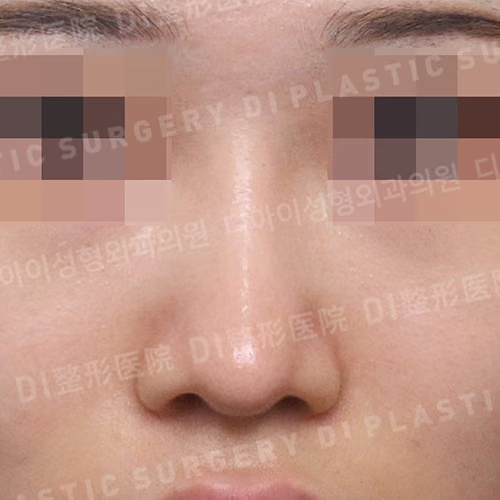
Confirmed label: Low-bridge rhinoplasty · Bulbous-nose correction. Original files and privacy masking are unchanged, with no added overlays, cropping or retouching. One month is an early photographic review, not evidence of finished healing. Results and recovery vary; this case cannot predict your outcome or the length of your stay.
Book the conversation without committing to surgery
When ready, use DI’s individual consultation route to clarify the assessment process and your tentative travel window. You can use a consultation to compare alternatives or decide not to proceed. Allow enough time to understand the plan before making treatment or non-refundable travel commitments.
Sources and scope
This is general preparation information, not personalized medical advice or a guarantee of services, eligibility or results. Sources checked on 1 October 2026: DI procedure information; ASPS consultation guidance; ASPS rhinoplasty risks; NHS rhinoplasty information; and the original DI gallery.
Preparation, aftercare and travel milestones
Before surgery, document previous nose operations, implants or grafts, breathing symptoms and injury history. Bring operative records where available. Review medicines, allergies and smoking or nicotine use with the team, and obtain specific preparation instructions.
Confirm splint, packing and suture arrangements and how to care for them. Avoid manipulating dressings or the nose without instructions. Ask about pressure from glasses, nose blowing, sleeping position and return to exercise. Early swelling can affect the apparent bridge and tip; a day-7 or one-month image is not a final result.
Arrange travel around the clinician’s review schedule, not around a generic blog timeline. Ask what symptoms should prompt immediate contact, when flying is suitable and how subsequent follow-up will continue after returning home.

Risks and symptoms to discuss before consent
Discuss bleeding, infection, scarring, asymmetry, breathing changes, material or graft concerns and possible revision. If cartilage harvesting is planned, discuss donor-site risks separately. Unexpected severe symptoms require assessment rather than comparison with an online photograph.
Ask which risks are most relevant to your examination, how complications would be handled, and what alternatives include postponing or not having treatment. Obtain written instructions from the treating team; a general article cannot replace them.
Questions before surgery and travel
Are all bridge materials included in the base line item?
The guide has separate material and graft add-ons. Ask the clinic which ones apply to the proposed plan; do not assume they are included.
Who confirms my final treatment plan and quotation?
The treating medical institution confirms suitability, the procedure, consent and the current itemized medical quotation. KOMD helps coordinate information and travel arrangements.
Does an early recovery estimate mean that I can fly?
No. Required reviews, wound or suture care and individual travel clearance must be confirmed by the treating clinician.
Procedure explanations and educational illustrations updated 7 October 2026. DI procedure information. Illustrations are AI-generated concepts, not actual patients or results. Medical decisions and current fees require clinic confirmation.