
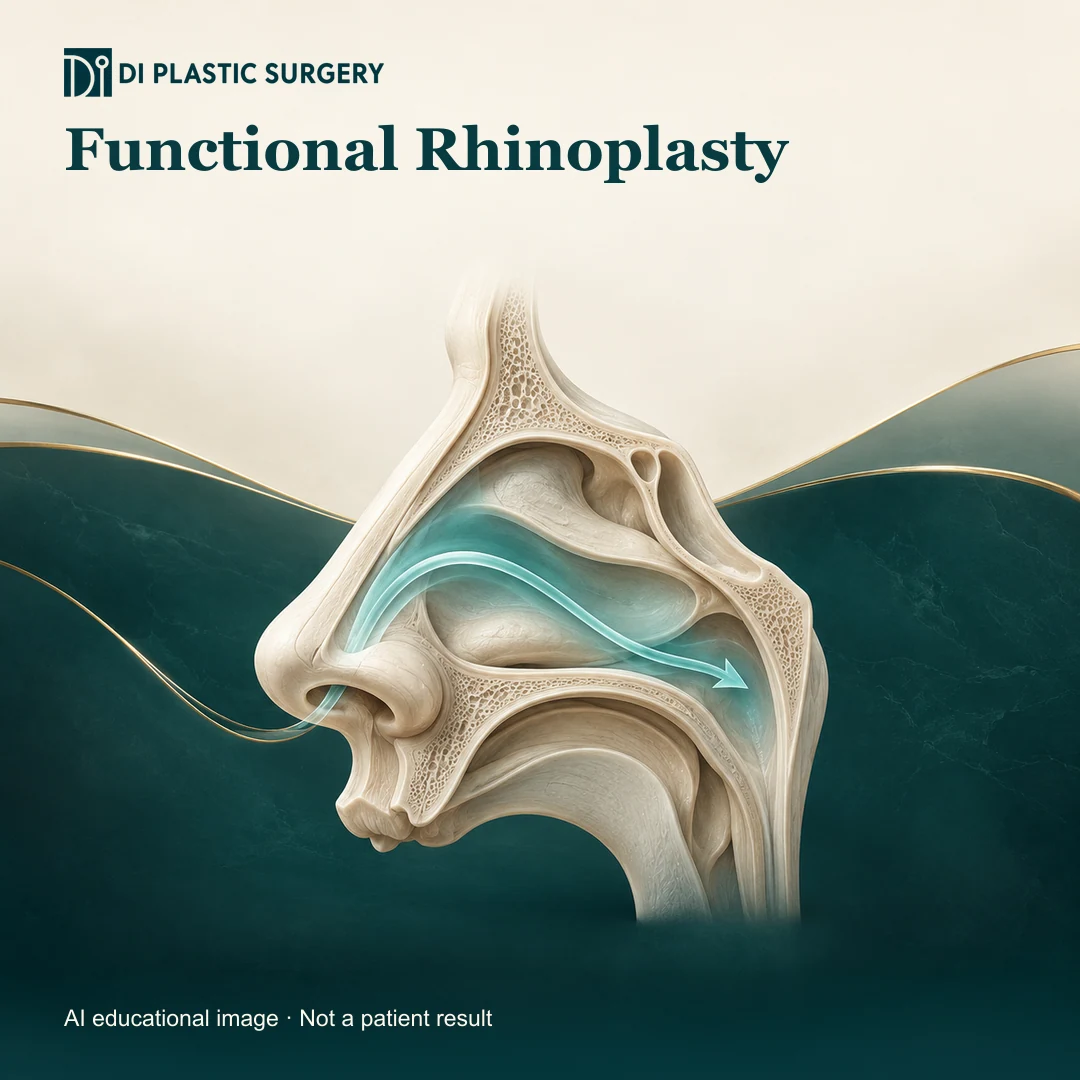
Reviewed September 28, 2026. If you are travelling to Seoul because your nose feels blocked, begin with a medical assessment—not a surgery date. “Functional rhinoplasty” describes a possible operation directed at nasal breathing, but an online description cannot establish the cause of obstruction or whether an operation is right for you.
AI-generated educational scene; not a DI clinician, patient, or real consultation.
Before you book: document the breathing concern
Write down when symptoms began, whether one or both sides are affected, and whether they change with seasons, exercise or sleep. Note allergies, trauma, earlier nose surgery, medications and prior treatments. This history helps the evaluating clinician distinguish possible structural issues from other causes. It does not diagnose the problem. If symptoms are severe or rapidly worsening, seek appropriate medical care rather than waiting for a travel consultation.
Bring any previous operative notes or scans if you have had nasal surgery. Do not send sensitive records through an unverified channel. Ask the clinic which secure method it uses and whether an ear, nose and throat assessment may be needed.

Understanding functional rhinoplasty
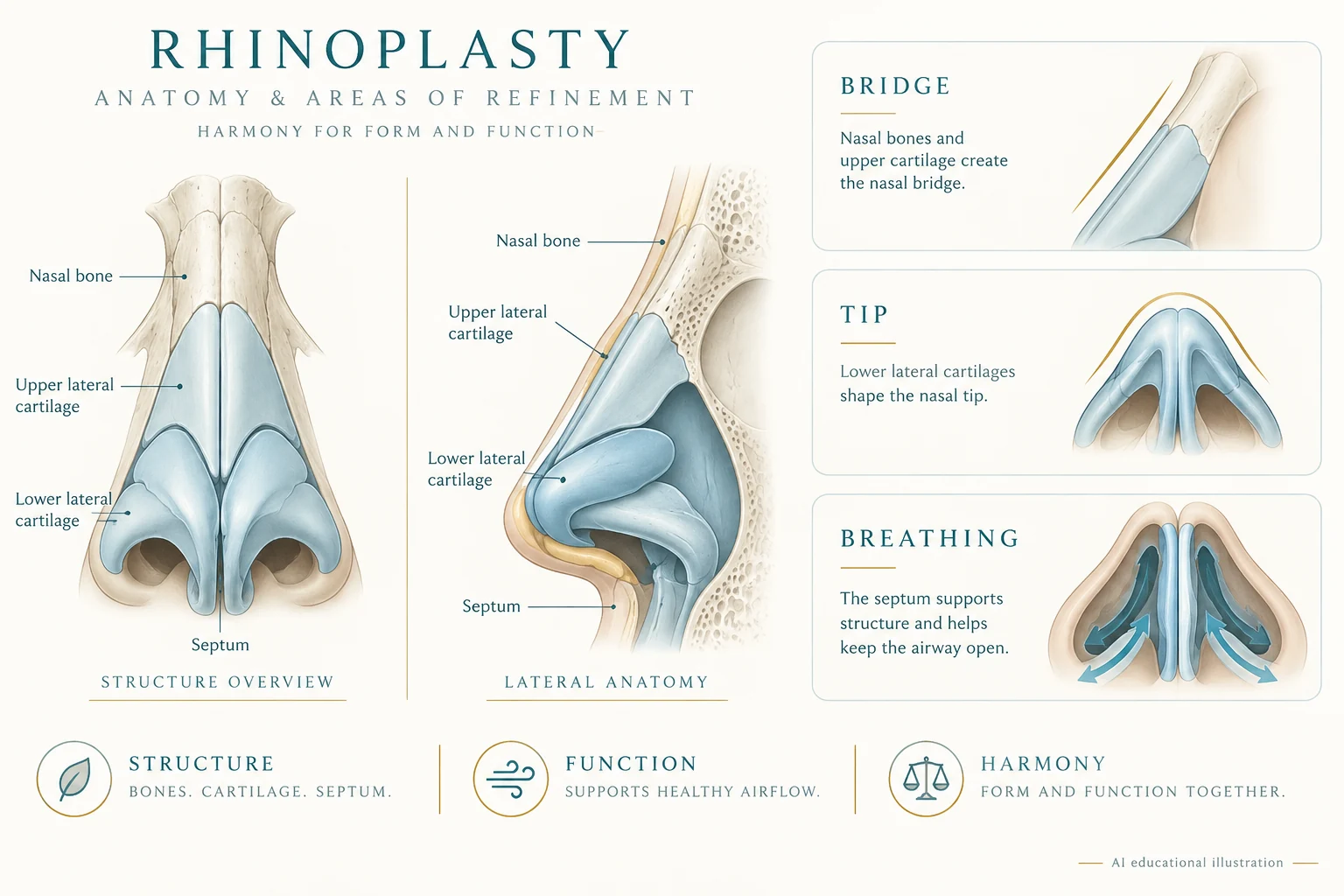
Functional assessment asks what contributes to restricted nasal breathing. The septum, nasal valves and turbinates are different structures; allergy or other conditions can also affect symptoms. Cosmetic shape concerns and breathing concerns can coexist but are not interchangeable diagnoses.
The proposed operation should identify the structure being treated and why that treatment is expected to address the diagnosed problem. Septal correction, turbinate treatment and nasal-valve correction are distinct line items in the verified price guide. An attractive external profile does not establish a normal internal airway.
Tell the clinician when obstruction occurs, whether it is one-sided, and what treatments or previous operations have been tried. Ask whether further examination or referral is needed, which functional steps are included, and how breathing will be reviewed after healing.
What to clarify at the in-person consultation
Ask what examination can identify the likely source of obstruction, whether non-surgical treatment is appropriate, and how any proposed surgery would address the specific finding. If you also want a change in appearance, discuss that as a separate goal. The American Society of Plastic Surgeons’ consultation guide includes both breathing and appearance goals, medical history, previous operations, available options and risks.
DI Plastic Surgery lists functional rhinoplasty among its procedure topics and provides a separate consultation guide. Those pages can help you prepare questions, but they cannot confirm eligibility, technique or price before examination.
Travel timing must follow the medical plan
Ask how many appointments would be needed before and after any procedure, who will review your breathing during recovery, and what symptoms warrant urgent attention. Keep your accommodation and departure flexible until the treating team gives individual advice. A generic “one-week trip” or splint-removal photo is not a flight clearance.

A Cambridge University Hospitals septorhinoplasty guide explains that early nasal blockage can occur and gives its own patients follow-up and travel restrictions. Its timing should not be treated as DI’s protocol or as an individual clearance for you. Ask your own clinician when travel is safe after the exact treatment chosen.
What the proposed procedure should specify
Keep functional and cosmetic steps separate in the consent and quotation; do not assume insurance eligibility or combined pricing from the procedure name.
Before consent, ask the clinician to name the operation and alternatives, explain the main objective and limitations, and confirm the person responsible for treatment and postoperative review. A schematic, a price item or a case video cannot establish suitability for an individual patient.
Verified DI price guide: KRW, VAT included
Source: DI 2026 English Price Guide, dated 11 September 2026, page 3; checked on 7 October 2026. The guide labels these as general prices in Korean won with VAT included.
The separately named procedure/package options below span KRW 950,000–1,700,000, VAT included. This range compares different scopes; it is not a promised total for one operation.
These rows are different procedures, packages or add-ons. An add-on is not the full operation price. The guide’s price does not establish which anesthesia, materials, tests, medicines, aftercare or additional procedures are included in your case. Request an itemized current quote before booking.
| Verified item | KRW, VAT included | Price scope |
|---|---|---|
| Standalone septal correction | KRW 1,700,000 | Listed procedure fee |
| Inferior turbinate surgery | KRW 950,000 | Listed procedure fee |
| Nasal-valve correction | KRW 1,700,000 | Listed procedure fee |
Budget for uncertainty, not just an operation
Request a written estimate after assessment and ask what it includes: examination, procedure, anesthesia, medicines, follow-up and possible additional care. The final cost may change with the diagnosis and treatment plan. Budget separately for a flexible hotel, local transport, a possible companion, and a changeable flight. Avoid paying for a non-refundable package before your medical questions are answered.
Risks and follow-up at home
The NHS rhinoplasty guide lists bleeding, infection, anesthesia complications and possible persistent or new breathing difficulty among risks. Ask how complications would be managed in Seoul and how records and follow-up information would reach a clinician at home if needed. Surgery can be declined or postponed; no travel itinerary should pressure a medical decision.
For procedure-specific discussion, review DI’s medical team and breathing-focused guide. This KOMD article is travel-planning information, not medical advice or a promised result.
Preparation, aftercare and travel milestones
Before surgery, document previous nose operations, implants or grafts, breathing symptoms and injury history. Bring operative records where available. Review medicines, allergies and smoking or nicotine use with the team, and obtain specific preparation instructions.
Confirm splint, packing and suture arrangements and how to care for them. Avoid manipulating dressings or the nose without instructions. Ask about pressure from glasses, nose blowing, sleeping position and return to exercise. Early swelling can affect the apparent bridge and tip; a day-7 or one-month image is not a final result.
Arrange travel around the clinician’s review schedule, not around a generic blog timeline. Ask what symptoms should prompt immediate contact, when flying is suitable and how subsequent follow-up will continue after returning home.

Risks and symptoms to discuss before consent
Discuss bleeding, infection, scarring, asymmetry, breathing changes, material or graft concerns and possible revision. If cartilage harvesting is planned, discuss donor-site risks separately. Unexpected severe symptoms require assessment rather than comparison with an online photograph.
Ask which risks are most relevant to your examination, how complications would be handled, and what alternatives include postponing or not having treatment. Obtain written instructions from the treating team; a general article cannot replace them.
Questions before surgery and travel
Can a photograph diagnose the cause of nasal obstruction?
No. Symptoms and nasal examination are needed to identify the relevant structure and whether surgery is appropriate.
Who confirms my final treatment plan and quotation?
The treating medical institution confirms suitability, the procedure, consent and the current itemized medical quotation. KOMD helps coordinate information and travel arrangements.
Does an early recovery estimate mean that I can fly?
No. Required reviews, wound or suture care and individual travel clearance must be confirmed by the treating clinician.
Procedure explanations and educational illustrations updated 7 October 2026. DI procedure information. Illustrations are AI-generated concepts, not actual patients or results. Medical decisions and current fees require clinic confirmation.