
Planning facial liposuction in Seoul starts with a follow-up plan, not a return-flight date. If your concern is fullness beneath the chin, ask the treating clinic which appointments, wound checks and possible suture care must happen locally before you commit to travel. A short procedure description is not an individual stay recommendation.
This guide focuses on organizing a trip for an under-chin assessment. It does not recommend surgery or a particular technique. Suitability, expected effects, price and recovery need an individual clinical evaluation.
Separate the consultation trip from the treatment decision
Use your first appointment to establish what is causing the concern and whether fat removal addresses it. Skin condition and the underlying chin contour may raise different questions. The official DI facial-liposuction page describes targeted fat removal; it is not a recommendation for every person who uses the search term double chin.
Before booking non-changeable arrangements, ask whether a consultation-only visit is possible and how a later treatment date would be organized. Leave room to decline or reconsider a proposal. If you are also comparing changes to the chin bone, use the separate chin-surgery consultation-stay guide; the operations are not interchangeable.
Understanding facial liposuction
Facial liposuction concerns selected superficial fat deposits. A contour concern may also involve loose skin, deeper structures or chin projection; removing fat alone does not address every cause of a heavy lower face.
The surgeon assesses which area is being treated and the suitability of the skin envelope. Jawline liposuction is a separate listed item from individual facial areas. Buccal-fat surgery concerns a different fat compartment and should not be treated as an interchangeable liposuction step.
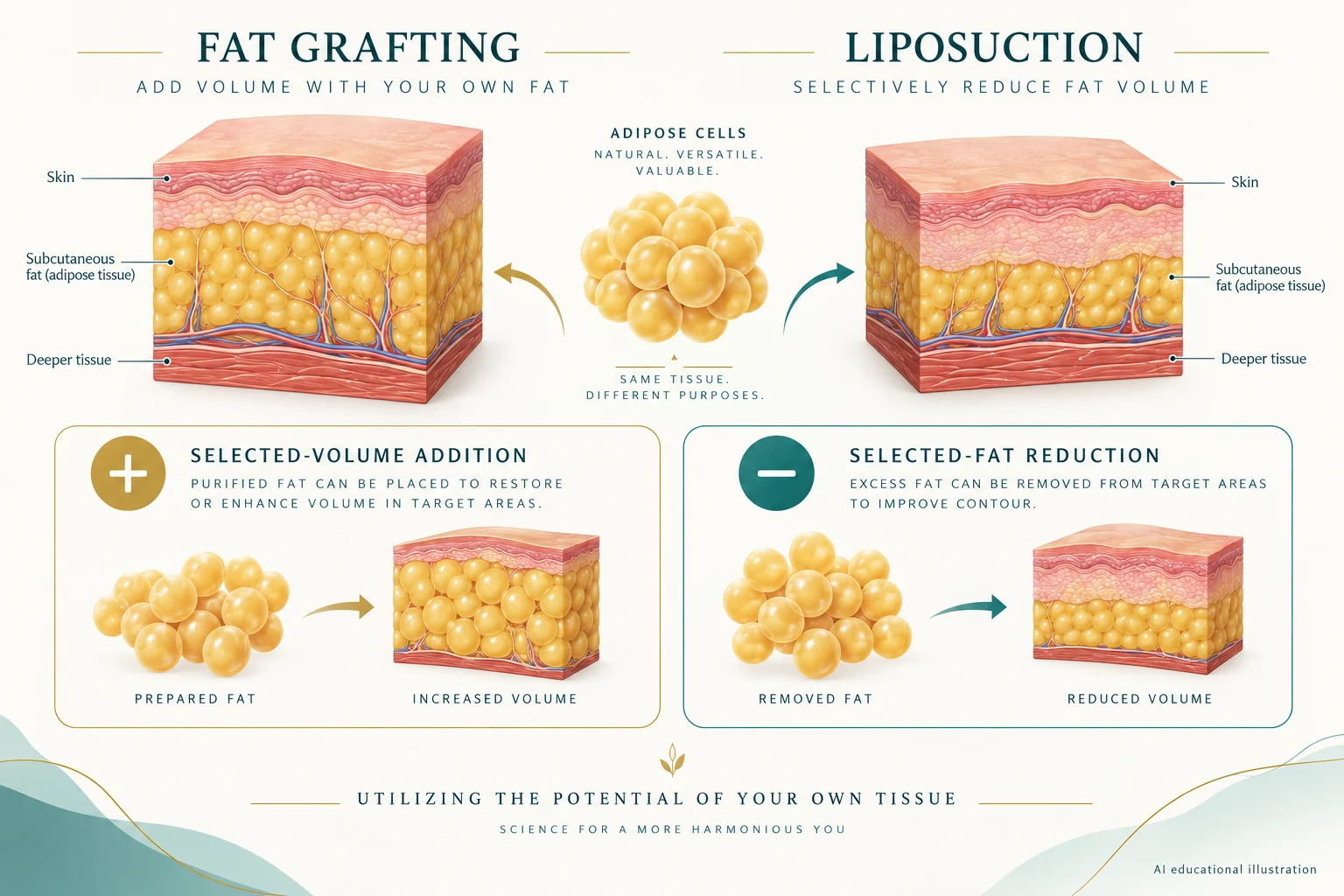
Ask about access points, compression if prescribed, contour irregularity, asymmetry and changes in sensation. The diagram contrasts fat reduction with volume addition and does not establish how much fat should be removed.
Ask for appointment milestones rather than a standard number of days
Request a written outline covering assessment, any required preoperative checks, the proposed procedure if suitable, early review, wound or suture care, and a departure assessment. Ask which steps require your physical presence and which later checks may be possible remotely. Remote messages are not a substitute for an examination when one is needed.
DI’s procedure information includes sutures and follow-up in its overview. Confirm what applies to your exact access sites and method rather than assuming a single visit completes all care. Obtain an alternative plan if a review is delayed, symptoms need investigation or you cannot leave on the tentative date.
Keep the appointment address, confirmed time and contact details together. For every stage, know who gives clinical instructions and who helps with practical arrangements. A travel coordinator cannot clear you for an operation or flight.

Confirm the treatment boundaries before adding procedures
Ask the surgeon to name the specific area being treated. Under-chin liposuction, cheek treatment, a lifting procedure and bone surgery can create different care requirements. If more than one procedure is proposed, request a separate explanation of its purpose, added risks, follow-up and cost. Do not build an itinerary around a broad facial-contouring package name.
The American Society of Plastic Surgeons’ liposuction overview explains that skin quality affects contouring and that liposuction is not weight-loss treatment. Bring appearance questions to consultation without assuming fat removal will solve loose skin. A gallery result cannot establish the right treatment for you.
What the proposed procedure should specify
Confirm the exact named area, number of areas and whether any skin- or muscle-directed treatment is a separate procedure.
Before consent, ask the clinician to name the operation and alternatives, explain the main objective and limitations, and confirm the person responsible for treatment and postoperative review. A schematic, a price item or a case video cannot establish suitability for an individual patient.
Verified DI price guide: KRW, VAT included
Source: DI 2026 English Price Guide, dated 11 September 2026, page 4; checked on 7 October 2026. The guide labels these as general prices in Korean won with VAT included.
The separately named procedure/package options below span KRW 750,000–1,200,000, VAT included. This range compares different scopes; it is not a promised total for one operation.
These rows are different procedures, packages or add-ons. An add-on is not the full operation price. The guide’s price does not establish which anesthesia, materials, tests, medicines, aftercare or additional procedures are included in your case. Request an itemized current quote before booking.
| Verified item | KRW, VAT included | Price scope |
|---|---|---|
| Facial liposuction: forehead, temple, zygoma or cheek; per listed area | KRW 750,000 | Listed procedure fee |
| Jawline liposuction | KRW 1,200,000 | Listed procedure fee |
Plan arrival and local transport around confirmed instructions
Choose accommodation after confirming the clinic address and review appointments. Consider a manageable route, access to meals and the ability to extend your stay. This is a practical checklist, not a claim that a named hotel provides medical recovery services. Ask what support the accommodation actually offers before relying on it.
Confirm the clinic’s arrival, fasting and accompaniment instructions for the proposed anesthesia. Do not treat a general website’s sedation label as your own protocol. Ask who can accompany you afterward, whether an escort is required and how transport should be arranged. A short journey does not remove the need to follow discharge instructions.
Keep luggage and errands manageable and avoid scheduling a demanding sightseeing day around a procedure or review. Travel assistance should remain separate from medical supervision. Have a practical route to urgent care if needed, rather than relying only on a hotel desk or online message.
Prepare for compression and wound care without inventing a regimen
DI’s published aftercare discusses compression, swelling and bruising. Ask whether a garment is prescribed for your operation, how it should fit, when it should be worn and how to keep it clean. Confirm whether the clinic supplies it and what to do if it is uncomfortable or causes an unexpected problem.
Request written instructions for cleaning access sites, washing, medicines, activity and any pressure or massage restrictions. Do not copy another traveler’s garment timetable or add a cosmetic treatment during recovery without clearance. Pack according to the treating team’s instructions, not the props in an illustration.

Keep departure flexible and arrange care at home
The CDC Yellow Book’s medical-tourism guidance highlights postoperative travel risks, including blood clots, and the importance of follow-up arrangements. Ask your treating team to assess your own departure plan. A review appointment or improving appearance alone does not establish fitness to fly.
Request records and care instructions in a language you understand, a contact route for concerns after returning home and a plan for local medical care if needed. Ask what your insurance covers and budget for additional care or an extended stay. Do not delay urgent assessment while waiting for a remote reply.
Liposuction carries surgical risks, not just temporary downtime. The ASPS safety information includes infection, altered sensation, uneven contours and possible revision. Discuss the risks relevant to the proposed area and method and obtain the clinic’s urgent-symptom instructions.
Use one original case as context, not a travel timetable
The original photographs below are designated DI gallery case 013: Double-chin liposuction, Front, with the After image labelled 1 month after surgery. The gallery does not display calendar capture dates, the pretreatment interval, the amount removed or the exact technique. These details are not inferred.
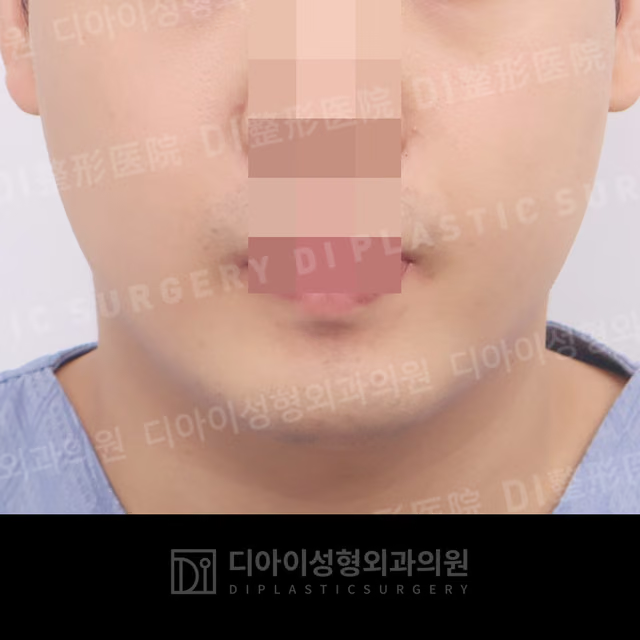
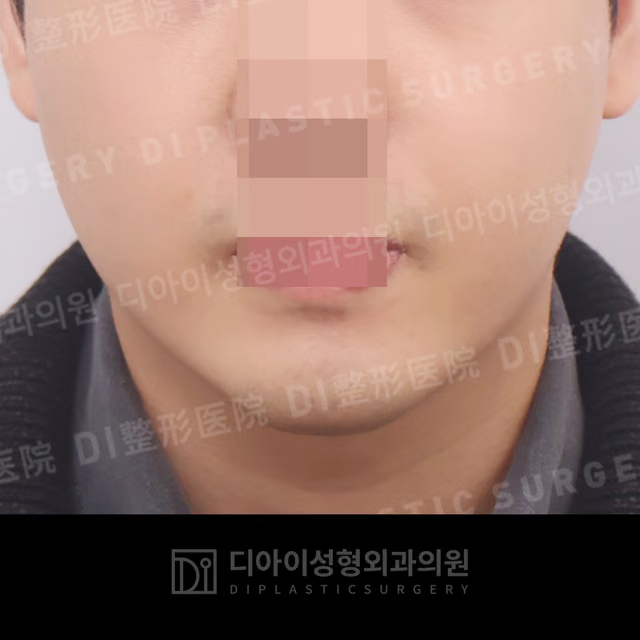
Original photographs and any original privacy masking are retained unchanged, without generated retouching, cropping or added branding. Individual results and recovery vary. A one-month photograph is not proof of completed healing or a prediction of your result. View the original labelled case in DI’s designated gallery. These two photographs are hosted by DI; the three explanatory images in this article are AI-generated and hosted by KOMD.
Send an inquiry that helps organize the next step
State your main concern, preferred language, whether you want consultation only, and your tentative Seoul dates. Ask for the proposed appointment milestones and an itemized estimate separating assessments, surgery, anesthesia, follow-up, optional treatment and travel costs. There is no verified universal package fee or fixed recovery stay in this guide.
Use KOMD’s contact options for practical inquiry routing and the clinic’s individual consultation page for medical assessment questions. Avoid sending medical records or sensitive identification in a general inquiry. Ask how to provide necessary clinical information through the appropriate secure process.
Check DI’s published medical-team information and allow the clinician to assess the plan. Practical support can help organize a visit, but the decision about surgery, aftercare and departure remains an individual medical matter.
Sources and image transparency
- DI: facial-liposuction procedure and care overview.
- ASPS: liposuction overview and limitations.
- ASPS: risks and safety.
- CDC Yellow Book: medical tourism, travel risks and continuity of care.
- DI: original gallery case 013 and displayed follow-up label.
The cover and two planning/editorial illustrations are AI-generated. They do not show a real patient, a real procedure, a physician portrait or a verified clinical record. This guide is educational and does not replace individual assessment.
Preparation, aftercare and travel milestones
Before treatment, identify the exact donor and recipient areas for grafting or the exact fat-reduction area for liposuction. Tell the clinician about previous fillers, threads and surgery. Ask how skin laxity or deeper structures affect the proposed approach.
Get separate care instructions for donor and treated areas, access points, compression if prescribed and activity. Do not massage or put pressure on an operated area unless instructed. Ask how lumps, unevenness or persistent swelling will be assessed.
Confirm the number of intended treatments, what is included in each session and when results will be reviewed. A treatment-count package does not guarantee a retained fat volume. Plan travel around the clinic’s reviews and your individual recovery.

Risks and symptoms to discuss before consent
Discuss infection, bleeding, asymmetry, contour irregularity, sensation changes and possible further treatment. Fat grafting also needs a discussion of donor-site and injection-related risks, including rare serious vascular complications. A sudden visual change or severe unexpected symptom needs urgent assessment.
Ask which risks are most relevant to your examination, how complications would be handled, and what alternatives include postponing or not having treatment. Obtain written instructions from the treating team; a general article cannot replace them.
Questions before surgery and travel
Will fat removal automatically tighten loose skin?
No. Fat, skin laxity and supporting structures are different concerns. The clinician should explain which components the proposed treatment addresses.
Who confirms my final treatment plan and quotation?
The treating medical institution confirms suitability, the procedure, consent and the current itemized medical quotation. KOMD helps coordinate information and travel arrangements.
Does an early recovery estimate mean that I can fly?
No. Required reviews, wound or suture care and individual travel clearance must be confirmed by the treating clinician.
Procedure explanations and educational illustrations updated 7 October 2026. DI procedure information. Illustrations are AI-generated concepts, not actual patients or results. Medical decisions and current fees require clinic confirmation.