
Planning a Seoul visit for cheekbone reduction requires more than finding an available surgery date. If treatment is appropriate after assessment, the trip needs room for mouth care, suitable meals, postoperative reviews and a departure decision made by the treating team. Start with these arrangements before buying non-changeable tickets.
Confirm the procedure before planning the trip
Cheekbone reduction, also called reduction malarplasty, concerns the cheekbone rather than every cause of facial width. Ask which structure the proposed operation addresses and whether an in-person examination and imaging are needed. A virtual discussion can help prepare questions but does not confirm that you need surgery.
DI’s published cheekbone-reduction information describes bone repositioning and fixation, with an incision inside the mouth. Confirm the actual approach, anesthesia and review schedule for your case. A generic facial-contouring package may also include jaw or chin treatment; ask what each component means before treating the package as one appointment.
Understanding cheekbone reduction
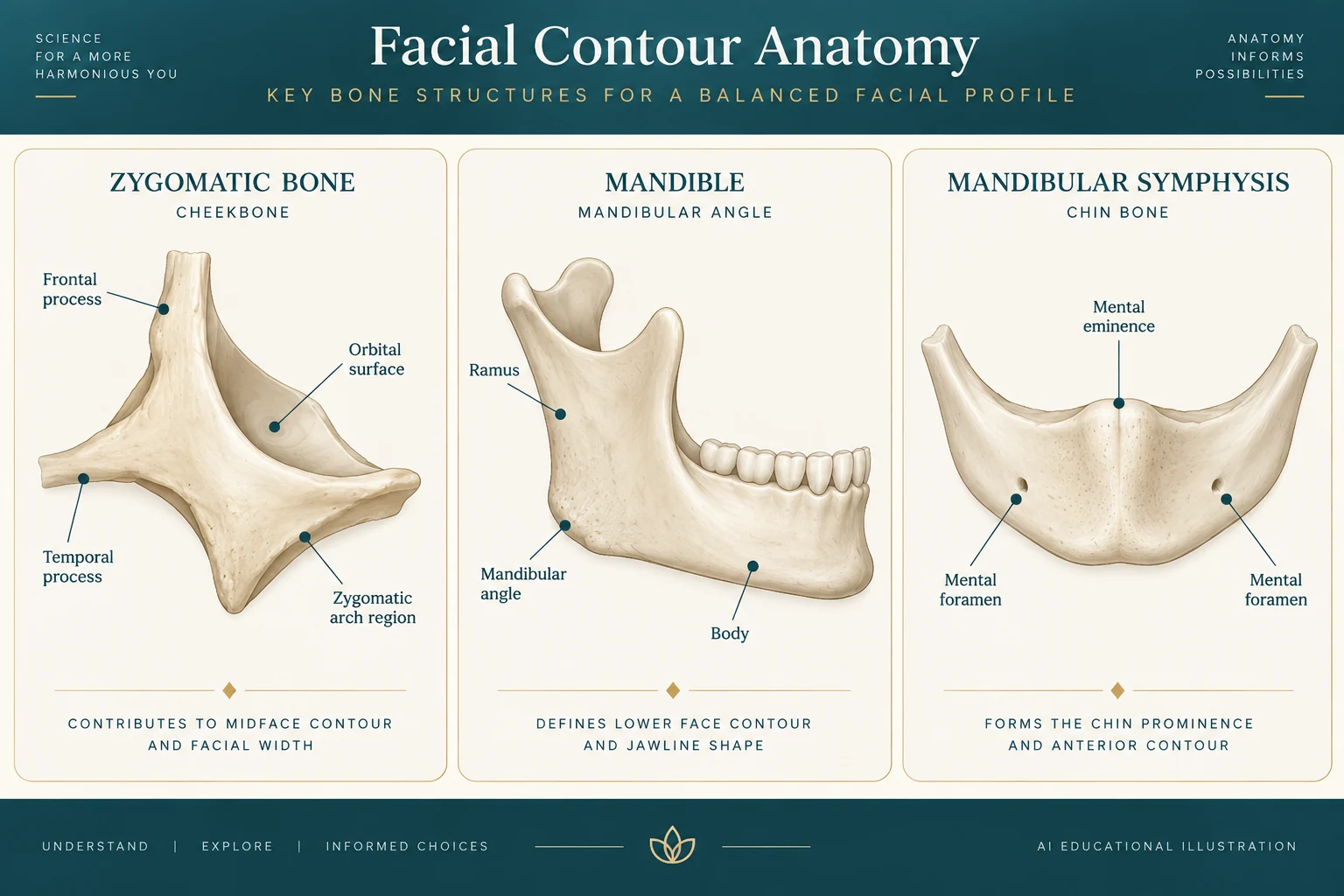
Cheekbone prominence can reflect bone shape, soft tissue or both. The assessment considers front and angled views, asymmetry and the relationship to the lower face. A wide-looking face does not by itself establish a need for bone surgery.
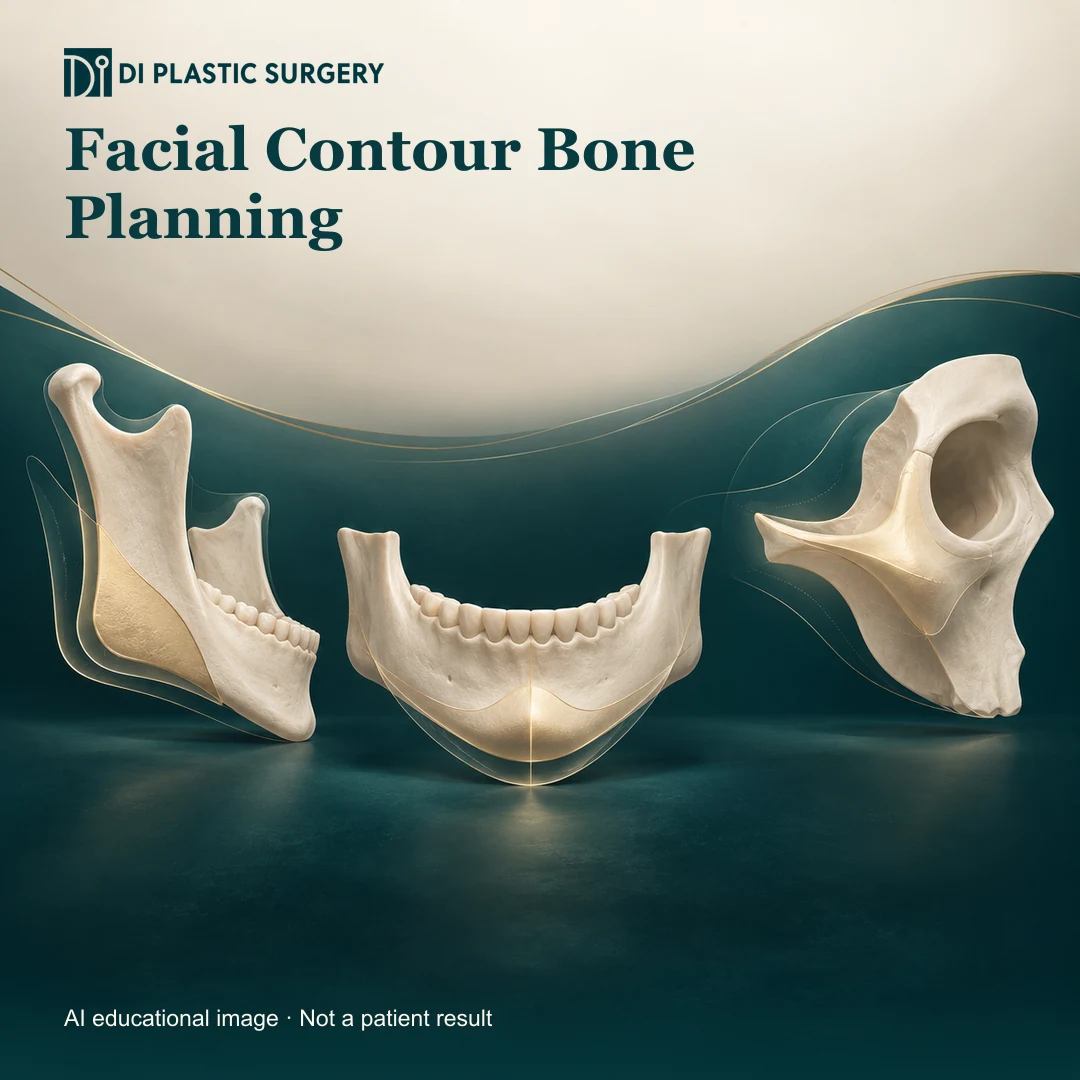
Cheekbone reduction and a shaving-only approach are distinct options in the guide. Ask whether bone will be cut, repositioned or contoured and whether fixation is planned. The isolated bone fragment is a schematic of the region, not a template for a safe cutting line.
The surgeon should discuss soft-tissue support, sensory changes, healing of the treated bone and possible asymmetry. Ask what imaging or dental assessment is needed and how chewing, mouth care and review appointments will be managed.
Arrange the assessment and language support first
In your initial inquiry, identify the concern you want evaluated, previous facial treatment, preferred language and tentative arrival and departure dates. Ask what information can be discussed before travel and what must wait for examination. Do not send complete medical records or identity documents through a general inquiry unless the clinic explains a suitable sharing route.
Ask who will explain the medical plan and consent in a language you understand, and how you will communicate during later visits. A coordinator or driver is not a substitute for the treating clinician. Use DI’s consultation page to request clinic-specific arrangements and the KOMD journal for separate travel-preparation topics.
Reserve time for reviews, not just the procedure
Before making final bookings, request an outline of assessment, treatment if recommended, discharge arrangements, early reviews and the review needed before leaving Korea. Ask what each appointment will check and what could extend the stay. If more than one operation is proposed, confirm how the combination changes these arrangements.
DI’s overview and technique comparison contain different time estimates. They do not establish your number of hotel nights, a guaranteed operation length or fitness to fly. A listed initial-recovery period is not the same as complete healing. Keep accommodation and departure arrangements flexible until the treating team has confirmed a personal plan.
What the proposed procedure should specify
Confirm reduction versus shaving, fixation if relevant, any combined jaw or chin surgery, and the complete perioperative plan.
Before consent, ask the clinician to name the operation and alternatives, explain the main objective and limitations, and confirm the person responsible for treatment and postoperative review. A schematic, a price item or a case video cannot establish suitability for an individual patient.
Verified DI price guide: KRW, VAT included
Source: DI 2026 English Price Guide, dated 11 September 2026, page 6; checked on 7 October 2026. The guide labels these as general prices in Korean won with VAT included.
The separately named procedure/package options below span KRW 1,700,000–3,500,000, VAT included. This range compares different scopes; it is not a promised total for one operation.
These rows are different procedures, packages or add-ons. An add-on is not the full operation price. The guide’s price does not establish which anesthesia, materials, tests, medicines, aftercare or additional procedures are included in your case. Request an itemized current quote before booking.
| Verified item | KRW, VAT included | Price scope |
|---|---|---|
| Cheekbone reduction | KRW 3,500,000 | Listed procedure fee |
| Cheekbone shaving | KRW 1,700,000 | Listed procedure fee |
Choose accommodation that supports your care instructions
Confirm the clinic’s address and any other appointment locations, then check the actual route from the accommodation. Consider elevator access, a quiet place to rest, easy bathroom access and whether the booking can be extended. A room with these features is still not a medical facility.
Ask whether the anesthesia plan requires an accompanying adult and how help after discharge should be arranged. Confirm who can assist with luggage and routine needs, and what that person is not qualified to do. A convenient hotel or airport transfer does not by itself provide postoperative monitoring.
Plan food and mouth care with the treating team
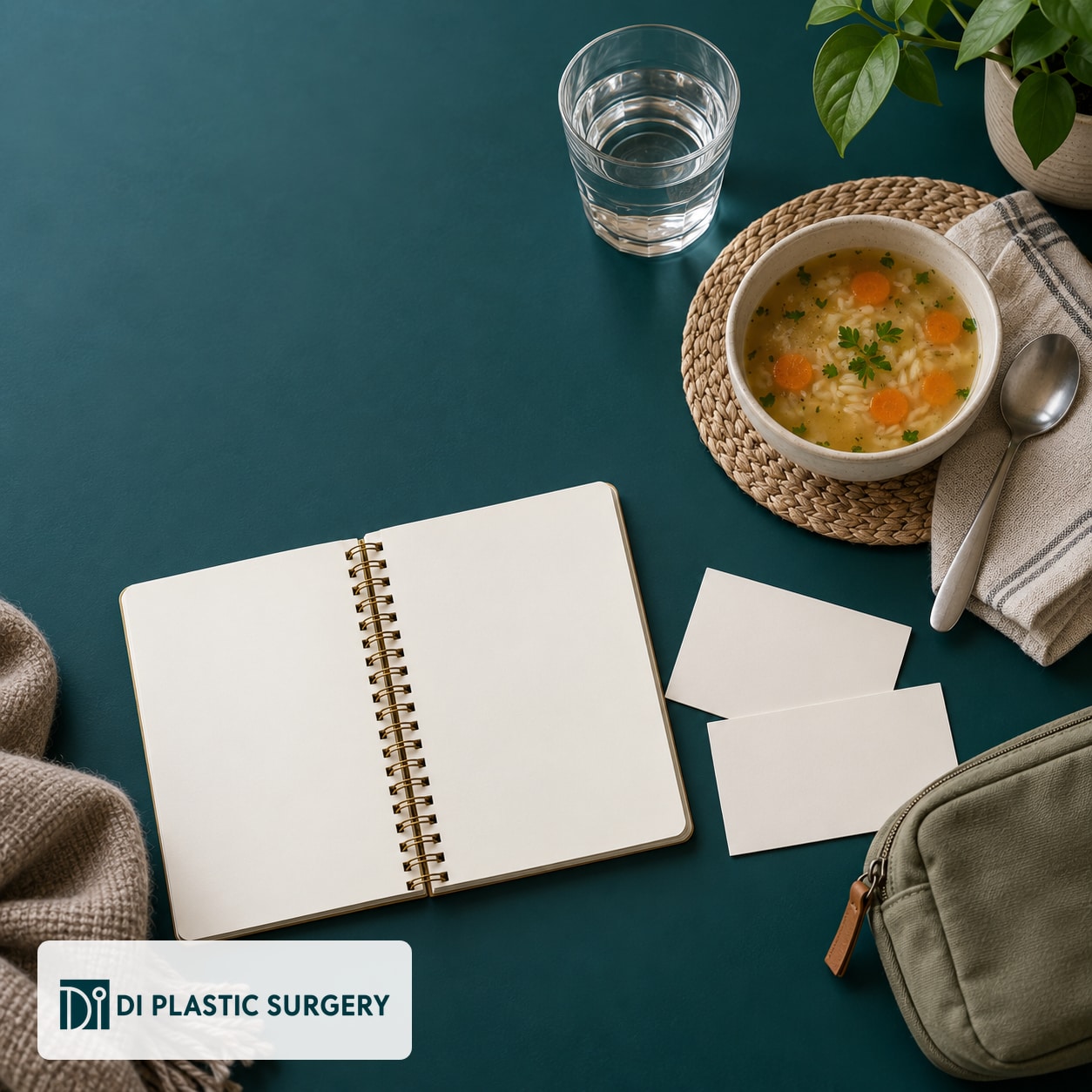
An incision inside the mouth makes diet and oral hygiene practical travel concerns. Ask for written directions on food texture, rinsing, toothbrushing and any prescribed medicines. Confirm what supplies are actually needed before shopping. Do not independently follow an online rinse recipe or a fixed schedule that was written for another patient.
Check whether your accommodation can provide the food the clinician permits or whether suitable delivery or shops are accessible. Explain allergies and dietary restrictions in advance. Avoid building the itinerary around restaurant tasting tours when you do not yet know what you will be allowed or comfortable to eat.
Keep transport simple and protect the treated area
Ask how pressure, accidental impact, strenuous activity and heavy bags should be managed in your own plan. Choose transport and luggage arrangements accordingly. Do not assume that a brief car journey, a crowded subway ride and a long flight present the same demands.
The CDC notes that surgery and air travel can each increase blood-clot risk. Ask the surgeon when flying is appropriate for your condition and whether your airline needs medical documentation. An early follow-up date is not automatic flight clearance. Consider onward travel only after the medical schedule and departure decision are clear.
Know how to obtain help before leaving Korea
Discuss bleeding, infection, altered sensation, restricted mouth opening, asymmetry, bone-healing problems, soft-tissue changes and anesthesia risks with the treating clinicians. This is not a complete list or an assessment of your risk. Ask which symptoms require urgent evaluation and obtain the clinic’s contact route and out-of-hours instructions.
If a serious problem develops, seek appropriate local medical care rather than waiting for a travel coordinator or an online reply. Before departure, request the information your home clinician would need, including the operation details, medicines and follow-up arrangements. Establish who will assess later concerns that cannot be resolved through photographs.
An original six-month pair is not a travel timetable
The comparison below is designated DI gallery case 014, displayed as Cheekbone reduction · Front · 6 months after surgery. Calendar capture dates, the pretreatment interval, operative details and fixation type are not displayed. They have not been inferred.
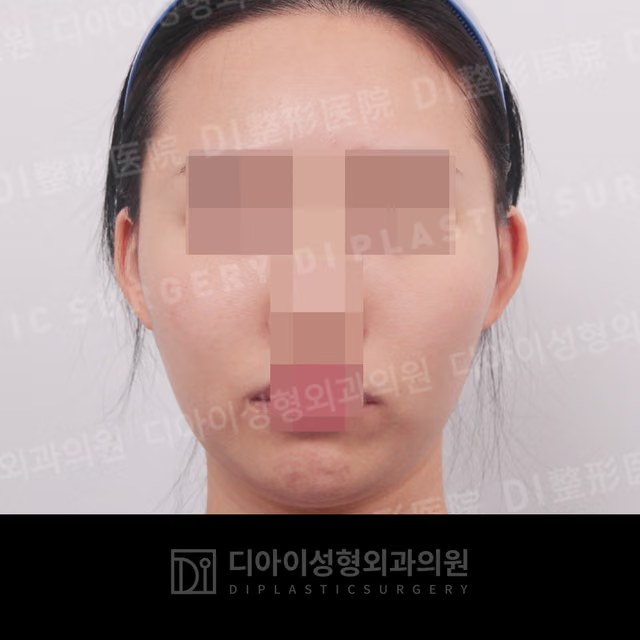
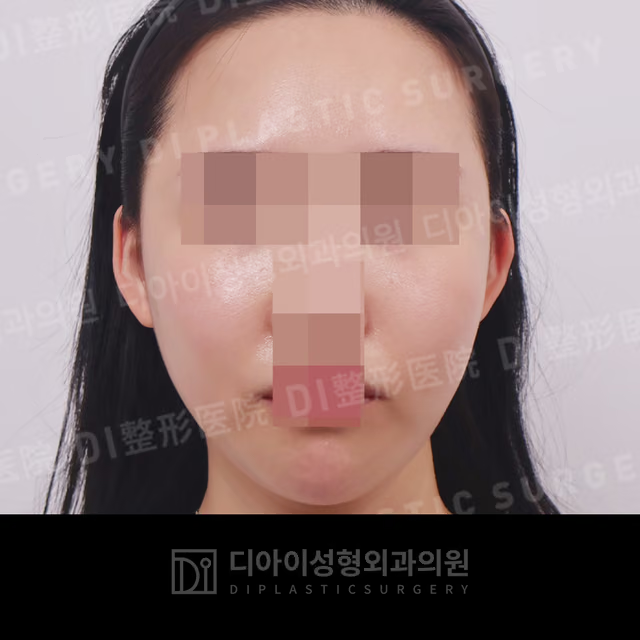
Original unchanged pair; the gallery’s privacy masking and markings are retained. Individual outcomes and recovery vary. The six-month label does not establish how long you should stay in Seoul or predict your result. View case 014 in the designated original gallery.
Settle these points before committing to bookings
- Has the clinician assessed the procedure and any proposed combination?
- Are essential reviews and possible reasons for extending the stay clear?
- Can you follow the personal mouth-care and food instructions at your accommodation?
- Are accompaniment, language support and transport roles separately confirmed?
- Do you know who will make the departure decision and manage later follow-up?
Request separate estimates for medical care, accommodation, transport and any support service, including the terms for changes. Suitability, effects, price and recovery require individual evaluation. Travel planning supports care; it does not guarantee eligibility, safety or a result. You can postpone or decline surgery after consultation.
Sources
- DI: published cheekbone-reduction and care information
- DI: designated original gallery case 014
- Myung et al. (2017): reduction-malarplasty complication meta-analysis
- CDC Yellow Book: medical tourism, air travel and continuity of care
General educational travel planning, not personal medical advice. The three explanatory images are AI-generated; only the explicitly labelled original comparison shows a patient case.
Preparation, aftercare and travel milestones
Before treatment, distinguish bone, muscle and soft-tissue concerns with the clinician. Ask which imaging, dental or other assessments are indicated. Bring previous operative or implant records and review medicines and health conditions before anesthesia planning.
Confirm oral or external wound care according to the chosen incision, dietary instructions, dressings and review appointments. Ask about expected swelling and sensory changes and which symptoms require earlier assessment. An estimate of initial recovery does not establish complete bone or soft-tissue healing.
Schedule follow-up before booking fixed travel. Ask whether any sutures need removal and how chewing, exercise and flight timing should be managed. Keep a copy of the operation and material details for future clinicians if further care is needed.

Risks and symptoms to discuss before consent
Discuss bleeding, infection, asymmetry, changes in sensation and possible revision. Bone procedures require discussion of healing and surrounding nerves; implants require material, displacement and removal discussions. The relevant risks depend on the exact operation.
Ask which risks are most relevant to your examination, how complications would be handled, and what alternatives include postponing or not having treatment. Obtain written instructions from the treating team; a general article cannot replace them.
Questions before surgery and travel
Are cheekbone reduction and shaving the same operation at different prices?
No. The named items describe different approaches. The appropriate technique depends on the examined anatomy and goals.
Who confirms my final treatment plan and quotation?
The treating medical institution confirms suitability, the procedure, consent and the current itemized medical quotation. KOMD helps coordinate information and travel arrangements.
Does an early recovery estimate mean that I can fly?
No. Required reviews, wound or suture care and individual travel clearance must be confirmed by the treating clinician.
Procedure explanations and educational illustrations updated 7 October 2026. DI procedure information. Illustrations are AI-generated concepts, not actual patients or results. Medical decisions and current fees require clinic confirmation.