
Last reviewed: September 28, 2026
Before choosing dates, confirm what needs to be assessed
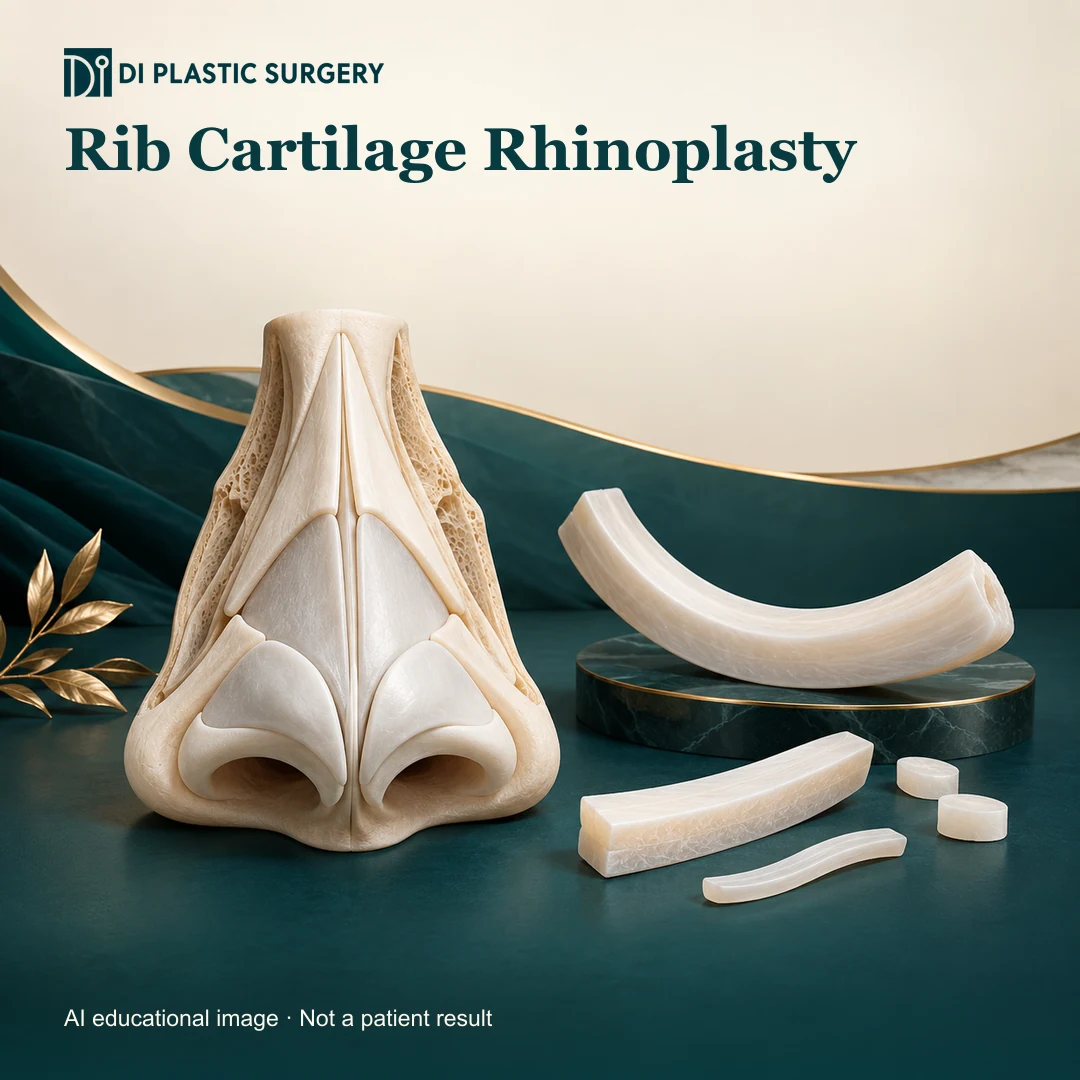
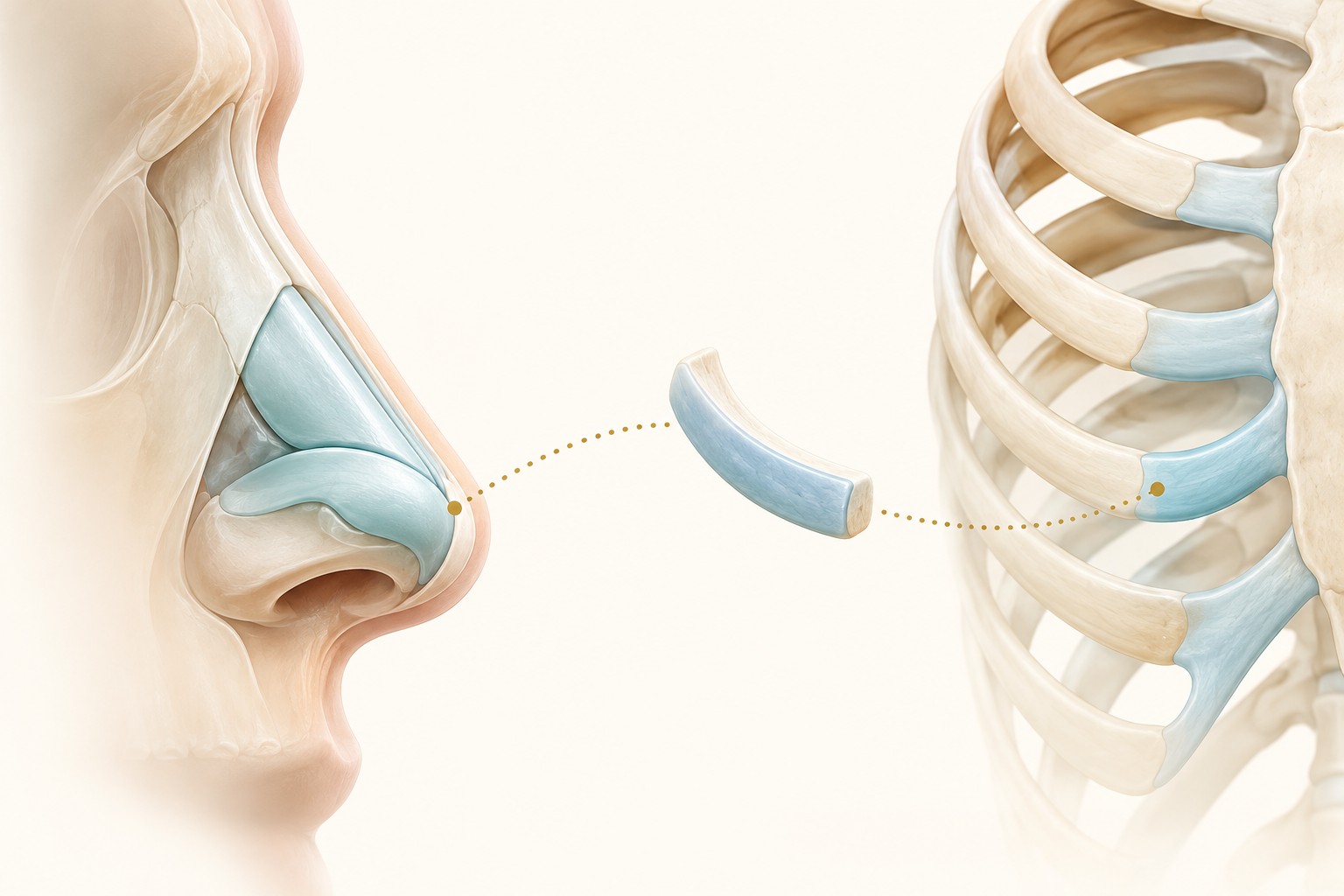
Some people researching rhinoplasty in Korea encounter the term autologous rib cartilage. It means cartilage taken from the patient’s own rib and considered as a graft for the nose. A surgeon may discuss it when additional structural support is needed or when cartilage from the septum or ear is limited, including in some revision cases. It is not automatically the best option for every person.
For an international visitor, the first step is to describe the concern, prior nasal operations, breathing symptoms and tentative dates. Previous operation reports and imaging, if available, may help the treating surgeon understand the history. An online exchange can prepare an appointment, but cannot establish a final operative plan, quotation or return-flight date.
AI-generated educational illustration. The people shown are fictional and do not depict a KOMD or DI consultation.
Ask about the nose and the chest donor site
Rib-cartilage surgery involves more than a change to the nose. If cartilage is harvested from the chest, there is a separate incision and healing area. During an in-person consultation, ask why a rib graft is under consideration, what alternatives exist, where the graft may be used, and how nasal breathing will be evaluated. Ask about the donor-site scar, discomfort, care instructions and possible complications at both sites.
DI Plastic Surgery’s published procedure information describes an individualized assessment and outlines possible issues such as bleeding, infection, inflammation, bruising, swelling and pain. General NHS rhinoplasty information also discusses recovery and risks. These sources support a conversation with your own clinician; neither predicts an individual outcome.
Build flexibility into a Seoul surgery itinerary
A useful trip plan leaves time for an in-person examination before any procedure and for the follow-up schedule that the treating clinic recommends afterward. Ask who will provide anesthesia, what support is needed immediately after surgery, which appointments must happen in Seoul, what warning signs require urgent contact, and who will decide when flying is appropriate. A clinic’s typical schedule should not be treated as a personal clearance to travel.
Accommodation near the clinic may make follow-up easier, but convenience should not determine the medical timetable. Avoid buying a fixed return ticket solely from a generic recovery estimate. If a previous rhinoplasty or another health condition makes the assessment more complex, allow for the possibility that the proposed operation or timing may change.

A short checklist for the consultation
- Explain what you hope to change and whether breathing is a concern.
- Bring records from previous nasal surgery, if any.
- Ask why rib cartilage is being considered and what alternatives exist.
- Discuss both nasal and chest donor-site risks, anesthesia and emergency arrangements.
- Request an individualized follow-up plan before fixing travel dates.
- Ask for a written quotation that makes clear what is included and what may change after examination.
For details specific to the clinic, read DI’s patient guide to autologous rib cartilage rhinoplasty, its medical-team profile and its consultation process. KOMD can help a visitor organize questions and practical travel information, but the treating clinicians make medical decisions. A generated image, another patient’s photograph or an online quotation cannot replace an individual examination.
Sources: American Society of Plastic Surgeons — rhinoplasty consultation; American Society of Plastic Surgeons — revision rhinoplasty; NHS — rhinoplasty.