
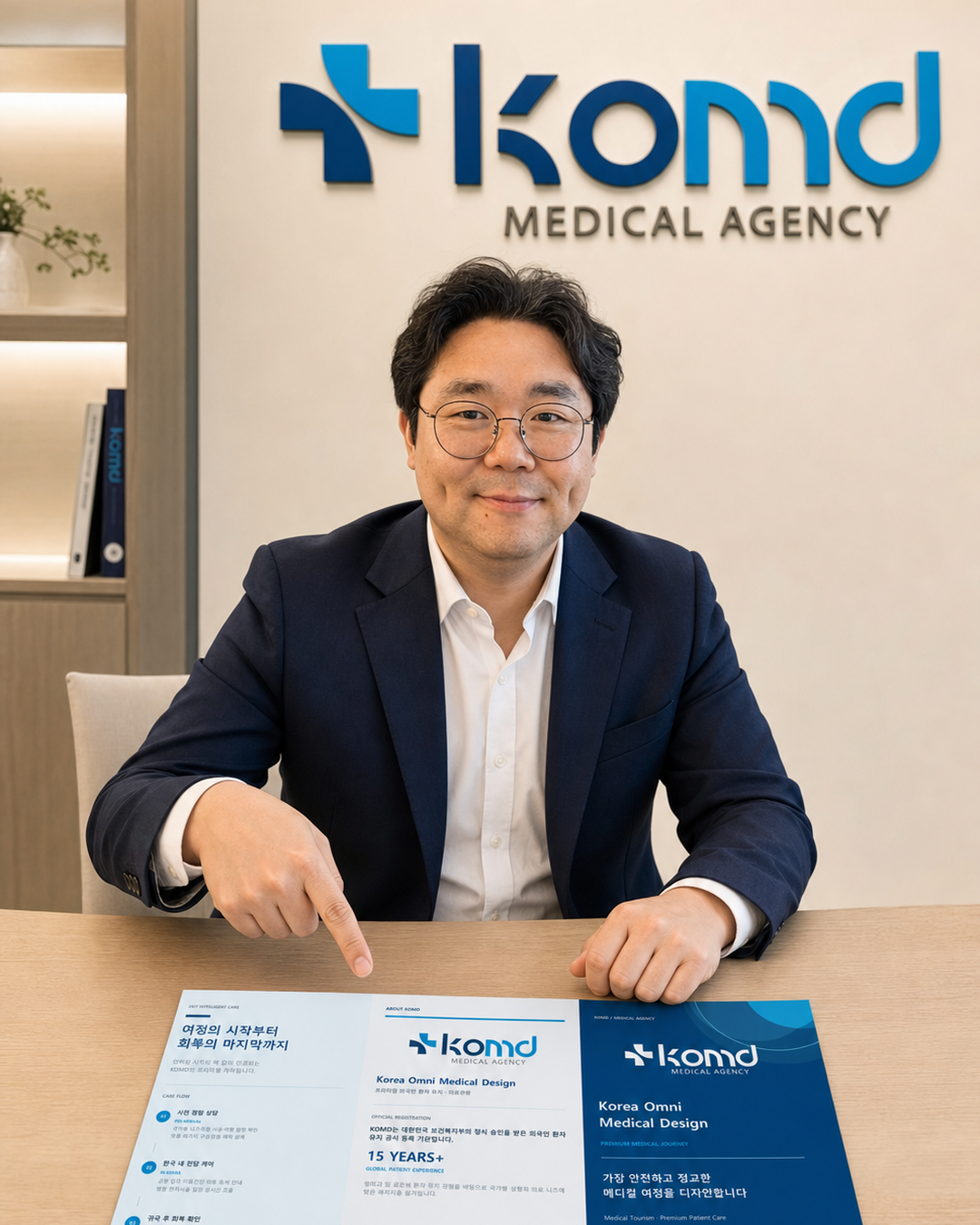
Cheongju medical tourism partners can help international patients move more clearly between clinic consultation, booking, arrival, accommodation and return-home communication. KOMD is developing a regional network of medical and non-medical providers with defined responsibilities, transparent terms and patient safety at the center of each itinerary.
Why KOMD Is Building a Cheongju Partner Network
International medical travel involves more than a clinic appointment. Patients may need help understanding the schedule, reaching Cheongju, finding suitable accommodation, communicating across languages and following the treating clinic’s instructions after a procedure. KOMD’s role is to coordinate these practical components without replacing the medical provider.
The network is intended to create a clearer operating route for patients and partners. Participation does not guarantee patient volume, revenue, exclusivity or a particular launch date. Scope and commercial terms are agreed individually in writing.
Who Can Become a Cheongju Medical Tourism Partner?
KOMD welcomes conversations with organizations that can support a responsible international-patient journey, including:
- Registered hospitals and clinics in fields such as dermatology, plastic surgery and health screening
- Qualified interpretation and multilingual communication providers
- Hotels and accommodation providers suited to different mobility, privacy and companion needs
- Licensed airport and local transportation providers
- Beauty, wellness, tourism and cultural-experience businesses that clearly distinguish non-medical services from treatment
Medical providers should verify current requirements for serving international patients through the Medical Korea registration-system guide and the relevant Korean authorities.
What KOMD Can Coordinate
Each operating plan is adapted to the provider’s services and the patient’s confirmed clinical schedule. Possible coordination areas include:
- International inquiry routing and practical needs review
- Clinic consultation and appointment-channel coordination
- Clear communication of confirmed packages and included services
- Airport, hotel and clinic transportation logistics
- Interpretation and schedule communication
- Accommodation and companion arrangements
- Non-emergency aftercare communication under the treating clinic’s guidance
Providers can review the dedicated Cheongju hospital partnership page for the current program outline.
Clear Roles Protect Patients and Partners
The medical institution and its licensed professionals remain responsible for assessment, informed consent, treatment, medication, medical records, complication management and clinical follow-up. KOMD coordinates communication and travel services. Non-medical partners remain responsible for their own licenses, insurance, service quality and safety obligations.
Marketing materials should accurately identify the provider and should not promise guaranteed results, fixed recovery times or benefits that the treating medical team has not confirmed. Prices and package inclusions should be presented in writing with medical and non-medical charges clearly distinguished.
The Partnership Review Process
- Initial consultation: We review the organization’s services, licenses, target patients, languages and available capacity.
- Role definition: Each party identifies its coordinator, communication channel, response times and responsibility boundaries.
- Service and terms review: The parties confirm available services, prices, payment recipients, settlement, cancellation terms and data-sharing needs.
- Patient-journey design: Confirmed clinical steps are connected with appropriate transport, accommodation, interpretation and communication.
- Launch and review: The parties monitor operational feedback, patient questions and service issues, then adjust the written process where needed.
Commercial Transparency and Data Protection
A partnership agreement should identify which organization provides each service, how fees are quoted and collected, how cancellations or schedule changes are handled, and who responds when a patient raises a concern. KOMD does not recommend relying on an informal verbal understanding for patient-facing prices or responsibility allocation.
Medical records, health histories and identifying photographs require appropriate handling. Partners should collect only the information necessary for an agreed purpose, use suitable transfer channels, restrict access and follow applicable retention and deletion requirements. Legal and regulatory obligations should be reviewed with qualified advisers where necessary.
Cheongju as Part of a Korea Medical Journey
Cheongju may suit patients whose selected provider is in the region, whose flight route uses Cheongju International Airport, or who prefer a more compact local itinerary. It should not be promoted as automatically cheaper, faster, safer or more suitable than Seoul. Destination choice should follow the required specialist, treatment plan, flight availability and individual recovery needs.
Partners can read the Cheongju medical tourism guide and the arrival-to-recovery journey guide to understand the patient-facing process.
Start a Partnership Conversation
Tell KOMD about your services, licenses, operating area, languages and preferred partnership scope. We will review whether the organization fits the current network and outline the next practical steps. Contact KOMD for a partnership consultation or read about KOMD’s role as a medical tourism facilitator in Korea.
Source note: The Medical Korea link above provides general information about Korea’s international-patient registration system. Prospective partners should confirm current registration, licensing, advertising, privacy and commercial requirements with the relevant authorities and qualified advisers.
Last updated: July 30, 2026. Prepared by: KOMD medical travel coordination team.
This article provides general partnership and medical-travel information, not medical, legal or commercial advice. Participation, services, fees, timelines and patient volume are not guaranteed and are established only through written agreements. Licensed medical providers remain responsible for all clinical decisions and care.