
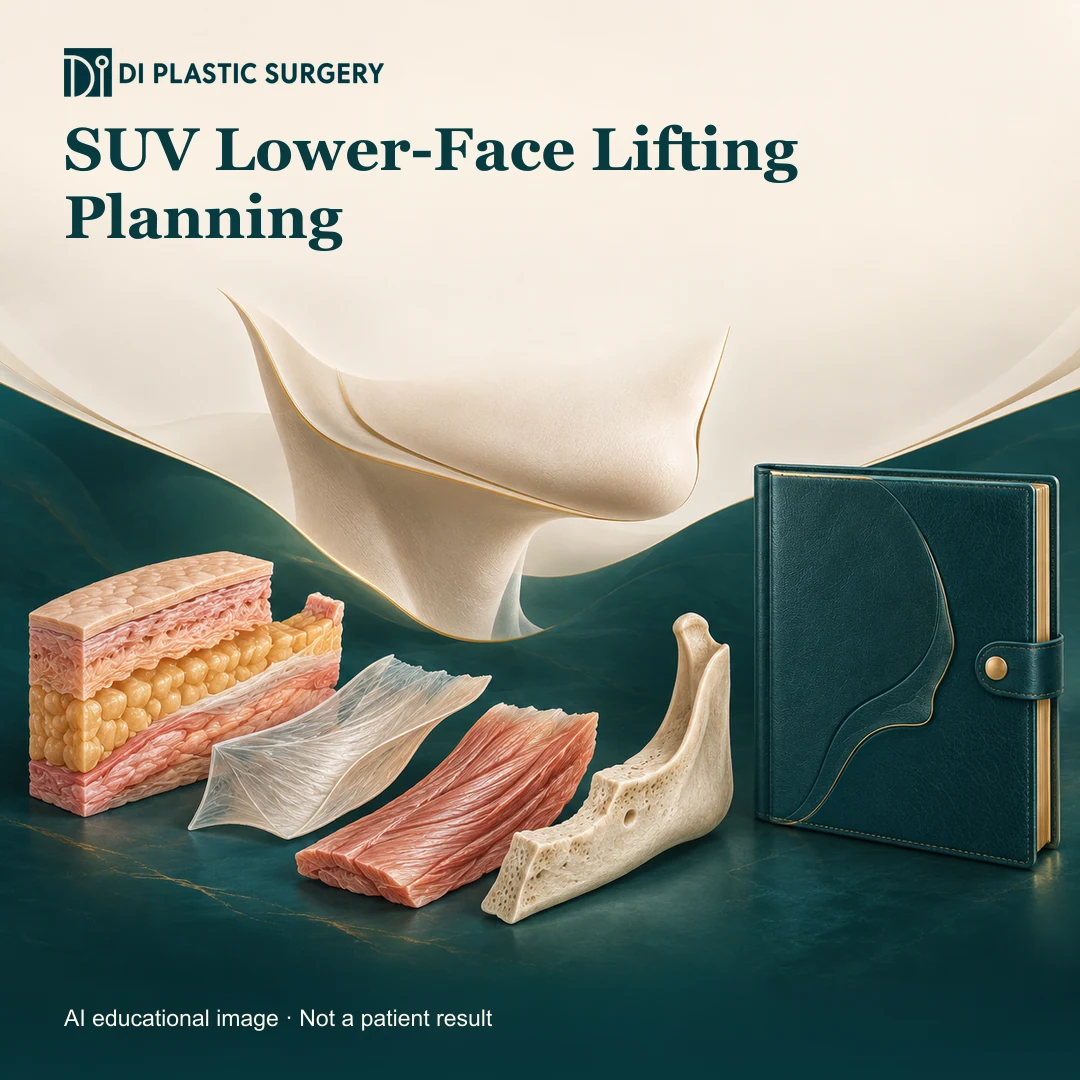
If you are planning an SUV Lifting consultation in Seoul, arrange the trip around decisions and clinical reviews, not an assumed number of recovery days. The most useful itinerary leaves room for an examination, a choice not to proceed and changes to follow-up.
This guide is for an overseas visitor organizing a possible lower-face lifting consultation. It covers travel preparation and practical questions, not a surgical recommendation or permission to fly after treatment.
Confirm what appointment you are booking
DI’s official SUV Lifting page describes a lower-face lifting procedure and discusses the skin and underlying SMAS supporting layer. That overview is a starting point for questions, not confirmation that SUV is the right procedure for your concern.
Ask whether the appointment is an initial consultation, an examination for a proposed operation or an already-confirmed treatment date. Clarify whether a neck concern or another area needs a separate assessment. A consultation-only trip can be useful; do not build a non-refundable surgical itinerary around a treatment name or an age chart.
Understanding suv lifting
SUV lifting is a clinic-specific treatment name. The useful medical description is the actual area treated, incision route, tissues addressed and any additional steps. A brand name alone does not establish that the procedure is a thread lift, a standard facelift or one uniform technique.
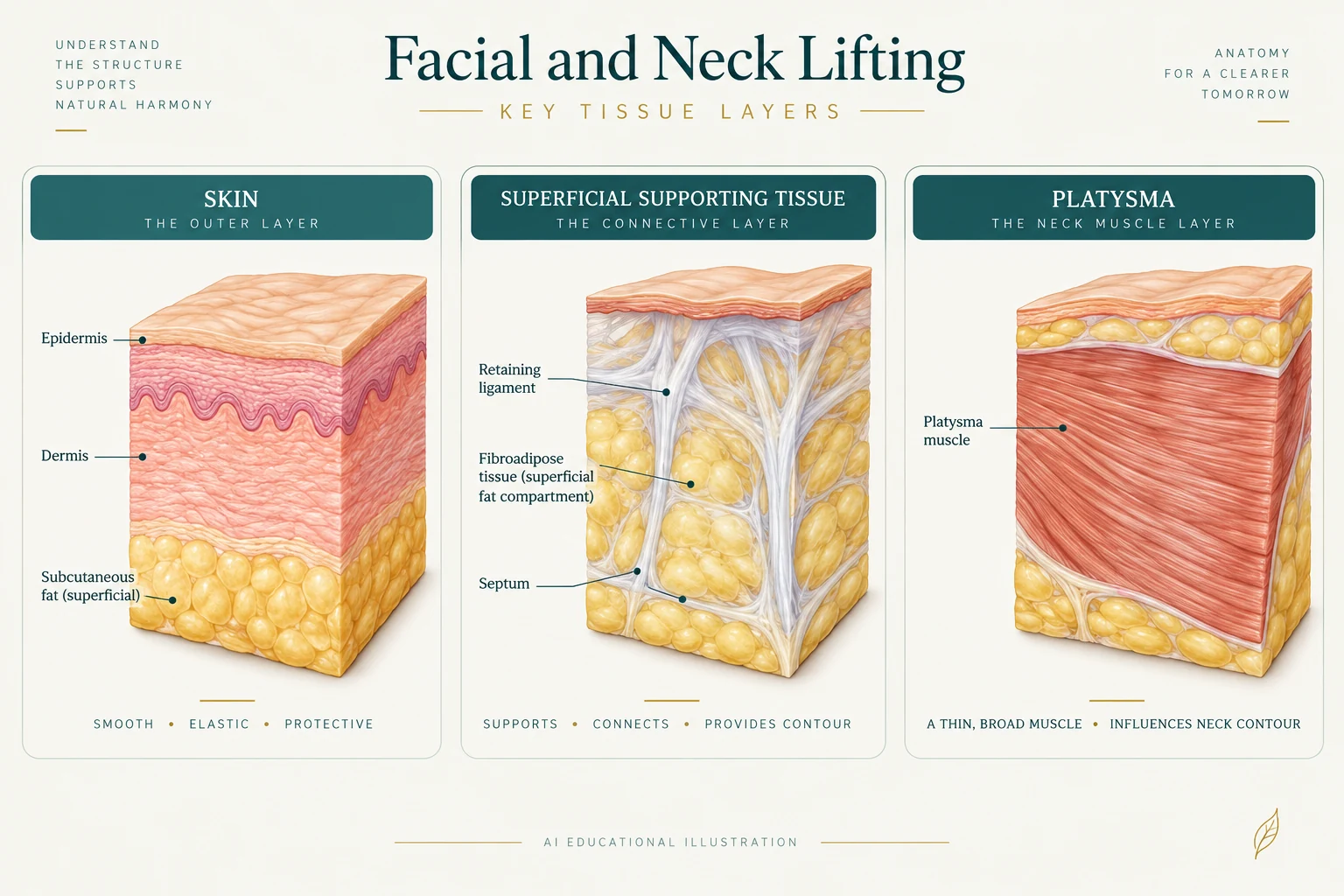
Ask the surgeon to explain whether the main concern is skin excess, supporting-tissue descent, neck bands or volume. The layered illustration separates these concepts so that the proposed operation can be discussed in plain language.
Confirm the scope, alternatives, scar locations and follow-up needs. If a combined treatment is suggested, identify the purpose of each component rather than assuming every element of a named program is required for your anatomy.
Keep the first inquiry practical and minimal
Share tentative travel dates, your preferred language and the general concern you want evaluated. Ask for the confirmed clinic address, appointment duration and whether language assistance is available on that date. Review DI’s medical-team information and ask who will conduct the examination.
Detailed medical history belongs in the clinic’s appropriate private consultation process. Ask how to provide it; do not attach a passport, payment details or a full medical record to a general planning message. Tell the treating team about previous surgery and relevant health information when they request it. Travel coordination cannot substitute for clinical evaluation.

Build a visit with three decision points
- Before booking: confirm consultation availability and ask what information is needed. Separate the appointment from any decision about surgery.
- After examination: consider the proposed treatment area, alternatives, risks and itemized estimate. Arrange treatment only if you choose to proceed and the clinical team confirms the plan.
- Before departure: complete the reviews required for your actual procedure and ask the surgeon about travel readiness. Allow the return date to change if healing or additional care requires it.
DI’s published SUV overview notes required suture removal and follow-up, with individual variation in recovery. Ask when these visits would occur for you and whether the proposed stay accommodates them. A listed operation duration or visit count cannot tell you how many nights to book or when you can safely return home.
What the proposed procedure should specify
Ask for the exact procedure, tissue planes and included areas. No exact matching line-item price was verified, so a standard facelift or thread-lift fee must not be substituted.
Before consent, ask the clinician to name the operation and alternatives, explain the main objective and limitations, and confirm the person responsible for treatment and postoperative review. A schematic, a price item or a case video cannot establish suitability for an individual patient.
Price confirmation for the named procedure
No exact matching price item was verified in the checked DI 2026 English Price Guide. A price from a similarly named operation is not substituted. Request the exact procedure, package inclusions and current written quotation.
| Procedure | Verified price | Next step |
|---|---|---|
| SUV lifting | No exact named price verified | Request a current itemized clinic quotation |
Choose accommodation for access, not a sightseeing checklist
Once the appointment location is confirmed, choose lodging that makes clinic visits practical. Keep the address in Korean and English and the clinic’s contact details accessible. Ask about step-free access or help with luggage if those are important to you; do not assume a hotel provides postoperative care.
Leave the early part of the itinerary free of tightly scheduled tours, long walking days and strenuous activities. The treating team should explain any activity restrictions for your plan. A calm room and flexible booking are planning choices, not a guarantee of a particular recovery speed.
Arrange the journey after treatment separately
Ask the clinic what transport and accompaniment are required after the proposed anesthesia. Confirm who will help you reach the accommodation and whom to contact if plans change. Do not assume you can travel alone or carry heavy bags immediately after an operation.
Airport transfers, interpretation, a companion and accommodation may be separate arrangements. Request confirmation of what is actually included in each quote rather than treating an advertised procedure as a complete travel package. Keep a backup local contact and enough flexibility for an extra review if requested.
Get the aftercare handover before going home
Request written instructions for wound care, medicines, warning signs and follow-up. Ask when you can resume routine activities and how a concern would be assessed after you leave Korea. A coordinator can help organize communication, but urgent medical symptoms require appropriate medical care, not a delayed travel reply.
Discuss surgical risks with the clinician, including bleeding, infection, anesthesia problems, nerve or sensation changes, poor healing, scarring and an unsatisfactory result. This is general context, not a complete SUV-specific list. Suitability, expected effects, price and recovery require individual assessment; no itinerary can remove those uncertainties.
Images, contacts and the limits of this guide
An exactly matching SUV Lifting case was not verified in the designated DI Before & After gallery. No patient comparison photographs are used here. Both images are AI-generated editorial illustrations and do not show a real patient, treatment result or clinical evidence.
Use KOMD’s contact options for a general visit-planning inquiry and DI’s consultation channel for clinic-specific assessment questions. Find other planning topics in the KOMD Journal or explore the procedure directory without assuming that a similar procedure has the same recovery plan.
Sources and scope
- DI Plastic Surgery: SUV Lifting overview
- American Society of Plastic Surgeons: general facial lifting recovery questions
- American Society of Plastic Surgeons: facelift risks — general context, not an SUV protocol or individual clearance.
Reviewed October 2, 2026. Educational travel-planning information, not a diagnosis, a fixed recovery timetable or a guarantee of results.
Preparation, aftercare and travel milestones
Before treatment, review previous lifting, threads, fillers or surgery, medicines, allergies and smoking or nicotine use. Ask who performs the procedure, how anesthesia is assessed and what monitoring is planned. Confirm each combined procedure separately.
Get written instructions on dressings, drains if used, wound care, hair washing, compression if prescribed and activity. Ask about expected swelling and when a rapidly increasing swelling, severe pain or other unexpected change needs immediate review. Suture removal and return to normal activity are separate milestones.
Build your stay around wound reviews and the surgeon’s assessment of recovery. Confirm how to contact the clinic after hours and after returning home. A limited-incision operation or a short procedure does not establish a fixed safe flight date.

Risks and symptoms to discuss before consent
Discuss bleeding or hematoma, infection, scarring, asymmetry, sensation changes, nerve-related complications and possible revision. Thread procedures also require discussion of visible or palpable threads, dimpling and removal. Risks vary with the operation actually proposed.
Ask which risks are most relevant to your examination, how complications would be handled, and what alternatives include postponing or not having treatment. Obtain written instructions from the treating team; a general article cannot replace them.
Questions before surgery and travel
Is there a verified fixed price for SUV lifting?
No exact matching item was found in the checked guide. Request an individualized written quotation identifying the operation and inclusions.
Who confirms my final treatment plan and quotation?
The treating medical institution confirms suitability, the procedure, consent and the current itemized medical quotation. KOMD helps coordinate information and travel arrangements.
Does an early recovery estimate mean that I can fly?
No. Required reviews, wound or suture care and individual travel clearance must be confirmed by the treating clinician.
Procedure explanations and educational illustrations updated 7 October 2026. DI procedure information. Illustrations are AI-generated concepts, not actual patients or results. Medical decisions and current fees require clinic confirmation.